
HANGBO ALLOY
Shanghai Hangbo Alloy Group Co., Ltd.
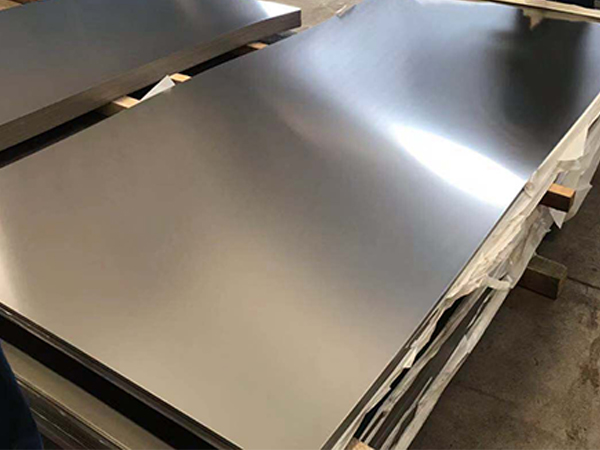
Choosing between Hastelloy C-22 (UNS N06022) and Hastelloy C-276 (UNS N10276) is one of the most consequential decisions engineers face when specifying materials for aggressive chemical environments. Both are nickel-chromium-molybdenum-tungsten alloys from the same Hastelloy family, yet their differing chromium-to-molybdenum ratios produce fundamentally different corrosion resistance profiles.
Quick Answer: Hastelloy C-22 outperforms C-276 in oxidizing acid environments and offers superior resistance to crevice corrosion at elevated temperatures, while C-276 excels in reducing acid media (hydrochloric and sulfuric acid) and has a 50-year proven track record in chemical processing. Choose C-22 for oxidizing conditions, seawater reverse osmosis, and nuclear waste containment; choose C-276 for reducing acid service, flue gas desulfurization, and marine/offshore applications where cost-effectiveness and maturity matter.
Shanghai Hangbo Alloy Group supplies both grades in round bars, seamless tubes, plates, precision strips, and forgings — all produced to ASTM specifications with full Mill Test Reports (MTRs). This article provides a data-driven comparison to help you specify the right alloy for your next project.
The core distinction between these two alloys lies in their chromium and molybdenum balance. C-22 carries significantly more chromium (20–22.5%) but less molybdenum (12.5–14.5%), while C-276 flips this ratio with lower chromium (14.5–16.5%) and higher molybdenum (15–17%). This single compositional difference drives virtually all the performance divergence between the two grades.
| Element | Hastelloy C-22 (UNS N06022) | Hastelloy C-276 (UNS N10276) | Key Impact |
|---|---|---|---|
| Nickel (Ni) | Balance (≥ 51%) | Balance (≥ 51%) | Base matrix stability |
| Chromium (Cr) | 20.0 – 22.5% | 14.5 – 16.5% | Oxidizing acid resistance |
| Molybdenum (Mo) | 12.5 – 14.5% | 15.0 – 17.0% | Reducing acid & pitting resistance |
| Tungsten (W) | 2.5 – 3.5% | 3.0 – 4.5% | Crevice corrosion enhancement |
| Iron (Fe) | 2.0 – 6.0% | 4.0 – 7.0% | Cost balance element |
| Cobalt (Co) | ≤ 2.5% | ≤ 2.5% | Minor hardening effect |
| Vanadium (V) | ≤ 0.35% | ≤ 0.35% | Microstructural stability |
| Carbon (C) | ≤ 0.010% | ≤ 0.020% | Intergranular corrosion control |
| Silicon (Si) | ≤ 0.08% | ≤ 0.08% | Weldability |
| Manganese (Mn) | ≤ 0.50% | ≤ 1.0% | Deoxidation |
| Phosphorus (P) | ≤ 0.025% | ≤ 0.020% | Purity control |
| Sulfur (S) | ≤ 0.010% | ≤ 0.020% | Hot workability |
Engineer’s Note: C-22 has a notably lower carbon limit (0.010% vs 0.020%) and tighter sulfur control (0.010% vs 0.020%), which directly translates to superior intergranular corrosion resistance after welding — no post-weld heat treatment is required for either alloy, but C-22 offers an extra margin of safety in sensitization-prone service.
Both alloys are solid-solution strengthened (not precipitation-hardenable), meaning their mechanical properties are relatively similar in the solution-annealed condition. The following table shows the minimum ASTM requirements for flat-rolled products (B575) and bar products (B574).
| Property | Hastelloy C-22 (UNS N06022) | Hastelloy C-276 (UNS N10276) | ASTM Standard |
|---|---|---|---|
| Tensile Strength (min) | 690 MPa (100 ksi) | 690 MPa (100 ksi) | B575 / B574 |
| Yield Strength 0.2% (min) | 310 MPa (45 ksi) | 283 MPa (41 ksi) | B575 / B574 |
| Elongation (min, 50mm) | 45% | 40% | B575 / B574 |
| Density | 8.69 g/cm³ | 8.89 g/cm³ | — |
| Melting Range | 1357–1399 °C | 1323–1371 °C | — |
Engineer’s Note: C-22 delivers a 10% higher minimum yield strength (310 vs 283 MPa) and 5% greater elongation (45% vs 40%), reflecting its tighter compositional control and higher alloy purity. For pressure vessel design per ASME Section VIII, this yield advantage can translate into thinner wall sections — and therefore weight and cost savings — in certain applications.
The chromium-to-molybdenum ratio creates a clear divergence:
| Corrosive Medium | Conditions | C-22 Rating | C-276 Rating | Preferred Grade |
|---|---|---|---|---|
| Nitric Acid (HNO&sub3;) | Concentrated, ≤80 °C | Excellent | Good | C-22 |
| Hydrochloric Acid (HCl) | 1–10%, ≤50 °C | Very Good | Excellent | C-276 |
| Sulfuric Acid (H&sub2;SO&sub4;) | ≤40%, ≤80 °C | Very Good | Excellent | C-276 |
| Wet Chlorine Gas | Ambient to 80 °C | Excellent | Good | C-22 |
| Ferric Chloride (FeCl&sub3;) | 10%, 25 °C | Excellent | Moderate | C-22 |
| Seawater (flowing) | Ambient | Excellent | Excellent | Either |
| Phosphoric Acid | Commercial grade | Very Good | Excellent | C-276 |
| Mixed Oxidizing+Reducing | Variable pH/chloride | Excellent | Good | C-22 |
C-22 demonstrates measurably better resistance to crevice corrosion at elevated temperatures in chloride-containing environments. Critical crevice corrosion temperature (CCCT) testing per ASTM G48 Method D shows C-22 resisting crevice attack at temperatures where C-276 initiates corrosion. This is the primary technical reason C-22 is specified for seawater reverse osmosis (SWRO) membrane housings and nuclear waste containers where localized corrosion initiation is unacceptable.
Both alloys are highly resistant to chloride-induced SCC. C-22 offers a marginal advantage in polythionic acid SCC environments found in refinery downstream units, but the practical difference is small for most engineering applications.
Engineer’s Note: When your service environment involves mixed oxidizing and reducing conditions — common in chemical plant headers handling process stream variability — C-22 is the safer choice because its broader corrosion resistance window covers both regimes. C-276 remains the cost-effective standard for well-characterized reducing acid service.
Proton exchange membrane (PEM) water electrolyzers for green hydrogen production require bipolar plates that resist acidic corrosion in the presence of dissolved oxygen and chloride impurities at 60–80 °C. Hastelloy C-22 is increasingly specified for these plates because its high chromium content provides superior resistance to the oxidizing conditions on the anode side, where oxygen evolution creates an aggressive local environment. C-276 can also serve in this role, but C-22's wider corrosion margin makes it the preferred grade for next-generation high-pressure electrolyzers operating at 30–80 bar.
| Application | Key Conditions | Preferred Alloy | Product Form (ASTM) |
|---|---|---|---|
| PEM Electrolyzer Bipolar Plate | 60–80 °C, acidic, O&sub2; evolution | C-22 | Plate B575 / Strip |
| Carbon Capture Amine System | 50–120 °C, CO&sub2;-loaded amine, chloride | C-276 | Plate B575 / Tube B622 |
| Geothermal Heat Exchanger | 180–250 °C, brine with H&sub2;S & CO&sub2; | C-22 | Tube B622 / Plate B575 |
| Nuclear Waste Canister | Long-term, mixed oxidizing, ≤200 °C | C-22 | Plate B575 / Bar B574 |
| FPSO Seawater Injection System | Ambient seawater, deaerated | C-276 | Tube B622 / Bar B574 |
Post-combustion carbon capture (CCUS) plants use amine solvents (MEA, MDEA) to absorb CO&sub2;. These solvents become corrosive when loaded with CO&sub2; and contaminated with chloride and oxygen degradation products. Hastelloy C-276 is the established choice for amine stripper reboilers and heat exchangers because the environment is predominantly reducing (high CO&sub2; partial pressure) and chloride-rich. C-22 can also serve, but the premium is harder to justify when C-276's track record in amine systems is well-documented.
Geothermal brine at 180–250 °C contains dissolved H&sub2;S, CO&sub2;, chloride, and silica — creating a mixed oxidizing-reducing environment with high crevice corrosion risk at heat exchanger tube-to-tubesheet joints. Hastelloy C-22 is preferred for these applications because its superior crevice corrosion resistance at elevated temperatures directly addresses the most common failure mode in geothermal heat exchangers.
Engineer’s Note: In hydrogen electrolyzers and nuclear waste containment, C-22's "broader shield" philosophy (strong in both oxidizing and reducing regimes) provides a safety margin that justifies the 10–15% price premium. In well-characterized reducing environments like carbon capture amine systems, C-276 remains the cost-effective standard.
| Product Form | Hastelloy C-22 ASTM Standard | Hastelloy C-276 ASTM Standard | Hangbo Available Sizes |
|---|---|---|---|
| Round Bar / Rod | ASTM B574 | ASTM B574 | Ø 6–300 mm |
| Seamless Tube / Pipe | ASTM B622 / B619 | ASTM B622 / B619 | OD 6–273 mm |
| Plate / Sheet | ASTM B575 | ASTM B575 | 0.5–80 mm thick |
| Forging | ASTM B564 | ASTM B564 | Custom to drawing |
| Welding Wire | AWS A5.14 (ERNiCrMo-10) | AWS A5.14 (ERNiCrMo-4) | Ø 1.0–4.0 mm |
Engineer’s Note: When welding C-22, use ERNiCrMo-10 filler (AWS A5.14) to maintain overmatching corrosion resistance in the weld deposit. For C-276, the corresponding filler is ERNiCrMo-4. Using the wrong filler metal will compromise weld corrosion performance — always match filler to parent metal grade.
No — not without engineering review and client approval. C-22's higher chromium content provides corrosion resistance in oxidizing environments where C-276's performance may be marginal. If the original specification was written for C-22 in oxidizing service (nitric acid, wet chlorine, ferric chloride, or mixed conditions), substituting C-276 could lead to accelerated localized corrosion. However, in well-characterized reducing acid service where C-22 was specified simply for "general corrosion resistance," C-276 may serve equally well at lower cost — consult with the design engineer first.
It depends on the environment. In predominantly reducing acid service (HCl, H&sub2;SO&sub4;), C-276 is both cheaper and better-performing — there is no reason to pay more for C-22. In oxidizing or mixed environments, or where crevice corrosion at elevated temperatures is a failure risk (SWRO, nuclear waste, geothermal), C-22's broader corrosion resistance window and higher CCCT can prevent premature failure that would cost far more than the material premium. Over a 20–30 year plant life, a 10–15% material premium that prevents one unplanned shutdown is easily justified.
No. Both Hastelloy C-22 and C-276 are designed with extremely low carbon content (C-22: ≤0.010%, C-276: ≤0.020%) to resist sensitization during welding. Neither requires post-weld heat treatment (PWHT) after standard GTAW/GMAW welding with matching filler metals. However, C-22's even lower carbon limit provides an additional margin against intergranular corrosion in the heat-affected zone (HAZ) for highly critical applications.
Hastelloy C-22 is the internationally preferred grade for high-level nuclear waste canister design (e.g., the Yucca Mountain project specification). Its superior resistance to oxidizing chloride environments and long-term crevice corrosion at moderate temperatures (≤200 °C over multi-decade service) makes it the consensus choice among nuclear materials engineers. C-276 was also evaluated but showed slightly lower CCCT values in the relevant test conditions.
Also published on nickel-alloy.com
Read this article and more technical resources from Shanghai Hangbo Alloy Group at nickel-alloy.com — our primary product and knowledge platform.
Contact our technical team for material selection advice, pricing, and delivery timelines. We respond within 10 minutes.
Request a Quote & Technical Datasheet →