Nickel Alloy Knowledge Center

Expert technical guides, material comparisons, and application insights for engineers and procurement professionals

Technical Resources

Expert Articles & Guides

Deepen your understanding of nickel-based alloys with our technical library — covering material selection, standards, processing, and real-world applications across industries.

ASTM Standards for Nickel Alloy Seamless Tubes
Standards & Specs
April 2025 7 min read

ASTM Standards for Nickel Alloy Seamless Tubes: B444, B622, B163 Explained

A practical breakdown of the key ASTM standards governing nickel alloy seamless tubes and pipes — helping procurement teams specify the right standard for heat exchangers, boilers, and chemical piping.

Read Full Article →
Nickel Alloy Forging Process Guide
Manufacturing
March 2025 9 min read

Nickel Alloy Forgings: Process, Grain Structure & Why They Outperform Castings

From open-die to closed-die and ring rolling — how forging transforms nickel alloy microstructure for superior mechanical performance. Includes grade selection guide for forgings.

Read Full Article →
Hastelloy C-276 Chemical Processing Applications
Application Guide
February 2025 8 min read

Hastelloy C-276 in Chemical Processing: Ultimate Corrosion Resistance Guide

How Hastelloy C-276 (UNS N10276) performs in aggressive chemical environments — covering chloride, sulfuric acid, hydrochloric acid resistance, and why it is the benchmark for chemical plant equipment.

Read Full Article →

More Articles Published Weekly

New technical articles are added every week covering material selection, manufacturing processes, and application engineering for nickel alloys.

Request Technical Data Sheet →
Standards & Specifications

ASTM Standards for Nickel Alloy Seamless Tubes: B444, B622, B163 Explained

April 2025 7 min read Hangbo Technical Team
Nickel Alloy Seamless Tubes ASTM Standards

Why ASTM Standards Matter

When specifying nickel alloy seamless tubes for heat exchangers, boilers, or chemical process piping, the ASTM standard you specify determines the alloy composition limits, required mechanical properties, permitted dimensional tolerances, and mandatory testing requirements. Specifying the wrong standard can result in non-compliant material or unnecessary cost.

ASTM B444: Seamless Tubes for Condensers and Heat Exchangers

ASTM B444 covers seamless nickel-chromium-molybdenum alloy tubes (Inconel 625, Alloy 825, etc.) intended for heat exchanger and condenser service. The standard specifies requirements for wall thickness and OD tolerances, hydrostatic or eddy current testing, and surface condition.

ASTM B622: Seamless Pipe and Tube – Hastelloy and Other High-Ni Alloys

ASTM B622 is the go-to standard for seamless pipe and tube made from Hastelloy C-276, C-22, B-2, B-3, and similar alloys. It specifies broader wall thicknesses than B444 and is used for process piping and pressure vessel nozzles where pressure containment is critical.

ASTM B163: Condenser and Heat Exchanger Tube – Nickel and Nickel Alloys

ASTM B163 covers a broader range of alloys including pure nickel (Ni 200/201), Monel 400, Incoloy 800/825, and others. This is the standard most commonly specified for heat exchanger shell-and-tube applications in utility power plants and refineries.

StandardTypical AlloysPrimary Application
ASTM B444Inconel 625, Incoloy 825Condenser & heat exchanger tubes
ASTM B622Hastelloy C-276, C-22, B-3Process piping, pressure service
ASTM B163Ni 200, Monel 400, Incoloy 800/825Heat exchangers, boiler tubing

Hangbo Alloy Group manufactures seamless tubes to all three standards, with full hydrostatic/eddy current testing, dimensional reports, and MTRs provided with each order.

Manufacturing

Nickel Alloy Forgings: Process, Grain Structure & Why They Outperform Castings

March 2025 9 min read Hangbo Technical Team
Nickel Alloy Forging Process

Why Forge Nickel Alloys?

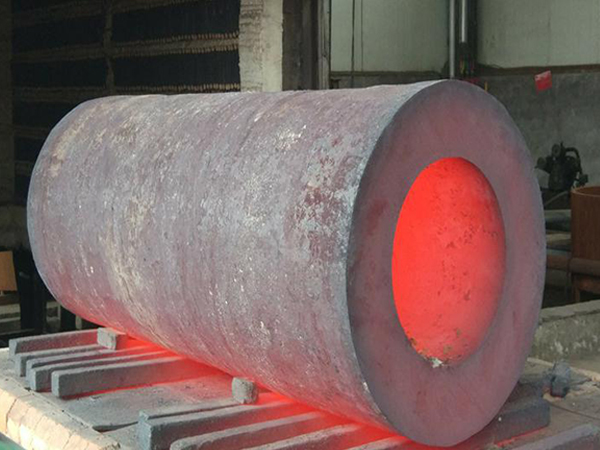
Forging is the preferred manufacturing route for critical nickel alloy components in aerospace turbines, oil & gas wellheads, and pressure vessel flanges. The forging process refines the grain structure, eliminates internal porosity, and aligns grain flow with the component geometry — resulting in superior mechanical properties compared to castings or machined-from-bar parts of equivalent size.

Forging Process Types

  • Open-Die Forging (Smith Forging): Suitable for large, simple shapes such as discs, shafts, and rings. Material is worked between flat or simple dies. Hangbo's 10T and 5T hydraulic presses handle billets up to 1,200mm diameter.
  • Closed-Die (Impression-Die) Forging: Used for complex near-net shapes such as turbine discs, impellers, and valve bodies. Provides tighter dimensional tolerance and less material waste.
  • Ring Rolling: Specifically for seamless rings (flanges, bearing rings, gear blanks). A ring blank is rolled between inner and outer rolls to achieve precise diameter, height, and wall thickness.

Effect on Microstructure

During hot forging, the as-cast dendritic structure is broken down and the grain is refined. The controlled plastic deformation creates a fibrous grain flow that follows the contours of the component. In nickel superalloys, this results in significantly improved fatigue life, impact toughness, and creep resistance at operating temperatures.

Recommended Alloys for Forgings

  • Inconel 718 — Aerospace turbine discs, rings, and structural parts (age-hardenable)
  • Nimonic 90 — Gas turbine blades and vanes (high strength above 800°C)
  • Incoloy 825 — Pressure vessel flanges and wellhead components
  • Hastelloy C-276 — Chemical reactor nozzles and valve bodies
  • Inconel 625 — Marine propulsion shafts, offshore structural forgings
Application Guide

Hastelloy C-276 in Chemical Processing: Ultimate Corrosion Resistance Guide

February 2025 8 min read Hangbo Technical Team
Hastelloy C-276 Chemical Processing

Introduction to Hastelloy C-276

Hastelloy C-276 (UNS N10276) is a nickel-molybdenum-chromium alloy with additions of tungsten, and is one of the most versatile corrosion-resistant alloys available today. Its high molybdenum and chromium content make it highly resistant to both oxidizing and reducing environments — a combination that few other alloys can match.

Corrosion Resistance in Key Media

Corrosive MediumResistanceNotes
Hydrochloric Acid (HCl)ExcellentAll concentrations at moderate temperatures
Sulfuric Acid (H₂SO₄)Very GoodUp to 40% at elevated temperatures
Phosphoric AcidExcellentIncluding wet process phosphoric acid
Chloride SolutionsOutstandingResistant to pitting and crevice corrosion
Oxidizing Acids (HNO₃)GoodModerate concentrations
Wet Chlorine GasExcellentSuperior to most other alloys

Typical Applications in Chemical Plants

  • Reactor vessels and agitators handling aggressive acid mixtures
  • Heat exchanger tubes in corrosive process streams
  • Scrubber components for flue gas desulfurization (FGD)
  • Waste treatment equipment and incinerator linings
  • Pharmaceutical manufacturing reactors requiring broad chemical compatibility

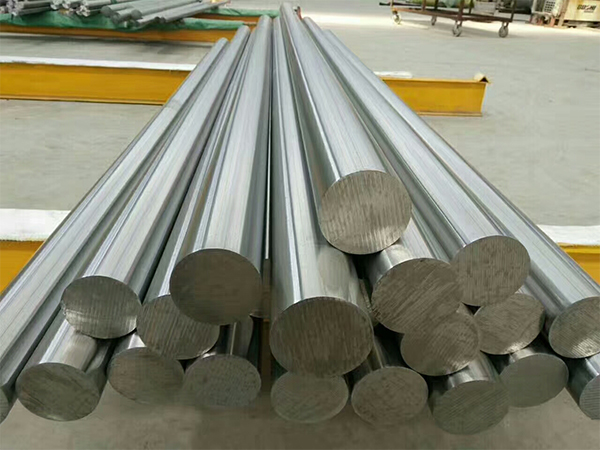
Hangbo Alloy Group supplies Hastelloy C-276 in round bars (Ø 6–300mm), seamless tubes (OD 6–273mm), plates/sheets (0.5–80mm), and custom forgings, all complying with ASTM B574/B619/B622/B626 as applicable.