
HANGBO ALLOY
Shanghai Hangbo Alloy Group Co., Ltd.
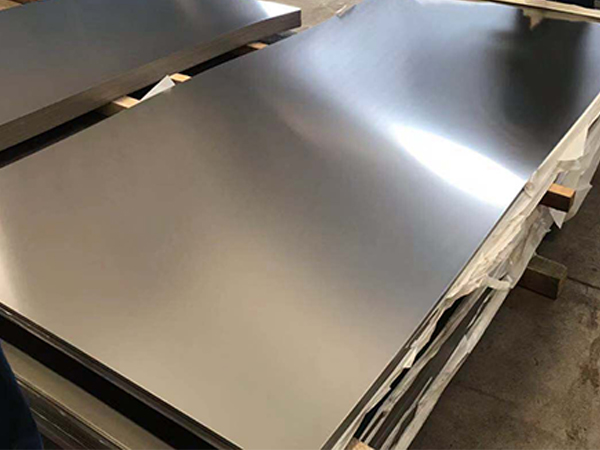
High-temperature sulfidation corrosion — also known as sulfidic corrosion — is one of the most destructive degradation mechanisms in petroleum refining, petrochemical processing, and power generation. It occurs when sulfur compounds (H₂S, mercaptans, elemental sulfur) react with metal surfaces at temperatures typically above 230°C (450°F), forming non-protective metal sulfide scales that spall, crack, and continuously expose fresh metal to attack.
Quick Answer: Nickel alloys with chromium contents above 20% — particularly Inconel 625 (UNS N06625), Hastelloy C-276 (UNS N10276), and Incoloy 825 (UNS N08825) — provide the best resistance to high-temperature sulfidation. The chromium forms a protective Cr₂O₃ oxide scale that acts as a diffusion barrier against sulfur ingress. Molybdenum additions further enhance resistance in mixed sulfidation/oxidation environments. For the most severe sulfidation conditions (above 450°C with high H₂S partial pressures), Inconel 625 weld overlay cladding on Cr-Mo steel vessels has become the industry standard in hydrocracker and hydrotreater reactors worldwide.
Shanghai Hangbo Alloy Group Co., Ltd. is a professional manufacturer and global exporter of nickel-based alloys, supplying round bars, seamless tubes, plates, strips, and forgings in all grades discussed in this article. This technical guide covers the sulfidation corrosion mechanism, alloy-by-alloy performance comparison, NACE MR0175/ISO 15156 compliance requirements, and modern application case studies for engineers and procurement professionals.
Sulfidation differs fundamentally from oxidation. In oxidation, most engineering alloys form protective chromium oxide (Cr₂O₃) or aluminum oxide (Al₂O₃) scales that are dense, adherent, and slow-growing — acting as effective diffusion barriers. In sulfidation, the metal sulfide scales (FeS, Ni₃S₂, Cr₂S₃) are typically:
The corrosion rate is primarily controlled by:
| Factor | Effect on Sulfidation Rate | Engineering Control |
|---|---|---|
| Temperature | Rate doubles approximately every 30°C above 260°C | Material upgrade at design stage |
| H₂S partial pressure | Rate increases with √(pH₂S) in H₂/H₂S environments | Chromium-rich alloys |
| Chromium content in alloy | Exponential decrease in rate with increasing Cr% | Select alloys with ≥20% Cr |
| Total sulfur in feedstock | Linear multiplier on base corrosion rate (per McConomy curves) | Feed desulfurization + alloy upgrade |
| Fluid velocity | Erosion-corrosion synergy at elbows, tees, valves | Increase wall thickness, upgrade material |
Engineer's Note: The McConomy curves (API RP 939-C) remain the industry's primary predictive tool for sulfidic corrosion rates in refinery environments. For a crude unit transfer line operating at 370°C with 1.5% sulfur feed, a 5Cr-0.5Mo steel corrodes at approximately 0.25–0.50 mm/year, while Inconel 625 exhibits negligible measurable loss (<0.01 mm/year) under identical conditions.
| Alloy | UNS No. | Cr% | Mo% | Max Temp for Sulfidation Service | Relative Resistance | Relevant ASTM Standard |
|---|---|---|---|---|---|---|
| Carbon Steel | — | — | — | 230°C | Baseline (worst) | ASTM A106 |
| 5Cr-0.5Mo | K41545 | 5 | 0.5 | 290°C | 2× carbon steel | ASTM A335 P5 |
| 9Cr-1Mo | K90941 | 9 | 1.0 | 340°C | 4× carbon steel | ASTM A335 P9 |
| 304 SS | S30400 | 18–20 | — | 400°C | 8–10× carbon steel | ASTM A312 TP304 |
| 316L SS | S31603 | 16–18 | 2–3 | 400°C | 8–10× carbon steel | ASTM A312 TP316L |
| Incoloy 825 | N08825 | 19.5–23.5 | 2.5–3.5 | 450°C | 15–20× carbon steel | ASTM B424 / B423 |
| Inconel 625 | N06625 | 20–23 | 8–10 | 540°C | 25–40× carbon steel | ASTM B443 / B444 |
| Hastelloy C-276 | N10276 | 14.5–16.5 | 15–17 | 500°C | 20–35× carbon steel | ASTM B575 / B622 |
| Inconel 718 | N07718 | 17–21 | 2.8–3.3 | 480°C | 18–25× carbon steel | ASTM B637 |
Data sources: API RP 939-C, NACE Publication 34103, ASM Handbook Vol. 13B, and Special Metals technical bulletins.
Engineer's Note: Chromium content is the single most important alloying element for sulfidation resistance — not molybdenum or nickel. An alloy with 20% Cr (Inconel 625) significantly outperforms one with 15% Cr (Hastelloy C-276) in pure sulfidation, even though C-276 has double the molybdenum. However, in mixed sulfidation/chloride environments (common in crude distillation overhead systems), the higher Mo content of C-276 provides better resistance to pitting and crevice corrosion.
Hydrocracking reactors operate at 380–450°C under hydrogen partial pressures of 10–20 MPa, with H₂S concentrations typically 1–5 vol%. The base metal is 2.25Cr-1Mo or 3Cr-1Mo steel for pressure containment, but the internal surface must resist both high-temperature sulfidation and hydrogen attack. The industry standard solution is Inconel 625 weld overlay cladding — typically 3–6 mm thick — applied by submerged arc welding (SAW) or electroslag welding (ESW).
| Parameter | Value |
|---|---|
| Base Metal | SA-387 Gr.22 Class 2 (2.25Cr-1Mo) |
| Cladding Alloy | Inconel 625 (ERNiCrMo-3 filler) |
| Cladding Thickness | 3.2 mm (first layer) + 3.2 mm (second layer) = 6.4 mm total |
| Operating Temperature | 420°C |
| Operating Pressure | 16.5 MPa H₂ partial pressure |
| H₂S Concentration | 3.5 vol% |
| Design Life | 30 years minimum |
| Inspection Interval | Every 5 years (UT thickness mapping) |
The Inconel 625 clad layer has demonstrated less than 0.05 mm metal loss after 15 years of service in multiple refinery case studies reported in NACE Conference Papers (CORROSION 2018, Paper No. 11167).
Floating Production Storage and Offloading (FPSO) vessels process high-H₂S associated gas in compact, high-velocity heat exchangers where sulfidation and erosion-corrosion act synergistically. In a major Southeast Asian FPSO project, the original 316L stainless steel tube bundles in sour gas coolers experienced through-wall penetration within 18 months at tube U-bends. The failure investigation (published in Corrosion Engineering, Science and Technology, 2021) identified the combined mechanism: high-temperature sulfidation (380°C inlet) weakening the protective Cr₂O₃ scale, followed by high-velocity gas flow (25 m/s) mechanically removing the sulfide layer.
The replacement specification called for Inconel 625 seamless tubes to ASTM B444 with a minimum wall thickness of 2.11 mm. After 5 years of continuous service, eddy current inspection confirmed no measurable wall loss. Shanghai Hangbo Alloy Group supplied the replacement tube bundles, which were U-bent, hydrostatically tested, and delivered with full Material Test Reports (MTRs) within 10 weeks.
Engineer's Note: For heat exchanger tubes in sulfidation service, always specify ASTM B444 (or B163 for broader alloy coverage) rather than B622. B444 includes mandatory eddy current or hydrostatic testing provisions that B622 does not require. The additional NDE cost is negligible compared to the cost of an unplanned shutdown.
For equipment exposed to H₂S-containing environments in oil and gas production, NACE MR0175/ISO 15156 Part 3 provides the governing material requirements for corrosion-resistant alloys (CRAs). Key compliance points for nickel alloys in sulfidation-prone service:
| Alloy | NACE MR0175/ISO 15156-3 Status | Maximum Hardness (HRC) | Maximum Temperature | Environmental Limits |
|---|---|---|---|---|
| Inconel 718 (solution annealed + aged) | Acceptable, Table A.42 | ≤40 HRC | 232°C | Any H₂S partial pressure; limited by aging temperature exposure |
| Inconel 625 (annealed) | Acceptable, Table A.29 | ≤35 HRC (annealed); ≤40 HRC (cold worked to 35% max) | 232°C | Any H₂S partial pressure; no limit on chloride concentration |
| Hastelloy C-276 (annealed) | Acceptable, Table A.26 | ≤35 HRC (annealed); ≤40 HRC (cold worked to 40% max) | 232°C | Any H₂S partial pressure; any chloride concentration |
| Incoloy 825 (annealed) | Acceptable, Table A.30 | ≤35 HRC (annealed); ≤40 HRC (cold worked to 45% max) | 232°C | Any H₂S partial pressure; any chloride concentration |
| Monel K-500 (aged) | Acceptable, Table A.43 | ≤35 HRC | 232°C | Any H₂S partial pressure; limited to non-oxidizing environments |
Critical rule: For all nickel alloys listed in NACE MR0175/ISO 15156-3, the maximum service temperature for sour environments is 232°C (450°F). This limit is based on the risk of environmentally assisted cracking at higher temperatures — not sulfidation corrosion resistance. Above 232°C, additional qualification testing per Annex B of ISO 15156-3 is required, or the component must be excluded from the sour service scope.
Shanghai Hangbo Alloy Group supplies all the above alloys in NACE-compliant conditions with certified hardness test results, grain size measurements, and full chemical analysis on every MTR. Our NACE-compliant products are marked with heat numbers traceable to the original mill certificates.
| Operating Condition | Recommended Alloy | Product Form | ASTM Standard | Estimated Service Life |
|---|---|---|---|---|
| T ≤ 290°C, low sulfur (<0.5%) | 5Cr-0.5Mo or 9Cr-1Mo | Seamless pipe | ASTM A335 P5/P9 | 10–15 years |
| 290–340°C, medium sulfur (0.5–2%) | Incoloy 825 | Seamless tube, plate | ASTM B423 / B424 | 15–20 years |
| 340–450°C, high sulfur (>2%) | Inconel 625 | Tube, plate, weld overlay | ASTM B444 / B443 | 25–30+ years |
| 340–450°C + chlorides present | Hastelloy C-276 | Tube, plate, sheet | ASTM B622 / B575 | 25–30+ years |
| 450–540°C, extreme sulfidation | Inconel 625 (solid or clad) | Weld overlay on Cr-Mo steel | ASTM B443 / ASME Sec IX | 20–25 years (inspect every 5) |
| Downhole sour gas, ≤232°C | Inconel 718 (aged) | Round bar, forging | ASTM B637 / API 6A | 15–20 years |
| Valve trim, high velocity + H₂S | Monel K-500 (aged) | Round bar | ASTM B865 | 10–15 years |
Engineer's Note: Never specify Inconel 625 and Hastelloy C-276 interchangeably in sulfidation service. While both are premium nickel alloys, Inconel 625's higher chromium content (20–23% vs. 14.5–16.5%) provides measurably better sulfidation resistance in H₂/H₂S environments above 400°C. Reserve C-276 for applications where chlorides or wet acid gases co-exist with H₂S, leveraging its exceptional pitting resistance (PREN ≥ 65 vs. PREN ≥ 50 for 625).
Welding nickel alloys for sulfidation service requires careful attention to avoid sensitization and ensure the weld metal matches the base metal's corrosion resistance:
Sulfidation corrosion becomes significant for carbon steel at approximately 230°C (450°F) and above, with the corrosion rate accelerating rapidly above 260°C. Below 230°C, the iron sulfide scale formed on carbon steel is sufficiently protective for most refinery applications. This is why carbon steel is acceptable for crude unit piping operating below this threshold, but must be upgraded to Cr-Mo or stainless steel alloys above it. Reference: API RP 939-C, Section 5.2.
Chromium forms Cr₂O₃ and, in sulfidizing environments, a Cr-rich sulfide/oxide mixed scale that is far more protective than nickel sulfide (Ni₃S₂). Nickel sulfides are highly defective, have a low melting eutectic (Ni-Ni₃S₂ at 635°C), and grow rapidly. This is why Inconel 625 (20–23% Cr, balance Ni) outperforms commercially pure nickel or low-chromium nickel alloys in sulfidation service, even though nickel is the base element. The Ni/Cr ratio is a useful screening parameter — alloys with Ni/Cr < 3 typically show good sulfidation resistance.
Yes — and this is a common value-engineering decision. Incoloy 825 (UNS N08825) with 19.5–23.5% Cr and 2.5–3.5% Mo provides excellent sulfidation resistance at temperatures up to approximately 450°C, at roughly 40–50% lower material cost than Inconel 625. Incoloy 825 is widely used for hydrotreater feed/effluent exchanger tubing, amine unit reboiler tubes, and sour water stripper overhead condensers. However, if the service temperature exceeds 450°C or if molybdenum-enhanced pitting resistance is needed, upgrade to Inconel 625. Shanghai Hangbo Alloy Group stocks both alloys in common tube and plate sizes and can assist with material selection based on your specific process conditions.
Sulfidation is a general corrosion mechanism — uniform metal loss caused by reaction with sulfur compounds at high temperature. Sulfide stress cracking (SSC) is a cracking mechanism — brittle failure of a stressed (or residually stressed) hard material in an H₂S-containing aqueous environment at relatively low temperatures (typically < 90°C). NACE MR0175/ISO 15156 primarily addresses SSC and other forms of environmentally assisted cracking, not sulfidation corrosion rates. A material can be NACE-compliant (resistant to SSC) but still suffer rapid sulfidation if the chromium content is insufficient for the operating temperature.
Shanghai Hangbo Alloy Group Co., Ltd. is an ISO 9001:2015 certified manufacturer and global exporter of nickel-based alloys, specializing in materials for high-temperature sulfidation service. Our product range includes:
Every shipment includes a full Material Test Report (MTR) with chemical analysis, mechanical properties, hardness testing, and NACE MR0175/ISO 15156 compliance certification where specified. Contact our technical team at hangbo@nickel-alloy.com or call +86-136-1165-6360 for material selection guidance, current pricing, and delivery timelines.
Disclaimer: This article provides general technical guidance only. Specific material selection for pressure-containing equipment must be performed by a qualified engineer in accordance with applicable codes (ASME BPVC, API, NACE) and based on the actual process conditions, fluid composition, and operating parameters of the specific installation.
Also published on nickel-alloy.com
Read more technical articles, alloy comparisons, and application guides from Shanghai Hangbo Alloy Group at nickel-alloy.com — our primary product and knowledge platform.
Contact our technical team for material selection advice, NACE-compliant product pricing, and delivery timelines. We respond within 10 minutes.
Request a Quote & Technical Datasheet →