
HANGBO ALLOY
Shanghai Hangbo Alloy Group Co., Ltd.
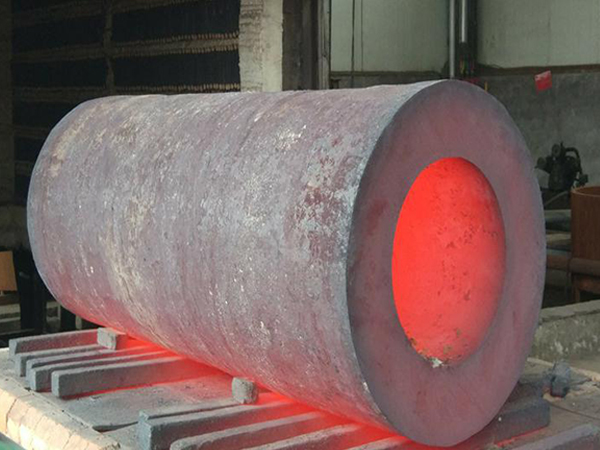
316L stainless steel is one of the most widely used corrosion-resistant alloys in the world — and for good reason: it is affordable, readily available, and performs well in mildly corrosive environments. However, in aggressive chloride, acidic, or high-temperature environments, 316L reaches its limits. Incoloy 825 (UNS N08825) is the logical upgrade — a nickel-iron-chromium alloy with molybdenum and copper additions that dramatically expand the corrosion resistance envelope.
This article helps engineers answer the critical question: When is it worth paying the premium for Incoloy 825 instead of specifying 316L?
| Element | 316L Stainless Steel | Incoloy 825 (UNS N08825) | Why It Matters |
|---|---|---|---|
| Nickel (Ni) | 10 – 14% | 38 – 46% | Ni improves chloride SCC resistance |
| Chromium (Cr) | 16 – 18% | 19.5 – 23.5% | Cr forms passive oxide film |
| Molybdenum (Mo) | 2 – 3% | 2.5 – 3.5% | Mo resists pitting and crevice corrosion |
| Copper (Cu) | — | 1.5 – 3.0% | Cu improves resistance to reducing acids (H₂SO₄) |
| Titanium (Ti) | — | 0.6 – 1.2% | Ti stabilizes against intergranular corrosion |
| Iron (Fe) | Balance (~65%) | ≥ 22% (balance is Ni) | Ni-based matrix vs Fe-based matrix |
The key architectural difference: 316L has an iron-based matrix with nickel as an alloying addition, while Incoloy 825 is nickel-iron-chromium — its nickel content (38–46%) is high enough to behave fundamentally differently in chloride and acidic environments.
The Pitting Resistance Equivalent Number (PREN) is the standard metric for comparing localized corrosion resistance:
| Alloy | PREN Range | Classification |
|---|---|---|
| 316L | 23 – 28 | Moderate pitting resistance |
| Incoloy 825 | 28 – 35 | Good to very good (depends on Cu & Ti bonus) |
| Inconel 625 | 46 – 52 | Excellent — for reference |
Incoloy 825's PREN advantage over 316L translates directly to better performance in chloride-containing environments such as seawater splash zones, brackish water, and chemical process streams with chlorides.
This is the #1 failure mode where 316L falls short and Incoloy 825 excels:
Real-world scenario: A chemical plant replaced 316L reboiler tubes with Incoloy 825 after experiencing SCC failures every 8–12 months. The Incoloy 825 tubes have been in service for 5+ years with zero failures — paying back the material premium within the first year of avoided shutdowns.
| Environment | 316L | Incoloy 825 |
|---|---|---|
| Sulfuric Acid (H₂SO₄) — dilute, warm | Poor | Good (Cu addition helps) |
| Phosphoric Acid (H₃PO₄) — all concentrations | Poor to Fair | Good — widely used in phosphoric acid plants |
| Hydrochloric Acid (HCl) | Poor | Limited — use Hastelloy C-276 for HCl |
| Nitric Acid (HNO₃) | Good | Good |
| Organic Acids (acetic, formic) | Fair | Good |
Incoloy 825 typically costs 3× to 5× the price of 316L on a per-kilogram basis. However, the total cost of ownership (TCO) often favors Incoloy 825 when you factor in:
Upgrading to Incoloy 825 is not always necessary. Stick with 316L when:
Make the upgrade when any of the following apply:
Hangbo Alloy Group stocks Incoloy 825 in all product forms — round bars, seamless tubes (ASTM B163/B423), plates and sheets (ASTM B424), and forgings. We also provide 316L for less demanding applications. Contact our technical sales team for a material recommendation specific to your process conditions.
Also published on nickel-alloy.com
Read more technical articles, alloy comparisons, and application guides from Shanghai Hangbo Alloy Group at nickel-alloy.com — our primary product and knowledge platform.
Contact our technical team for material selection advice, pricing, and delivery timelines. We respond within 10 minutes.
Request a Quote & Technical Datasheet →