
Hangbo Alloy Group
Shanghai · Est. 2012
310S (UNS S31008, ASTM A240) vs GH2747 (GB/T 14992) — a detailed comparison of two Fe-based heat-resistant alloys: chemical composition, Al2O3 vs Cr2O3 oxidation protection, service life, mechanical properties, and cost-effectiveness for furnace and structural applications.
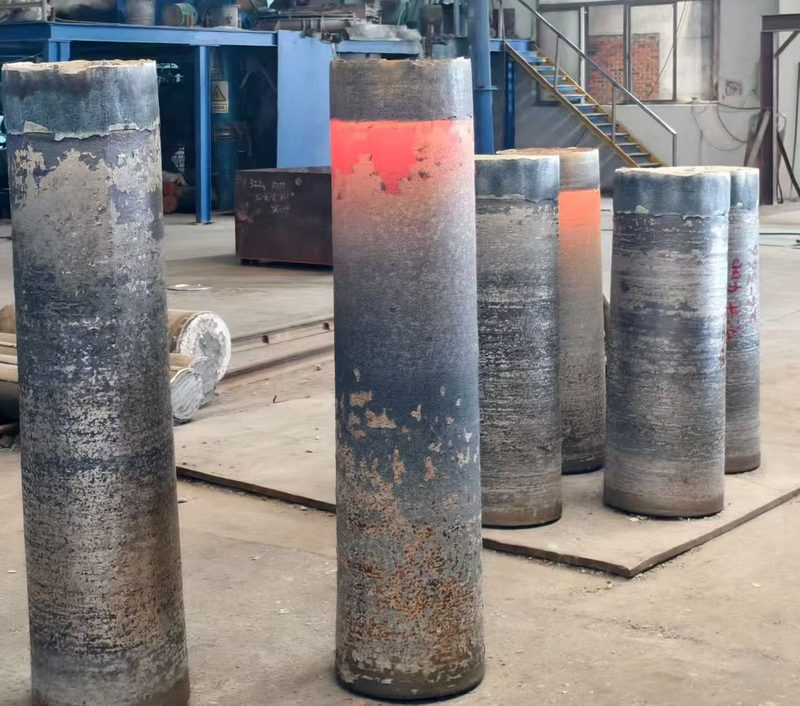
When you need a material that survives years of service inside a 1000°C furnace without falling apart, the choice often comes down to this: 310S or GH2747. Both are iron-based, both are austenitic, both are designed for high-temperature service. But they protect themselves from oxidation in fundamentally different ways — and that difference has enormous practical consequences for service life, replacement frequency, and total cost of ownership.
310S (UNS S31008) is an internationally standardized austenitic stainless steel per ASTM A240, with 24-26% chromium and 19-22% nickel. It forms a Cr2O3 protective scale and is the go-to heat-resistant stainless steel for furnace construction worldwide. GH2747 (per GB/T 14992-2005, formerly designated GH747) is a Chinese-developed Fe-Ni-Cr-Al superalloy with 44-46% nickel, 15-17% chromium, and 2.9-3.9% aluminum. The aluminum is the game-changer — it forms an Al2O3 film that is significantly more protective than Cr2O3 at temperatures above 1000°C.
In this article, we put these two alloys head-to-head using standard reference data: ASTM A240 for 310S and GB/T 14992 for GH2747. The goal is to give engineers and procurement teams a clear, data-driven basis for choosing between them.
The most important compositional difference between these two alloys is right there in the chemistry table: GH2747 contains aluminum, and 310S does not. This single element changes everything about how the alloy protects itself at high temperature.
| Element | 310S (ASTM A240) | GH2747 (GB/T 14992) | Key Difference |
|---|---|---|---|
| Chromium (Cr) | 24.0 – 26.0% | 15.0 – 17.0% | 310S has ~60% more Cr |
| Nickel (Ni) | 19.0 – 22.0% | 44.0 – 46.0% | GH2747 has ~2× more Ni |
| Aluminum (Al) | — | 2.9 – 3.9% | GH2747 only — forms Al2O3 |
| Iron (Fe) | Balance | Balance | Both are Fe-based |
| Carbon (C) | ≤ 0.08% | ≤ 0.10% | Similar; both low-carbon |
| Silicon (Si) | ≤ 1.00% | ≤ 1.00% | Identical limit |
| Manganese (Mn) | ≤ 2.00% | ≤ 1.00% | 310S allows more Mn |
| Phosphorus (P) | ≤ 0.045% | ≤ 0.025% | GH2747 tighter P control |
| Sulfur (S) | ≤ 0.030% | ≤ 0.020% | GH2747 tighter S control |
| Cerium (Ce) | — | ≤ 0.03% | GH2747 only; rare earth |
Let us break down what each element does:
This is the heart of the comparison. Both alloys rely on forming a thin, adherent oxide scale on their surface to prevent further oxidation of the underlying metal. But the type of oxide they form, and how it behaves at extreme temperatures, is fundamentally different.
310S forms a chromium oxide (Cr2O3) scale. At temperatures up to about 950-1000°C, this is an excellent protective film — dense, adherent, and slow-growing. However, above approximately 1000-1050°C, Cr2O3 begins to oxidize further to form volatile CrO3 gas. This volatilization causes the protective scale to thin and eventually fail, leading to accelerated material loss. The higher the temperature, the faster the Cr2O3 scale is consumed by volatilization.
GH2747 forms a composite oxide scale: an outer Cr2O3 layer with an inner Al2O3 layer. The Al2O3 layer is the key advantage. Aluminum oxide is:
| Temperature | 310S Oxidation Rate (mg/cm²/h) | GH2747 Oxidation rate (mg/cm²/h) | Advantage |
|---|---|---|---|
| 900°C | ~0.02 | ~0.01 | GH2747 ~2× better |
| 1000°C | ~0.08 | ~0.03 | GH2747 ~2.7× better |
| 1100°C | ~0.25 | ~0.06 | GH2747 ~4× better |
| 1200°C | Rapid scale failure | ~0.15 | GH2747 far superior |
The advantage of GH2747 grows dramatically as temperature increases. At 900°C, the oxidation rates are comparable and both alloys perform well. But at 1100°C, GH2747's oxidation rate is approximately 4 times slower than 310S. This translates directly to service life: in industrial furnace applications at 1000-1100°C, GH2747 components have been reported to last 3 to 5 times longer than equivalent 310S (2Cr25Ni20-type) components in the same environment.
| Property | 310S (ASTM A240) | GH2747 (GB/T 14992) |
|---|---|---|
| Density | 7.98 g/cm³ (0.288 lb/in³) | ~7.90 g/cm³ (0.285 lb/in³) |
| Melting Range | 1400 – 1450°C (2550 – 2640°F) | ~1380 – 1420°C (2516 – 2588°F) |
| Modulus of Elasticity (RT) | ~193 GPa | ~190 GPa |
| Mean CTE (20–800°C) | ~18.7 µm/m·°C | ~16.5 µm/m·°C |
| Thermal Conductivity (RT) | ~14.2 W/m·K | ~13.5 W/m·K |
| Electrical Resistivity (RT) | ~0.78 µΩ·m | ~0.95 µΩ·m |
| Magnetic Property | Non-magnetic (austenitic) | Non-magnetic (austenitic) |
| Crystal Structure | FCC Austenite | FCC Austenite |
Physically, the two alloys are quite similar — both are austenitic (FCC) and non-magnetic. GH2747 is slightly lighter due to its aluminum content, and has a lower coefficient of thermal expansion (CTE), which is advantageous for thermal cycling resistance — less expansion means less thermal stress on the oxide scale, contributing to better scale retention.
Neither of these alloys is chosen for its mechanical strength — both are primarily oxidation-resistant materials. However, GH2747 does offer meaningfully better mechanical properties than 310S, especially at elevated temperatures, thanks to its higher nickel content.
| Property | 310S (Annealed) | GH2747 (Solution Treated) |
|---|---|---|
| Tensile Strength | ≥ 515 MPa | ~800 – 1000 MPa |
| Yield Strength (0.2%) | ≥ 205 MPa | ~500 – 700 MPa |
| Elongation | ≥ 40% | ~15 – 25% |
| Hardness | ≤ 95 HRB (~200 HB) | ~250 – 290 HB |
| Temperature | 310S Tensile (MPa) | GH2747 Tensile (MPa) | 310S Yield (MPa) | GH2747 Yield (MPa) |
|---|---|---|---|---|
| 21°C (RT) | 515 | ~900 | 205 | ~600 |
| 500°C | ~420 | ~750 | ~170 | ~500 |
| 700°C | ~250 | ~600 – 700 | ~130 | ~400 |
| 800°C | ~180 | ~400 | ~100 | ~250 |
| 1000°C | ~60 | ~100 | ~35 | ~60 |
GH2747 maintains roughly 2-3 times the strength of 310S across the entire temperature range. At 700°C — a critical temperature for furnace structural components — GH2747 retains tensile strength of 600-700 MPa versus only ~250 MPa for 310S. This means that for load-bearing furnace structures operating at 600-800°C, GH2747 components can be designed with thinner sections, reducing weight and material cost.
This is where the aluminum advantage of GH2747 pays off in real money. Multiple Chinese industrial sources report that in continuous high-temperature service (1000-1100°C, oxidizing atmosphere), GH2747 furnace components last approximately 3 to 5 times longer than equivalent components made from 2Cr25Ni20-type stainless steel (the Chinese equivalent of 310S).
| Service Environment | 310S Typical Life | GH2747 Typical Life | Life Ratio |
|---|---|---|---|
| 800°C, continuous oxidation | 5 – 8 years | 10 – 15+ years | ~2× |
| 1000°C, continuous oxidation | 1 – 3 years | 5 – 10 years | ~3 – 4× |
| 1100°C, continuous oxidation | 0.5 – 1 year | 3 – 5 years | ~4 – 5× |
| 1000°C, thermal cycling | 0.5 – 2 years | 3 – 6 years | ~3 – 5× |
Note: Actual service life depends on specific conditions including temperature uniformity, atmosphere composition, thermal cycling frequency, and component design. These ranges are based on reported industrial experience and should be used as general guidance only.
| Welding Parameter | 310S | GH2747 |
|---|---|---|
| Overall Weldability | Good Easier | Acceptable |
| Recommended Process | TIG, MIG, SMAW | TIG (preferred), SMAW |
| Filler Metal | ER310 (matching) | Ni-based filler (ERNiCr-3 or similar) |
| Pre-weld Condition | Solution annealed | Solution treated (1000-1200°C/AC) |
| Post-Weld Treatment | Not typically required | Solution treatment recommended |
| HAZ Concern | Sensitization (carbide precipitation) | Aluminum oxidation in HAZ |
| Shielding Gas | Standard Ar/Ar+He | High-purity Ar (critical for Al protection) |
310S is the easier of the two to weld — it is a standard austenitic stainless steel and follows conventional welding procedures. GH2747's high aluminum content makes welding slightly more challenging: the aluminum can oxidize in the heat-affected zone if shielding gas coverage is not adequate, and the higher nickel content requires nickel-based filler metals for optimal joint properties. Both alloys should be welded in the solution-annealed condition.
| Application | 310S | GH2747 | Recommendation |
|---|---|---|---|
| Furnace Heating Elements | Good | Excellent | GH2747 for >1000°C + |
| Furnace Chamber Walls | Good | Excellent | GH2747 for longer life + |
| Radiant Tubes | Good | Excellent | GH2747 for >1000°C + |
| Heat Treatment Baskets | Good | Good | 310S for cost savings + |
| Burner Nozzles | Good | Excellent | GH2747 for >1000°C + |
| High-Temp Structural Supports | Limited (>700°C) | Good (to 800°C) | GH2747 + |
| Combustion Chamber Shells | Good | Excellent | GH2747 + |
| Large Furnace Tubes | Good | Excellent | GH2747 for life + |
| Petrochemical Furnace Tubes | Standard choice | Alternative (if GB accepted) | 310S (ASTM spec'd) + |
| Heat Exchanger Tubes | Standard choice | Alternative | 310S (ASTM spec'd) + |
The pattern is clear: GH2747 wins in high-temperature, oxidation-dominated applications above 1000°C where its Al2O3 film provides longer life. 310S remains the preferred choice where ASTM-standard material is specified (international projects, petrochemical industry standards) or where the temperature is below 950°C and 310S's lower cost and easier availability are advantageous.
| Cost Factor | 310S | GH2747 |
|---|---|---|
| Material Cost (per kg) | 1.0 × (baseline) Cheaper | 1.5 – 2.5 × |
| Nickel Content Cost Driver | 19-22% Ni | 44-46% Ni (2× more) |
| Aluminum Addition | None | 2.9-3.9% Al (additional cost) |
| Standardization | ASTM (global) | GB/T (China-focused) |
| Availability | Widely available globally + | Available from Chinese mills |
| Expected Service Life (1000°C) | 1 – 3 years | 5 – 10 years |
| Life-Cycle Cost (10 yr, 1000°C) | 3 – 5 replacements × cost | 1 – 2 replacements × cost |
| Downtime Cost | Higher (frequent replacement) | Lower (longer intervals) + |
While GH2747 costs 1.5-2.5 times more per kilogram, its 3-5 times longer service life in high-temperature environments makes it the more economical choice on a life-cycle basis for critical furnace components operating above 1000°C. The savings come not just from reduced material purchases, but also from less frequent shutdowns, lower replacement labor costs, and reduced production downtime.
| Property | 310S (UNS S31008) | GH2747 (GB/T 14992) | Winner |
|---|---|---|---|
| Standard | ASTM A240 | GB/T 14992-2005 | — |
| Alloy Type | Fe-Cr-Ni Austenitic SS | Fe-Ni-Cr-Al Superalloy | — |
| Density (g/cm³) | 7.98 | ~7.90 | GH2747 (lighter) + |
| Melting Range (°C) | 1400-1450 | ~1380-1420 | 310S (higher) + |
| RT Yield Strength (MPa) | ≥ 205 | ~500-700 | GH2747 (2.5-3×) + |
| 700°C Tensile (MPa) | ~250 | ~600-700 | GH2747 (2.5×) + |
| Oxide Film Type | Cr2O3 | Al2O3+Cr2O3 | GH2747 + |
| Oxidation Rate at 1100°C | ~0.25 mg/cm²/h | ~0.06 mg/cm²/h | GH2747 (4×) + |
| Service Life at 1000°C | 1-3 years | 5-10 years | GH2747 (3-5×) + |
| Weldability | Good | Acceptable | 310S + |
| Material Cost | 1.0 × | 1.5-2.5 × | 310S + |
| Life-Cycle Cost (1000°C) | Higher (frequent replacement) | Lower (long life) + | GH2747 + |
| International Availability | Excellent | Limited (Chinese mills) | 310S + |
Hangbo Alloy Group is an ISO 9001 certified manufacturer and supplier of 310S stainless steel and GH2747 superalloy products. We supply plate, bar, pipe, tube, and custom forgings for high-temperature furnace, petrochemical, and aerospace applications. All material shipped with full mill test certificates (MTC) per ASTM/GB standards.
Response within 24 hours • ISO 9001:2015 Certified • Worldwide Shipping
GH2747 (formerly designated GH747) is a Fe-Ni-Cr based solid-solution strengthened superalloy developed and standardized in China. It is covered under GB/T 14992-2005 (Classification and designation of superalloys and intermetallic high-temperature materials). Its chemical composition per GB/T 14992: Cr 15-17%, Ni 44-46%, Al 2.9-3.9%, C max 0.10%, Fe balance. The alloy is known for exceptional oxidation resistance up to 1100°C due to the formation of a composite Al2O3+Cr2O3 protective film, and is widely used in Chinese industrial furnace and aerospace applications.
310S (ASTM A240, UNS S31008): Cr 24-26%, Ni 19-22%, C max 0.08%, Fe balance, no aluminum. GH2747 (GB/T 14992): Cr 15-17%, Ni 44-46%, Al 2.9-3.9%, C max 0.10%, Fe balance. The key compositional difference is aluminum: GH2747 contains 2.9-3.9% Al which forms a protective Al2O3 film at high temperatures, while 310S has zero aluminum and relies entirely on Cr2O3. GH2747 also has significantly more nickel (44-46% vs 19-22%), providing better high-temperature structural stability, while 310S has higher chromium (24-26% vs 15-17%) for its own type of oxidation protection.
GH2747 has superior long-term oxidation resistance above 1000°C. While 310S forms a Cr2O3 film that is effective up to about 1100°C, GH2747 forms a composite Al2O3+Cr2O3 film that is significantly more stable and slower-growing at temperatures above 1000°C. Al2O3 has a slower growth rate and better adhesion than Cr2O3 at extreme temperatures, which means less material loss over time. In practical industrial furnace applications, GH2747 components have been reported to last 3-5 times longer than equivalent 310S (2Cr25Ni20-type) components in the same high-temperature oxidizing environment.
Both alloys are rated for continuous oxidation service up to approximately 1100°C. However, GH2747's Al2O3-based protective film provides more reliable long-term protection at the upper end of this range (1000-1100°C), where 310S's Cr2O3 film begins to show accelerated volatilization as CrO3. For structural load-bearing applications, GH2747 is typically rated for service up to 750-800°C, while 310S is limited to about 600-700°C due to its lower high-temperature strength. In pure oxidation environments (no significant load), both alloys can be used up to 1100°C.
310S has a density of 7.98 g/cm³. GH2747 has a density of approximately 7.90 g/cm³. GH2747 is slightly lighter than 310S, which is advantageous for large furnace structures where weight reduction is desired. The lower density of GH2747 is due to its higher aluminum content (2.9-3.9%) — aluminum is one of the lightest metallic elements — and its lower chromium content compared to 310S.
310S has a melting range of approximately 1400-1450°C (2550-2640°F) per ASTM A240 data. GH2747 has a melting range of approximately 1380-1420°C (2516-2588°F). The melting ranges are similar, with 310S having a slightly higher upper limit due to its higher chromium content. Both alloys maintain good dimensional stability in the solid state well below their melting points, which is important for furnace component integrity.
GH2747 has significantly better mechanical strength than 310S at elevated temperatures. At room temperature, GH2747 achieves tensile strength of approximately 800-1000 MPa vs 515 MPa for 310S. At 700°C, GH2747 retains tensile strength of approximately 600-700 MPa, while 310S drops to roughly 250 MPa. GH2747's higher nickel content (44-46%) provides superior solid-solution strengthening of the austenitic matrix at elevated temperatures. However, both alloys are primarily used for oxidation resistance rather than load-bearing strength — for high-strength applications, nickel-based superalloys like Inconel 718 would be preferred.
Yes, both alloys can be welded, but with different considerations. 310S has good weldability using standard TIG, MIG, and SMAW processes with ER310 filler metal. The main concern is controlling interpass temperature to avoid sensitization. GH2747 also has acceptable weldability — it can be welded in the solid-solution condition using nickel-based filler metals. However, the high aluminum content (2.9-3.9%) in GH2747 can make the heat-affected zone somewhat more prone to oxidation during welding, requiring proper shielding gas coverage. Both alloys should be welded in the solution-annealed condition.
310S is widely used internationally in furnace components, heat treatment baskets, radiant tubes, heat exchangers, burner nozzles, and petrochemical furnace tubes per ASTM standards. GH2747 is primarily used in China for similar high-temperature applications: industrial furnace heating elements, furnace chamber structural components, combustion chamber shells, gas turbine hot-end components, large furnace tubes, and high-temperature support structures. GH2747 is particularly favored in Chinese domestic manufacturing where GB/T standards are preferred and where the longer service life (3-5x vs 310S) justifies the higher initial material cost.
GH2747 is typically 1.5 to 2.5 times more expensive than 310S per kilogram. The higher cost reflects GH2747's significantly higher nickel content (44-46% vs 19-22%) and the addition of aluminum (2.9-3.9%). However, when evaluated on a life-cycle cost basis, GH2747 can be more economical because its service life in high-temperature oxidation environments is reportedly 3-5 times longer than 310S. The reduced frequency of replacement, lower downtime, and less maintenance labor can make GH2747 the better long-term investment for critical high-temperature furnace components.
310S requires only a simple solution annealing treatment at 1030-1150°C followed by rapid cooling (water quench or air cool) to ensure full austenite structure and dissolve any carbides. No precipitation hardening is possible. GH2747 is supplied in the solid-solution treated condition, typically solution annealed at 1000-1200°C and air cooled per GB/T 14992. Like 310S, GH2747 is primarily solid-solution strengthened and does not require aging treatment. The high aluminum in GH2747 provides oxidation protection through Al2O3 film formation during service, not through precipitation strengthening.
GH2747 does not have a direct equivalent in ASTM or AMS standards. It is a Chinese-developed Fe-Ni-Cr-Al superalloy unique to the GB/T standard system. In terms of performance, it occupies a position between 310S (inferior oxidation) and Inconel 601/617 (comparable oxidation but higher cost). The closest Western analog would be certain alumina-forming austenitic (AFA) stainless steels under development, but these are not yet standardized under ASTM. For international projects requiring ASTM-certified material, Inconel 601 (UNS N06601) or Alloy 602CA (UNS N06025) are the closest commercially available alternatives with similar Al2O3-forming oxidation protection.