
Hangbo Alloy Group
Shanghai · Est. 2012
Inconel 600 (UNS N06600, ASTM B168) vs Inconel 601 (UNS N06601, ASTM B168) — a detailed technical comparison of chemical composition, oxidation and carburization resistance, mechanical properties, and application selection for furnace, heat treatment, and chemical processing industries.
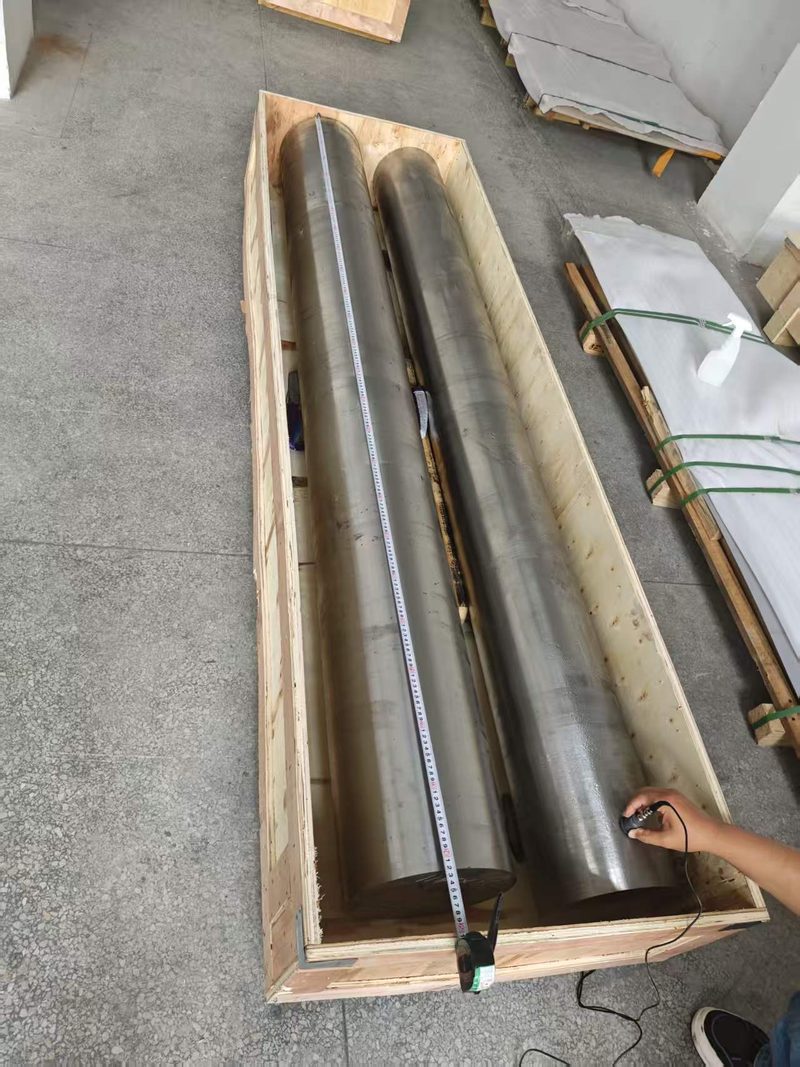
Inconel 600 and Inconel 601 sound like they should be almost the same — they share the same ASTM B168 specification, the same nickel-chromium-iron family, and visually they are indistinguishable. But in the furnace, at 1100°C, the difference becomes dramatic. Inconel 601 was specifically designed to outperform Inconel 600 in high-temperature oxidation. It achieves this through a seemingly small but metallurgically profound change: higher chromium plus a deliberate aluminum addition.
Inconel 600 is the classic general-purpose nickel-chromium alloy. With ≥72% nickel and 14-17% chromium, it has been the standard for caustic service, nuclear steam generator tubing, and moderate-temperature furnace components since the 1950s. Inconel 601, introduced later, sacrifices some of that nickel (down to 58-63%) and redirects the chemistry toward oxidation performance: 21-25% chromium and 1.0-1.7% aluminum. The aluminum forms a sub-surface Al2O3 layer beneath the Cr2O3 scale, creating a dual-layer oxidation barrier that extends the maximum service temperature by nearly 100°C compared to 600.
This article provides a data-driven comparison based on ASTM B168 standard values and published technical data. If you are selecting between these two alloys for a furnace, heat treatment, or chemical processing application, here is everything you need to know.
The chemistry difference between 600 and 601 is elegantly simple: 601 trades about 10% nickel for 7% more chromium and 1.4% aluminum. This swap transforms the oxidation behavior completely while maintaining the same nickel-based austenitic matrix.
| Element | Inconel 600 (ASTM B168) | Inconel 601 (ASTM B168) | Key Difference |
|---|---|---|---|
| Nickel (Ni) | ≥ 72.0% | 58.0 – 63.0% | 600 has ~13% more Ni + |
| Chromium (Cr) | 14.0 – 17.0% | 21.0 – 25.0% | 601 has ~8% more Cr + |
| Aluminum (Al) | — | 1.0 – 1.7% | 601 only; key for Al2O3 + |
| Iron (Fe) | 6.0 – 10.0% | Balance (~14%) | 601 has more Fe |
| Carbon (C) | ≤ 0.15% | ≤ 0.10% | 601 slightly lower C |
| Manganese (Mn) | ≤ 1.0% | ≤ 1.0% | Same |
| Silicon (Si) | ≤ 0.50% | ≤ 0.50% | Same |
| Copper (Cu) | ≤ 0.50% | ≤ 1.0% | 601 allows more Cu |
| Sulfur (S) | ≤ 0.015% | ≤ 0.015% | Same |
The aluminum in 601 is the game-changer. During high-temperature oxidation, it diffuses to the surface and forms a thin, tightly adherent Al2O3 layer underneath the Cr2O3 scale. This dual-layer protection is far more effective than chromium oxide alone — Al2O3 has a much lower diffusion coefficient for oxygen, meaning it acts as a more effective barrier. This is the same principle used in advanced FeCrAl heating element alloys, adapted into a weldable, fabricable nickel alloy.
| Property | Inconel 600 | Inconel 601 |
|---|---|---|
| Density | 8.47 g/cm³ (0.306 lb/in³) | 8.11 g/cm³ (0.293 lb/in³) |
| Melting Range | 1354 – 1413°C | 1360 – 1411°C |
| Modulus of Elasticity (RT) | 207 GPa | 207 GPa |
| Mean CTE (20–100°C) | 13.3 µm/m·°C | 13.3 µm/m·°C |
| Mean CTE (20–800°C) | 16.5 µm/m·°C | 16.1 µm/m·°C |
| Thermal Conductivity (RT) | 14.9 W/m·K | 11.2 W/m·K |
| Specific Heat (RT) | 444 J/kg·K | 448 J/kg·K |
| Electrical Resistivity (RT) | 1.03 µΩ·m | 1.19 µΩ·m |
The physical properties are very similar, as expected for two alloys in the same family. 601 is about 4.3% lighter than 600 (8.11 vs 8.47 g/cm³) because it replaces some high-density nickel with lighter chromium and aluminum. The thermal expansion and modulus values are nearly identical, meaning components can often be interchanged dimensionally. The lower thermal conductivity of 601 (11.2 vs 14.9 W/m·K at RT) can be a minor consideration in heat exchanger design but is rarely decisive.
Both alloys are solid-solution strengthened; neither is precipitation-hardenable. The mechanical properties are comparable, and this is not typically the deciding factor between them.
| Property | Inconel 600 | Inconel 601 | Comparison |
|---|---|---|---|
| Tensile Strength | ≥ 550 MPa (80 ksi) | ≥ 550 MPa (80 ksi) | Equivalent |
| Yield Strength (0.2%) | ≥ 240 MPa (35 ksi) | ≥ 205 MPa (30 ksi) | 600 slightly higher |
| Elongation | ≥ 30% | ≥ 30% | Equivalent |
| Hardness | ≤ 95 HRB | ≤ 95 HRB | Equivalent |
| Temperature | Inconel 600 | Inconel 601 | Note |
|---|---|---|---|
| Room Temperature | ~620 | ~620 | Same |
| 400°C | ~550 | ~530 | Similar |
| 600°C | ~420 | ~430 | 601 slightly better |
| 800°C | ~150 | ~180 | 601 retains strength |
| 1000°C | ~40 | ~50 | 601 slightly better |
The mechanical performance is close enough that your choice should be driven by oxidation requirements, not strength. At very high temperatures (above 800°C), 601 maintains marginally better strength due to the stabilizing effect of its oxide layers and slightly better microstructural stability.
This is where the two alloys diverge in a way that directly impacts service life. The difference in oxidation resistance is the primary reason for choosing 601 over 600.
| Oxidation Parameter | Inconel 600 | Inconel 601 | Winner |
|---|---|---|---|
| Continuous Service Max Temp | ~1095°C (2000°F) | ~1180°C (2155°F) | 601 +85°C |
| Intermittent Service Max | ~1150°C | ~1260°C (2300°F) | 601 +110°C |
| Protective Oxide | Cr2O3 only | Cr2O3 + Al2O3 subscale | 601 dual-layer + |
| Scale Spallation | Moderate | Good | 601 + |
| Thermal Cycling (1000°C) | Moderate spalling | Low spalling | 601 + |
| Weight Loss at 1100°C/1000h | ~15-25 mg/cm² | ~3-8 mg/cm² | 601 3x better + |
The aluminum in 601 makes all the difference. At 1100°C, 601 loses metal at roughly one-third the rate of 600. This translates directly to longer component life or the ability to use thinner wall sections for the same design life. In cyclic conditions where the furnace heats and cools repeatedly, 601's Al2O3 subscale resists spalling far better than the pure Cr2O3 scale on 600, which tends to crack and flake off during thermal cycling.
| Carburization Condition | Inconel 600 | Inconel 601 | Winner |
|---|---|---|---|
| General Carburizing Atmosphere | Fair to Good | Excellent | 601 Clear |
| Endothermic Gas (heat treating) | Moderate | Good | 601 + |
| Petrochemical Cracking (800°C) | Moderate to Poor | Good | 601 + |
| Carbon Penetration Depth (1000h) | Deeper | Shallower | 601 + |
Carburization — the diffusion of carbon into the alloy at high temperature, causing embrittlement and loss of ductility — is a major failure mechanism for furnace components. 601's higher chromium content and aluminum addition create a more effective barrier against carbon ingress. In heat treatment furnaces using endothermic atmospheres, 601 components consistently outlast 600 equivalents.
While both alloys are primarily selected for high-temperature oxidation, they also see chemical process service. Here, the higher nickel content of 600 gives it the edge in certain environments.
| Environment | Inconel 600 | Inconel 601 | Winner |
|---|---|---|---|
| Caustic Soda (NaOH), <80% | Excellent | Good | 600 + |
| Chloride SCC Resistance | Excellent | Good to Excellent | 600 Slight |
| Nitric Acid (HNO3) | Good | Excellent | 601 + |
| Sulfur-Containing Gases (SO2) | Fair | Fair to Good | 601 Slight |
| Neutral Salts (Molten) | Good | Good | Tie |
For caustic service (NaOH), Inconel 600 remains the preferred grade due to its high nickel content, which provides excellent resistance to caustic stress corrosion cracking. For nitric acid and other strongly oxidizing environments, 601's high chromium content gives it the advantage. In most furnace and heat treatment applications, the atmosphere is oxidizing or carburizing rather than chemically aggressive, so 601's oxidation advantage dominates the selection decision.
| Welding Parameter | Inconel 600 | Inconel 601 |
|---|---|---|
| Overall Weldability | Very Good | Very Good |
| Recommended Process | GTAW, GMAW, SMAW | GTAW, GMAW, SMAW |
| Filler Metal | ERNiCr-3 (AWS A5.14) | ERNiCrFe-11 (AWS A5.14) |
| Preheat | Not required | Not required |
| Post-Weld Heat Treat | Not typically required | Not typically required |
| Hot Cracking Risk | Low | Low |
| Interpass Temperature | ≤ 150°C | ≤ 150°C |
Both alloys weld similarly and well. Standard TIG and MIG processes with matching filler metals produce sound welds. Proper pre-weld cleaning to remove oils and oxides is important. No post-weld heat treatment is typically needed for corrosion or oxidation resistance, although stress relief may be applied for dimensional stability in precision components.
| Application Area | Inconel 600 | Inconel 601 |
|---|---|---|
| Heat Treat Baskets & Fixtures | Good (to ~1050°C) | Excellent Preferred |
| Furnace Radiant Tubes | Good (to ~1050°C) | Excellent Preferred |
| Furnace Muffles | Moderate | Excellent Preferred |
| Burner Nozzles | Good | Excellent Preferred |
| Thermocouple Sheaths | Good (general) | Excellent (high temp) Preferred |
| Caustic Soda Processing | Excellent Preferred | Good |
| Nuclear Steam Generators | Excellent Preferred | Not typically used |
| Petrochemical Furnace Tubes | Good (moderate temp) | Excellent Preferred |
| Spark Plug Electrodes | Good | Excellent Preferred |
| Food Processing Equipment | Excellent Preferred | Good |
| Cost Factor | Inconel 600 | Inconel 601 |
|---|---|---|
| Relative Material Cost (per kg) | 1.0 × Cheaper | 1.10-1.15 × |
| Raw Material Drivers | High Ni (≥72%) | High Cr (21-25%) + Al |
| Typical Plate Price (2026 est.) | $30–45/kg | $33–50/kg |
| Availability | Excellent Widely stocked | Very Good |
The price difference is modest — roughly 10-15%. Given that 601 typically provides significantly longer service life in high-temperature oxidation service, the total cost of ownership (purchase price + downtime + replacement labor) usually favors 601 for furnace applications. For chemical service where oxidation is not the limiting factor, 600's lower cost makes it the more economical choice.
| Property | Inconel 600 (N06600) | Inconel 601 (N06601) | Winner |
|---|---|---|---|
| Standard | ASTM B168 | ASTM B168 | — |
| Ni Content | ≥ 72% | 58-63% | 600 + |
| Cr Content | 14-17% | 21-25% | 601 + |
| Aluminum | None | 1.0-1.7% | 601 key advantage + |
| Density (g/cm³) | 8.47 | 8.11 | 601 (lighter) + |
| RT Yield Strength (MPa) | ≥ 240 | ≥ 205 | 600 slight edge |
| RT Tensile (MPa) | ≥ 550 | ≥ 550 | Equivalent |
| Max Oxidation Temp | ~1095°C | ~1180°C | 601 + |
| Carburization Resistance | Fair-Good | Excellent | 601 + |
| Caustic Resistance | Excellent | Good | 600 + |
| Weldability | Very Good | Very Good | Equal |
| Relative Cost | 1.0 × | 1.10-1.15 × | 600 slightly cheaper + |
Hangbo Alloy Group is an ISO 9001 certified manufacturer and supplier of Inconel 600 and Inconel 601 nickel alloy products. We stock a full range of plate, bar, pipe, tube, sheet, strip, wire, and forgings in standard and custom dimensions. All material shipped with full mill test certificates (MTC) per ASTM B168/B166/B167 standards.
Response within 24 hours • ISO 9001:2015 Certified • Worldwide Shipping
Inconel 600 can operate continuously in oxidizing atmospheres up to approximately 1095°C (2000°F). Inconel 601, thanks to its higher chromium content (21-25%) and 1.0-1.7% aluminum addition, can withstand continuous oxidation service up to approximately 1180°C (2155°F) and intermittent exposure up to 1260°C (2300°F). The aluminum in 601 forms a tightly adherent Al2O3 subscale beneath the Cr2O3 layer, providing a dual-layer oxidation barrier that 600 lacks.
Inconel 600 (UNS N06600, ASTM B168): Ni ≥72%, Cr 14-17%, Fe 6-10%, C ≤0.15%, Mn ≤1.0%, Cu ≤0.5%, Si ≤0.5%, S ≤0.015%. Inconel 601 (UNS N06601, ASTM B168): Ni 58-63%, Cr 21-25%, Al 1.0-1.7%, Fe balance (~14%), C ≤0.10%, Mn ≤1.0%, Si ≤0.5%, S ≤0.015%. The critical difference: 601 sacrifices some nickel for significantly higher chromium plus a deliberate aluminum addition for superior oxidation protection.
Inconel 601 has significantly better carburization resistance than 600. The higher chromium content (21-25% vs 14-17%) and aluminum addition in 601 form a more effective barrier against carbon diffusion into the alloy matrix. In carburizing environments (heat treatment furnaces, petrochemical cracking), 601 maintains its ductility and corrosion resistance far longer than 600. This is why 601 is the preferred choice for furnace radiant tubes, heat treatment baskets, and other carburizing-environment components.
Both alloys are covered under ASTM B168 for plate, sheet, and strip; ASTM B166 for rod and bar; ASTM B167 for seamless pipe and tube; ASTM B163 for condenser and heat exchanger tubing. Inconel 600 is designated UNS N06600/W.Nr. 2.4816; Inconel 601 is designated UNS N06601/W.Nr. 2.4851. Both are also covered under ASME Boiler & Pressure Vessel Code (Section II, VIII) for pressure-containing applications.
For most furnace applications, Inconel 601 is the better choice. Its superior oxidation resistance (to ~1180°C vs ~1095°C), better carburization resistance, and adequate mechanical strength make it ideal for radiant tubes, muffles, heat treatment baskets, burner nozzles, and thermocouple protection tubes. Inconel 600 is preferred when higher nickel content is needed for specific chemical resistance (e.g., caustic environments) or when lower cost is the primary driver.
Inconel 600 has a density of 8.47 g/cm³ (0.306 lb/in³), while Inconel 601 has a density of 8.11 g/cm³ (0.293 lb/in³). Inconel 601 is approximately 4.3% lighter than 600. This is because 601 replaces some of the high-density nickel with lighter chromium and aluminum. The density difference can affect component weight calculations for large furnace structures.
At room temperature (annealed condition), both alloys have similar mechanical properties per ASTM B168: tensile strength ≥550 MPa, yield strength ≥205-240 MPa, elongation ≥30%. At elevated temperatures, 601 retains strength slightly better due to its higher chromium and aluminum content. Neither alloy is precipitation-hardenable; both rely on solid-solution strengthening. For structural strength, their performance is comparable, and the choice should be driven by oxidation/corrosion requirements.
Inconel 600 is the better choice for caustic soda service. Its high nickel content (≥72%) provides excellent resistance to stress corrosion cracking in caustic environments and good general corrosion resistance in NaOH up to approximately 80% concentration at elevated temperatures. Inconel 601, with lower nickel (58-63%), has somewhat reduced caustic resistance. For pure caustic service, 600 is the preferred grade; for environments combining caustic with high-temperature oxidation, 601 may be considered.
Inconel 600 is typically slightly less expensive than 601, roughly 10-15% cheaper. While 600 has higher nickel content (more expensive), 601's higher chromium and aluminum content partially offsets this. The price difference is modest compared to the cost of premature failure from choosing the wrong alloy. In high-temperature oxidation service, the longer service life of 601 typically justifies its modest premium.
Inconel 600: chemical processing (caustic soda, fatty acids), nuclear steam generator tubing, thermocouple sheaths, food processing equipment, and furnace components where oxidation temperatures are below 1095°C. Inconel 601: heat treatment furnace components (radiant tubes, baskets, muffles), petrochemical furnace tubes, gas turbine combustion chambers, thermocouple protection tubes, industrial burner nozzles, spark plug electrodes, and any application requiring oxidation resistance above 1000°C.
Both alloys have similar, good weldability. They are nickel-based solid-solution alloys that do not undergo phase transformations during cooling, so hot cracking is the primary welding concern rather than hardening. Matching filler metals are used: ERNiCr-3 (AWS A5.14) for 600 and ERNiCrFe-11 for 601. Proper cleaning, controlled interpass temperature (≤150°C), and low heat input are recommended for both. Post-weld heat treatment is not typically required for corrosion resistance. Weldability is essentially equivalent for both alloys.
Both alloys are widely available in plate, sheet, strip, round bar, flat bar, seamless pipe/tube, welded pipe/tube, wire, forgings, and fittings. Standard ASTM specifications cover each form (B168 for plate/sheet, B166 for bar, B167 for seamless tube). Hangbo Alloy Group stocks both Inconel 600 and 601 in common dimensions and can supply custom sizes with full mill test certificates (MTC) per ASTM/ASME requirements.