
Hangbo Alloy Group
Shanghai · Est. 2012
UNS N06690 / W.Nr. 2.4642 — Chemical composition, mechanical properties, temperature limits, and corrosion resistance data for engineers and procurement professionals.
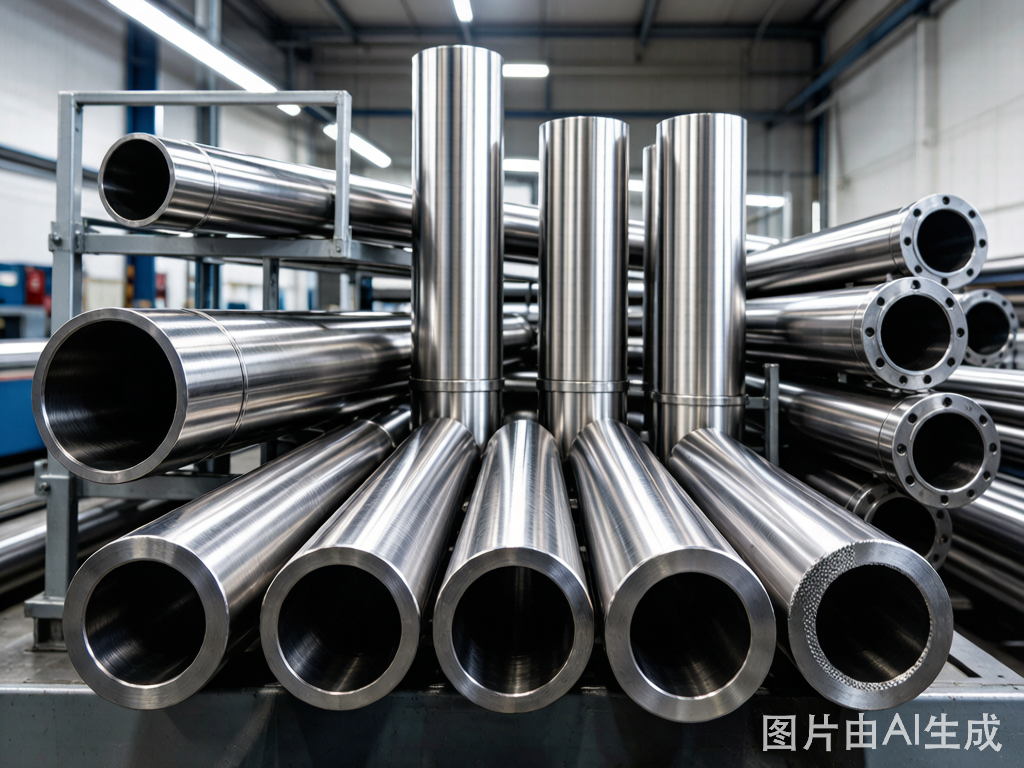
Inconel 690 (UNS N06690 / W.Nr. 2.4642) is a high-chromium, nickel-base alloy developed specifically for nuclear steam generator tubing and other aggressive aqueous environments. With approximately 30% chromium, it offers significantly better resistance to stress corrosion cracking (SCC) and caustic corrosion than Inconel 600. The alloy maintains excellent oxidation resistance at elevated temperatures and retains good mechanical properties across a wide temperature range. Today, Inconel 690 is the standard material for pressurized water reactor (PWR) steam generator tubing and is widely used in heat exchangers, furnace components, and chemical processing equipment where corrosion resistance is paramount.
The chemical composition of Inconel 690 is carefully controlled to deliver its unique combination of mechanical strength, corrosion resistance, and high-temperature stability. Trace elements such as carbon, boron, and zirconium are tightly controlled to ensure microstructural consistency and reproducible properties.
| Element | Min % | Max % |
|---|---|---|
| Nickel (Ni) | Balance | Balance |
| Chromium (Cr) | 27.0 | 31.0 |
| Iron (Fe) | 7.0 | 11.0 |
| Carbon (C) | — | 0.05 |
| Manganese (Mn) | — | 0.50 |
| Silicon (Si) | — | 0.50 |
| Copper (Cu) | — | 0.50 |
| Sulfur (S) | — | 0.015 |
| Phosphorus (P) | — | 0.020 |
Inconel 690 exhibits a face-centered cubic (FCC) austenitic matrix. Its physical properties remain stable across the service temperature range, supporting reliable thermal and mechanical design in aerospace, nuclear, and chemical applications.
| Property | Value | Unit |
|---|---|---|
| Density | 8.19 | g/cm³ |
| Melting Point | 1343 – 1377 | °C |
| Specific Heat (21 °C) | 450 | J/kg·K |
| Thermal Conductivity (21 °C) | 12.5 | W/m·K |
| Electrical Resistivity (21 °C) | 1.15 | μΩ·m |
| Modulus of Elasticity (21 °C) | 211 | GPa |
| Mean CTE (21 – 93 °C) | 13.5 | μm/m·°C |
The mechanical properties below represent typical values for solution-treated and, where applicable, aged product forms. Actual values vary with section size, processing history, and heat treatment condition.
| Property | Value |
|---|---|
| Tensile Strength | ≥ 725 MPa (105 ksi) |
| Yield Strength (0.2% offset) | ≥ 345 MPa (50 ksi) |
| Elongation in 2 inches | ≥ 35% |
| Reduction of Area | ≥ 50% |
| Hardness (Annealed) | 85 – 95 HRB |
Inconel 690 retains useful strength and ductility at elevated temperatures. The data below are representative of the alloy in its standard heat-treated condition and are intended for preliminary design guidance.
| Temperature (°C) | Tensile Strength (MPa) | Yield Strength (MPa) | Elongation (%) |
|---|---|---|---|
| 21 | 725 | 345 | 35 |
| 316 | 690 | 290 | 38 |
| 427 | 650 | 275 | 40 |
| 538 | 590 | 260 | 42 |
| 649 | 520 | 245 | 45 |
| 760 | 430 | 230 | 48 |
| 871 | 330 | 210 | 52 |
Inconel 690 offers a distinctive corrosion resistance profile that makes it suitable for demanding service environments. The specific performance characteristics depend on the alloy's chromium, molybdenum, and other alloying additions.
The combination of high-temperature strength, corrosion resistance, and structural reliability makes Inconel 690 a preferred material across several critical industries:
Hangbo Alloy Group manufactures and supplies Inconel 690 in the following product forms, conforming to ASTM, AMS, ASME, and other international specifications:
| Standard | Description |
|---|---|
| ASTM B167 | Seamless Pipe and Tube |
| ASTM B168 | Plate, Sheet, and Strip |
| ASTM B166 | Bar and Rod |
| ASTM B564 | Forgings |
| ASTM B366 | Fittings |
| ASTM B829 | Seamless Nickel and Nickel Alloy Pipe and Tube |
| ASME SB-167 | Boiler and Pressure Vessel Code — Seamless Tubing |
| ASME SB-168 | Boiler and Pressure Vessel Code — Plate and Sheet |
| AMS 5547 | Sheet, Strip, and Plate |
| AMS 5581 | Seamless Tubing |
| AWS A5.14 | Welding Wire (ERNiCrFe-7 / Inconel 52) |
| RCC-M M3304 / M3306 | Nuclear Pressure Equipment Components |
The density of Inconel 690 is approximately 8.19 g/cm³, similar to other nickel-base alloys such as Inconel 600 and Waspaloy.
Inconel 690 is a high-chromium nickel alloy with 27–31% chromium, 7–11% iron, and nickel as the balance. It contains low carbon (≤0.05%), manganese (≤0.50%), silicon (≤0.50%), and sulfur (≤0.015%).
Key standards include ASTM B167 (seamless tube), ASTM B168 (plate/sheet), ASTM B166 (bar/rod), ASTM B564 (forgings), ASME SB-167/168, AMS 5547, AMS 5581, and AWS A5.14 ERNiCrFe-7 welding wire.
Inconel 690 is typically supplied in the solution-annealed condition. Annealing is performed at 1050 – 1150 °C followed by rapid water quench or air cool to dissolve carbides and optimize corrosion resistance.
Pricing depends on product form (tube, plate, bar), dimensions, quantity, specification requirements (nuclear grade vs commercial), and current nickel/chromium market prices. Typical lead product forms include mill test certificates and third-party inspection.
Available forms include seamless tubes, plates, sheets, round bars, forgings, welding wire, strips, fittings, and custom fabrications such as tube bundles and clad products.
Yes. Inconel 690 can be welded using GTAW, GMAW, SMAW, and SAW processes. Matching filler metal such as ERNiCrFe-7 (Inconel 52) is recommended to maintain corrosion resistance and mechanical properties.
Inconel 690 has approximately twice the chromium content of Inconel 600, providing significantly better resistance to stress corrosion cracking in high-purity water and caustic environments. It is the preferred replacement for Alloy 600 in nuclear steam generators.
Standard sizes are often ex-stock. Custom nuclear-grade material may require 4–8 weeks. Minimum order quantities typically start at 50 kg for bars/tubes and 100 kg for plates, depending on size and specification.
Inconel 690 offers exceptional resistance to stress corrosion cracking, caustic corrosion, chloride-induced SCC, and high-temperature oxidation. It is also resistant to nitric acid and performs well in seawater and flue gas environments.
Inconel 690 can be used continuously up to about 980 °C and intermittently up to 1150 °C, where its chromium oxide scale provides oxidation protection.
Primary applications include nuclear steam generator tubing, heat exchangers, caustic handling equipment, furnace components, flue gas desulfurization systems, and marine/desalination heat exchangers.
Hangbo Alloy Group maintains extensive inventory of Inconel 690 in all standard product forms. We can provide mill test certificates, third-party inspection reports (SGS, TUV, BV), and custom processing services including cutting, machining, forging, and surface finishing.
For quotations, material certifications, or technical consultation, contact our sales team or call +86-136-1165-6360. We typically respond within 10 minutes.
Request a quotation for Inconel 690 round bars, tubes, plates, or forgings. We stock standard sizes and accept custom orders.