
Hangbo Alloy Group
Shanghai · Est. 2012
UNS N07750 / W.Nr. 2.4669 — Precipitation-hardening nickel-chromium superalloy with excellent spring properties, relaxation resistance, and service stability up to 800°C.
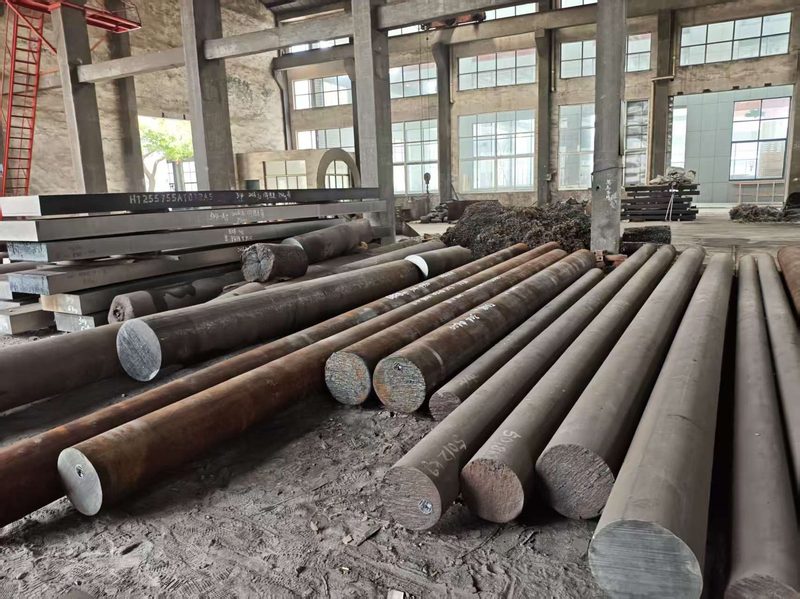
Inconel X-750 (UNS N07750 / W.Nr. 2.4669) is a precipitation-hardenable nickel-chromium superalloy that derives its strength primarily from the gamma-prime (Ni3(Al,Ti)) intermetallic phase. Developed as an evolution of the earlier Nimonic 80A alloy, Inconel X-750 was specifically designed to provide a combination of high strength, excellent spring performance, and outstanding relaxation resistance at elevated temperatures. It has become the industry standard material for hot springs, high-temperature fasteners, and structural components in gas turbines and jet engines.
The alloy's chemistry features carefully controlled additions of aluminum and titanium to form the gamma-prime strengthening phase during aging heat treatment. Unlike Inconel 718, which is strengthened primarily by gamma double-prime (Ni3Nb), Inconel X-750 relies on the more thermally stable gamma-prime precipitate, which provides excellent long-term strength retention but at a lower absolute strength level compared to Inconel 718 at room temperature. This makes X-750 the preferred choice where sustained load-bearing capacity at 600-800°C is more important than peak room-temperature strength.
One of the most valuable characteristics of Inconel X-750 is its spring relaxation resistance. At temperatures where conventional spring steels lose 50-80% of their initial load, X-750 springs retain the majority of their preload, making it indispensable for turbine gland seals, compressor ring springs, and exhaust system clamps that must function reliably over thousands of thermal cycles. The alloy also exhibits excellent fatigue life in the aged condition, particularly when processed by the optimized double-aging treatment.
Processing typically involves vacuum induction melting (VIM) followed by vacuum arc remelting (VAR) or electroslag remelting (ESR). For spring wire production, the material is cold drawn to final diameter in the solution-annealed condition, then aged to develop the required spring properties. For bars and forgings, hot working in the 950-1100°C range is standard. Machining in the aged condition requires carbide tools with low cutting speeds, rigid setups, and ample coolant, similar to other nickel superalloys.
At Hangbo Alloy Group, Inconel X-750 is supplied in wire, round bars, sheets, and forgings per AMS 5670, AMS 5671, ASTM B637, and custom specifications. We serve aerospace engine manufacturers, power generation turbine builders, and industrial spring manufacturers worldwide with certified material and competitive delivery times.
The composition of Inconel X-750 is balanced to promote the formation of gamma-prime precipitates while maintaining good fabricability and oxidation resistance. Aluminum and titanium are the key strengthening elements; their ratio and total content directly affect the volume fraction and stability of the gamma-prime phase. Carbon is kept low to minimize carbide formation and protect ductility, while niobium provides additional strengthening and improves notch rupture life at elevated temperatures.
| Element | Min % | Max % |
|---|---|---|
| Nickel + Cobalt (Ni+Co) | 70.0 | — |
| Chromium (Cr) | 14.0 | 17.0 |
| Iron (Fe) | 5.0 | 9.0 |
| Titanium (Ti) | 2.25 | 2.75 |
| Aluminum (Al) | 0.40 | 1.00 |
| Niobium + Tantalum (Nb+Ta) | 0.70 | 1.20 |
| Manganese (Mn) | — | 1.00 |
| Silicon (Si) | — | 0.50 |
| Sulfur (S) | — | 0.010 |
| Copper (Cu) | — | 0.50 |
| Carbon (C) | — | 0.08 |
| Cobalt (Co) | — | 1.00 |
| Phosphorus (P) | — | 0.015 |
| Boron (B) | — | 0.006 |
Inconel X-750 has a face-centered cubic (FCC) austenitic matrix that remains stable across its entire service temperature range. The gamma-prime precipitates formed during aging are coherent with the matrix and provide strength without significant dimensional change, which is critical for precision spring applications. The alloy's moderate thermal expansion coefficient and thermal conductivity are favorable for components experiencing thermal cycling.
| Property | Value | Unit |
|---|---|---|
| Density | 8.28 | g/cm3 |
| Melting Range | 1393 - 1427 | °C |
| Specific Heat (21°C) | 431 | J/kg·K |
| Thermal Conductivity (21°C) | 11.7 | W/m·K |
| Electrical Resistivity (21°C) | 1.22 | μΩ·m |
| Modulus of Elasticity (21°C) | 214 | GPa |
| Mean Coefficient of Thermal Expansion (21-93°C) | 12.6 | μm/m·°C |
| Curie Temperature | -135 | °C |
Mechanical properties of Inconel X-750 depend on the specific aging treatment applied. The standard single-age treatment (705°C for 24 hours) provides moderate strength with good ductility, suitable for general structural applications. The double-age treatment (705°C for 24 hours + 620°C for 8 hours) produces higher strength and is preferred for springs and fasteners. The values below are typical for bars and forgings in the fully aged condition per AMS 5671.
| Property | Value |
|---|---|
| Tensile Strength | 1170 MPa (170 ksi) |
| Yield Strength (0.2% offset) | 795 MPa (115 ksi) |
| Elongation in 2 inches | 15 - 25% |
| Reduction of Area | 20 - 40% |
| Hardness | 30 - 40 HRC |
| Charpy V-notch Impact (room temp) | 30 - 50 J |
Inconel X-750 is supplied in either solution-treated or solution-treated plus aged condition. The choice of heat treatment significantly affects both the absolute strength level and the relaxation resistance at elevated temperature. Three primary heat treatment schedules are used in practice, each optimized for different service requirements:
The equalizing step at 885°C serves to dissolve grain boundary carbide films that can form during prior processing, thereby improving stress rupture ductility. For spring wire, the cold-drawn material is typically given the double-age treatment after forming, which produces maximum spring properties without the need for prior solution treatment. Hangbo Alloy Group provides material in all standard heat treatment conditions with full certification and can perform custom heat treatments per customer specification.
Inconel X-750 is valued primarily for its ability to retain strength and resist stress relaxation at temperatures where most engineering alloys rapidly degrade. The gamma-prime precipitates remain stable up to approximately 750°C, providing a useful strength advantage over solid-solution alloys like Inconel 600 or 625. Above 800°C, the precipitates begin to coarsen significantly, and long-term strength drops to levels comparable to solid-solution alloys. However, short-term exposure to temperatures up to 870°C is permissible for applications with limited dwell times.
| Temperature (°C) | Tensile Strength (MPa) | Yield Strength (MPa) | Elongation (%) |
|---|---|---|---|
| 21 (Room) | 1170 | 795 | 20 |
| 316 | 1060 | 720 | 22 |
| 427 | 985 | 655 | 22 |
| 538 | 895 | 570 | 24 |
| 649 | 690 | 440 | 26 |
| 704 | 530 | 360 | 28 |
| 760 | 380 | 270 | 32 |
| 816 | 260 | 190 | 38 |
The defining performance advantage of Inconel X-750 over conventional spring steels (such as music wire or chrome-vanadium steel) is its dramatically superior relaxation resistance at elevated temperatures. In spring applications, relaxation refers to the loss of initial preload or deflection over time when the spring is held at temperature under load. This is a critical failure mode for turbine gland seal springs and exhaust clamps, where loss of clamping force can lead to gas leakage, vibration, or component separation.
Typical relaxation data for double-aged X-750 springs compared to chromium-vanadium steel:
The double-age heat treatment consistently produces the best relaxation resistance because the secondary aging at 620°C stabilizes the precipitate structure against further transformation during service exposure. Springs manufactured from the single-aged condition tend to show slightly more relaxation because the precipitates undergo additional thermal stabilization during service, which is accompanied by a modest strength reduction.
Inconel X-750 possesses good corrosion resistance in a range of environments, although it is primarily selected for its mechanical and spring properties. Its 14-17% chromium content provides a protective oxide film that resists oxidation and many forms of atmospheric corrosion. In environments requiring maximum corrosion resistance, alloys such as Inconel 625 or Hastelloy C-276 are generally preferred.
The combination of spring relaxation resistance, moderate-to-high strength, and thermal stability makes Inconel X-750 a preferred material for demanding high-temperature spring and fastener applications, as well as structural components requiring long-term dimensional stability under load at elevated temperature.
Hangbo Alloy Group manufactures and supplies Inconel X-750 in a comprehensive range of product forms optimized for spring manufacturing, fastener production, and structural fabrication:
| Standard | Description |
|---|---|
| ASTM B637 | Bar, Forging, and Forging Stock |
| AMS 5670 | Wire, Spring, Solution Treated |
| AMS 5671 | Wire, Spring, Spring Heat Treated |
| AMS 5598 | Sheet, Strip, and Plate, Solution Treated |
| AMS 5599 | Sheet, Strip, and Plate, Precipitation Heat Treated |
| AMS 5582 | Seamless Tubing, Solution Treated |
| AMS 5667 | Bar and Forging, Solution Treated |
| AMS 5668 | Bar and Forging, Precipitation Heat Treated |
| AWS A5.14 | Welding Wire (ERNiCrFe-8) |
| ASME SB-637 | Boiler and Pressure Vessel Code |
Hangbo Alloy Group maintains ready supply of Inconel X-750 spring wire, round bars, forgings, and plates in AMS 5670, AMS 5671, and ASTM B637 conditions. Our technical team can advise on the optimal heat treatment selection for your specific application — whether you need maximum spring relaxation resistance, improved notch rupture life, or general structural strength. We provide full heat treatment certification, ultrasonic testing, and spring wire surface quality reports.
For quotations, material certifications, or technical consultation, contact our sales team or call +86-136-1165-6360. We typically respond within 10 minutes.
Request a quotation for Inconel X-750 spring wire, round bars, forgings, or plates. We stock standard sizes and accept custom orders with optimized heat treatment.