
Hangbo Alloy Group
Shanghai · Est. 2012
UNS K94610 / W.Nr. 1.3982 — Fe-Ni-Co controlled-expansion alloy with CTE matched to hard borosilicate glass for hermetic seals in power tubes, microwave tubes, military electronics, and semiconductor packaging.
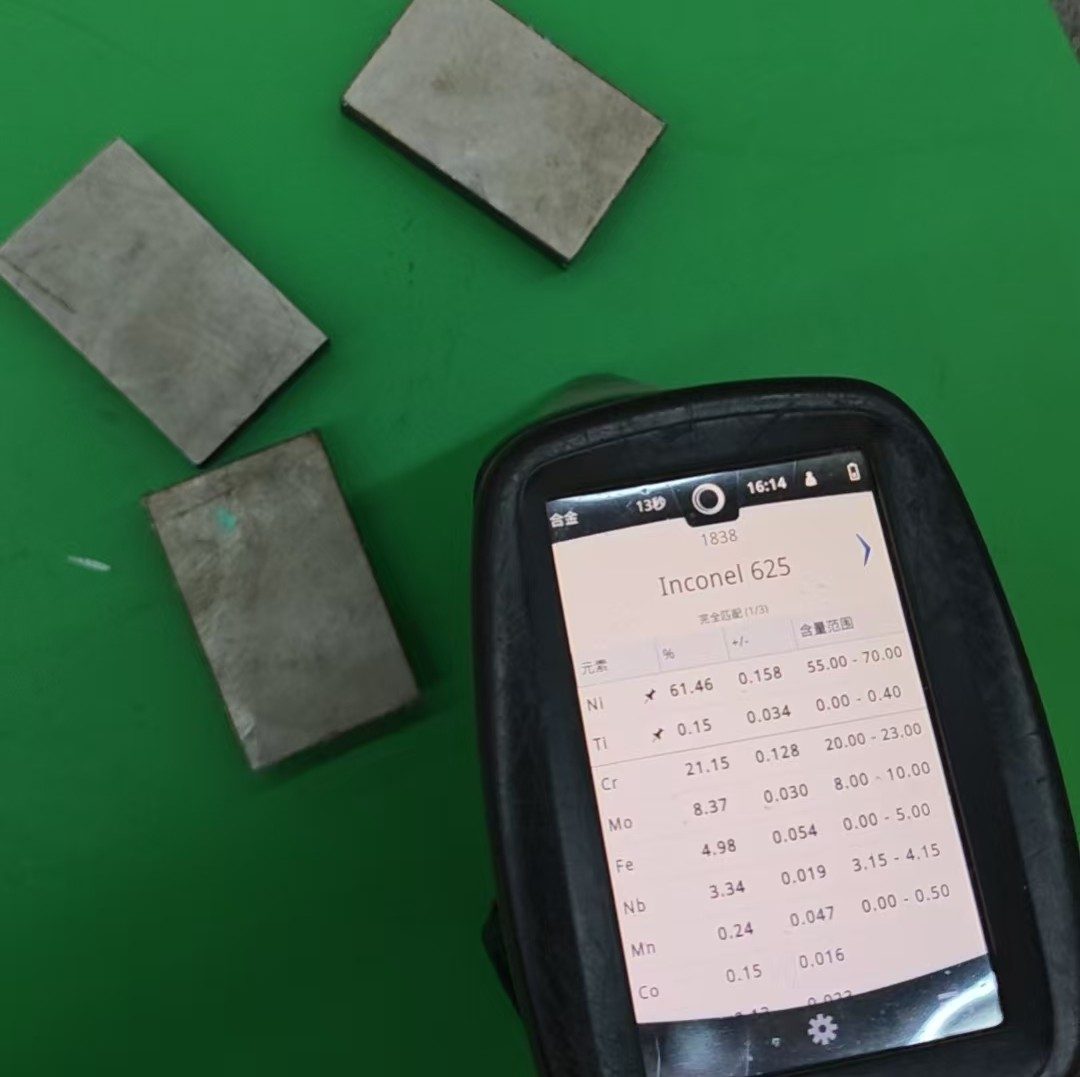
Kovar (UNS K94610 / W.Nr. 1.3982, also known as ASTM F15 alloy, Nilo K, Rodar, and Fe-29Ni-17Co) is a ternary iron-nickel-cobalt alloy containing approximately 29% nickel, 17% cobalt, and 54% iron. It belongs to the family of controlled-expansion alloys and is the industry-standard material for hermetic glass-to-metal seals with hard borosilicate glass.
The defining engineering property of Kovar is its coefficient of thermal expansion, which closely matches that of hard borosilicate sealing glass (Corning 7052, Schott 8250, and similar compositions) over the temperature range from 25 to 465 °C. The mean CTE in this range is approximately 5.0 × 10⁻⁶/°C, compared to the glass expansion of about 4.6–5.2 × 10⁻⁶/°C. This near-perfect match allows the formation of strong, hermetic seals that survive thermal cycling, mechanical shock, and long-term service without cracking or helium-leak failure.
The name "Kovar" was originally a trademark of Westinghouse Electric Corporation and derives from the word "cobalt-VAR" (vacuum arc remelted), reflecting the cobalt addition that distinguishes it from binary Fe-Ni alloys like Alloy 42. The cobalt content is critical: it shifts the Invar anomaly in the Fe-Ni system and raises the Curie temperature, producing an expansion curve that is both lower than Alloy 42 (better matched to hard glass) and more constant through the sealing temperature range (less slope change near the Curie point).
Kovar has a face-centered cubic (FCC) austenitic structure in the annealed condition. It is ferromagnetic at room temperature with a Curie temperature of approximately 435 °C, which marks the upper end of the low-expansion "Invar" behavior. Above this temperature the expansion rate increases toward that of normal austenitic steel, so continuous service above 450 °C is not recommended for controlled-expansion applications.
At Hangbo Alloy Group, Kovar is melted by vacuum induction melting (VIM) with optional electroslag remelting (ESR) for the cleanest material, then hot-worked, cold-rolled to final gauge, and slit to width. Each lot is tested for chemical composition, expansion behavior (dilatometer verification from 25–500 °C against ASTM F15 acceptance limits), tensile strength, hardness, surface finish, and grain size.
The composition window of Kovar is extremely tight because small deviations in any of the three major elements (Ni, Co, Fe) will shift the CTE curve out of the glass-matching range. The ASTM F15 specification defines acceptance limits that are narrower than those for Alloy 42, reflecting the more demanding CTE match required for hard glass sealing. The cobalt content of 16.5–17.5% is the key parameter; dropping cobalt below 16% causes the expansion curve to rise too quickly near 400 °C, while raising it above 18% pushes the curve too low for a good glass match.
| Element | Min % | Max % |
|---|---|---|
| Nickel (Ni) | 28.5 | 29.5 |
| Cobalt (Co) | 16.5 | 17.5 |
| Iron (Fe) | Balance | Balance |
| Carbon (C) | — | 0.02 |
| Manganese (Mn) | — | 0.50 |
| Silicon (Si) | — | 0.20 |
| Chromium (Cr) | — | 0.20 |
| Aluminum (Al) | — | 0.10 |
| Magnesium (Mg) | — | 0.05 |
| Zirconium (Zr) | — | 0.10 |
| Titanium (Ti) | — | 0.10 |
| Copper (Cu) | — | 0.20 |
| Molybdenum (Mo) | — | 0.20 |
| Phosphorus (P) | — | 0.015 |
| Sulfur (S) | — | 0.015 |
Kovar's physical properties are dominated by its controlled-expansion behavior. The mean CTE from 25–465 °C is approximately 5.0 × 10⁻⁶/°C, which is within the ASTM F15 acceptance range and closely matches the expansion of hard borosilicate sealing glass. The expansion curve is nearly linear from room temperature to about 425 °C, then increases more rapidly as the alloy passes through its Curie temperature (~435 °C) and transitions from ferromagnetic to paramagnetic behavior.
This "knee" in the expansion curve near the Curie temperature is a well-known feature of all iron-nickel and iron-nickel-cobalt Invar-type alloys. In Kovar, the knee is positioned just above the glass strain point (typically 460–510 °C for hard borosilicate glass), so that during the sealing cycle (which involves heating to 800–1000 °C and then slow cooling through the glass annealing range), the alloy and glass contraction rates are matched over the critical temperature range where the glass transitions from liquid to rigid. Below the glass strain point, the alloy and glass are both rigid and expand at nearly the same rate, so residual seal stress is minimized.
| Property | Value | Unit |
|---|---|---|
| Density | 8.36 | g/cm³ |
| Melting Point | ~1450 | °C |
| Specific Heat (20–100 °C) | ~500 | J/kg·K |
| Thermal Conductivity (20 °C) | ~17.3 | W/m·K |
| Electrical Resistivity (20 °C) | ~0.49 | μΩ·m |
| Modulus of Elasticity (20 °C) | ~138 | GPa |
| Curie Temperature | ~435 | °C |
| Mean CTE (25–100 °C) | ~4.9 | × 10−6/°C |
| Mean CTE (25–300 °C) | ~5.0 | × 10−6/°C |
| Mean CTE (25–465 °C) | ~5.0 | × 10−6/°C |
| Mean CTE (25–500 °C) | ~5.5 | × 10−6/°C |
| Magnetic Permeability (annealed) | ~300–500 | — |
Kovar is a moderately strong, ductile alloy in the annealed condition. Its primary engineering application is glass sealing, where the CTE match is far more important than absolute strength, but the alloy must still have sufficient mechanical integrity to survive stamping, forming, and assembly operations without cracking. Cold working increases strength rapidly; strip for header stamping is commonly supplied in 1/4-hard to 1/2-hard temper for a balance of strength and formability.
In the annealed condition, Kovar is readily deep-drawn into cups, headers, and tube envelopes. Hardness is typically 70–80 HRB annealed, 85–95 HRB in 1/2-hard, and 25–30 HRC in full-hard. The alloy is machinable in all conditions but best machined in the annealed state with carbide tools and generous coolant.
| Property | Annealed | 1/2 Hard | Full Hard |
|---|---|---|---|
| Tensile Strength | 490 MPa (71 ksi) | 620–700 MPa (90–102 ksi) | 750–850 MPa (110–124 ksi) |
| Yield Strength (0.2%) | 280 MPa (41 ksi) | 480–550 MPa (70–80 ksi) | 650–750 MPa (95–110 ksi) |
| Elongation (in 50 mm) | 30–35% | 10–18% | 3–6% |
| Hardness | 70–80 HRB | 85–95 HRB | 25–30 HRC |
Kovar's thermal expansion behavior is the single most important engineering property, and it is verified on every heat using a calibrated push-rod dilatometer. ASTM F15 specifies acceptance limits for the mean CTE from 25–465 °C (the "glass-matching window") and also for the incremental CTE at specific temperature intervals to ensure that the expansion curve shape matches the glass curve, not just the average value.
Common matched glass systems for Kovar include:
The sealing process typically involves: (1) pre-oxidizing the Kovar component in a controlled wet-hydrogen atmosphere at 800–1000 °C to form a thin, adherent oxide layer (~2–5 μm); (2) heating the Kovar and glass together above the glass sealing temperature (typically 950–1050 °C for hard borosilicate glass); (3) allowing the molten glass to wet and dissolve the Kovar oxide, forming a chemical bond; (4) slow cooling through the glass annealing range (510–460 °C) to relieve residual stress; (5) final cool to room temperature. The resulting seal has a bond strength of 10–20 MPa and helium leak rate below 10−9 atm·cc/sec.
Kovar is not a corrosion-resistant alloy; it contains no significant chromium and behaves essentially like a low-carbon steel in most environments. It is intended for use inside sealed packages or for short-term exposure during device fabrication. Outside of sealed environments, Kovar must be protected by plating or coating.
Kovar is readily fabricated using standard metalworking processes. Annealing is performed in dry hydrogen, vacuum, or inert atmosphere at 800–900 °C to avoid excessive surface oxidation. After the final anneal, the surface can be conditioned (pickled, bright-etched, or pre-oxidized) for the specific application.
Kovar is the industry-standard alloy for hermetic glass-to-metal seals with hard borosilicate glass, with a history spanning over 80 years in electronic, vacuum tube, and semiconductor device manufacturing.
Hangbo Alloy Group manufactures and supplies Kovar in a comprehensive range of forms:
| Standard | Description |
|---|---|
| ASTM F15 | Iron-Nickel-Cobalt Alloy for Glass-to-Metal Seals (Kovar) |
| ASTM F1466 | Iron-Nickel-Cobalt Alloy Wire (Kovar Wire) |
| ASTM F1684 | Iron-Nickel Low-Expansion Alloy Plate, Sheet, and Strip |
| MIL-I-23011 | Military Specification for Kovar (Iron-Nickel-Cobalt Sealing Alloy) |
| DIN 17745 | Wrought Iron-Nickel-Cobalt Alloys (W.Nr. 1.3982) |
| GB/T 4339 | Chinese Standard for Controlled-Expansion Alloys |
| JIS H2501 | Japanese Standard for Controlled Expansion Alloys |
Kovar (UNS K94610) is an Fe-29Ni-17Co alloy with a coefficient of thermal expansion of ~5.0 × 10⁻⁶/°C from 25–465 °C, closely matched to hard borosilicate sealing glass. It is the industry-standard material for hermetic glass-to-metal seals in power tubes, microwave tubes, military electronics, and semiconductor packaging.
Kovar contains Ni 28.5–29.5%, Co 16.5–17.5%, Fe balance (~54%), with strict residual limits: C ≤0.02%, Mn ≤0.50%, Si ≤0.20%, Cr ≤0.20%, P ≤0.015%, S ≤0.015%. The narrow composition window is essential to keep the CTE curve within the ASTM F15 glass-matching acceptance limits.
The mean CTE from 25–465 °C is approximately 5.0 × 10⁻⁶/°C, matching the expansion of hard borosilicate glass (Corning 7052, Schott 8250). The expansion curve is nearly linear to ~425 °C and increases above the Curie point (~435 °C). This match ensures minimal residual stress in hermetic glass-to-metal seals.
Kovar is covered by ASTM F15 (glass-sealing alloy strip, sheet, plate, bar, and wire), ASTM F1466 (wire), MIL-I-23011 (military spec), DIN 17745 (W.Nr. 1.3982), GB/T 4339, and JIS H2501.
Annealed Kovar has tensile strength ~490 MPa (71 ksi) and yield strength ~280 MPa (41 ksi), with elongation 30–35%. Cold-rolled strip in 1/2-hard temper reaches ~620–700 MPa (90–102 ksi). Full-hard strip can exceed 850 MPa.
Yes, Kovar is ferromagnetic at room temperature with relative permeability of ~300–500 and Curie temperature ~435 °C. This means Kovar components can affect nearby magnetic fields and must be kept away from sensitive sensors. Above 435 °C it becomes paramagnetic.
Alloy 42 (Fe-42Ni) matches soft borosilicate glass (lower strain point, CTE ~4.5–5.5 × 10⁻⁶/°C). Kovar (Fe-29Ni-17Co) matches hard borosilicate glass (higher strain point, CTE ~5.0 × 10⁻⁶/°C from 25–465 °C). Hard glass is more resistant to thermal shock and devitrification, making Kovar the choice for power tubes, microwave tubes, and military electronics. Kovar is also ferromagnetic while Alloy 42 is essentially non-magnetic.
Kovar is designed for controlled-expansion service from cryogenic temperatures up to about 450 °C. Above the Curie point (~435 °C), the CTE increases rapidly and the expansion match to glass deteriorates. The glass-sealing process itself occurs at 800–1000 °C, but sealed assemblies typically operate below 400 °C.
Power tube and microwave tube headers and envelopes, X-ray tube seals, military and aerospace hermetic electronic packages, ceramic-to-metal seals for power semiconductors, transistor and IC headers with hard glass, feedthrough pins, and high-reliability reed switches.
Hangbo Alloy Group supplies cold-rolled strip (0.05–3.0 mm, slit to width), wire (0.10–8.0 mm), round bar (6–200 mm), tube (1–30 mm OD), plate, foil, pre-oxidized strip for direct glass sealing, and plated strip/wire (nickel, gold, tin, silver, solder).
Kovar is more expensive than Alloy 42 due to its cobalt content. Cold-rolled strip typically ranges USD 35–60 per kilogram FOB Shanghai (2026), depending on thickness, width, and tolerance. Wire and bar are 15–25% lower per kg. The cobalt market price is a significant cost driver.
Standard strip ships from stock in 3–7 days, MOQ 5–10 kg. Custom slit/thickness: 2–4 weeks, MOQ 50–100 kg. Mill quantities (≥500 kg): 4–6 weeks. Pre-oxidized and plated strip: additional 1–2 weeks.
Hangbo Alloy Group maintains mill-direct supply of Kovar strip, wire, bar, tube, and pre-oxidized strip in both standard and custom configurations. Our team can assist with CTE matching to your specific glass system, surface finish specification, temper selection, plating requirements, and export documentation for military and aerospace-grade shipments.
For quotations, material certifications, or technical consultation, contact our sales team or call +86-136-1165-6360. We typically respond within 10 minutes.
Request a quotation for Kovar strip, wire, bar, tube, or pre-oxidized strip. CTE verification per ASTM F15 and custom glass-matching dilatometer reports available.