
Hangbo Alloy Group
Shanghai · Est. 2012
UNS N07783 — Cobalt-containing nickel-iron-chromium superalloy with low and nearly constant thermal expansion for gas turbine seal rings, shroud bands, and clearance-control structural components.
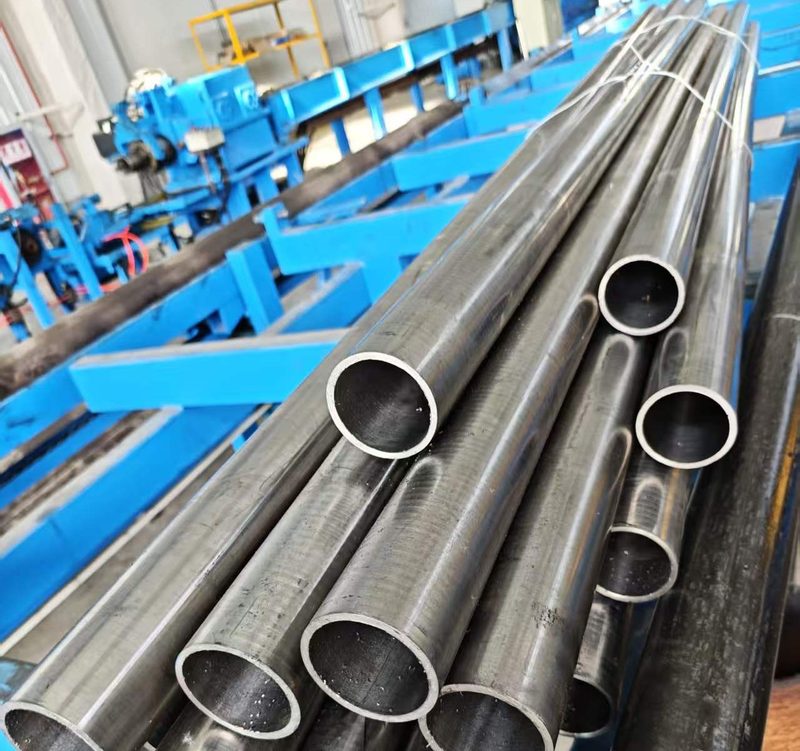
Inconel 783 (UNS N07783) is a cobalt-containing nickel-iron-chromium superalloy specifically engineered to combine low and nearly constant coefficient of thermal expansion with useful precipitation-hardened strength and improved oxidation resistance. It was developed by Special Metals Corporation as an evolution of the Incoloy 907 and 909 low-expansion superalloy family, adding cobalt (~28%), chromium (~5.4%), aluminum (~3%), and titanium (~0.8%) to achieve a balance of properties that none of the earlier alloys could deliver alone.
The primary engineering motivation for Inconel 783 is thermal clearance control in gas turbines. In a typical aero or industrial gas turbine, the hot inner components (blades, discs, seal rings) and the cooler outer casing structures expand at very different rates as engine temperature changes from idle to full power. This differential expansion causes blade tip clearance to open up at full power (reducing efficiency) and close down at idle (risking rubbing and wear). By making the seal ring or shroud band from a low-CTE alloy like Inconel 783, the designer can reduce the clearance variation, improve turbine efficiency by 1–2%, and extend component life.
Inconel 783 fills a niche between the Incoloy 909 family (which has excellent low CTE but poor oxidation resistance and limited creep strength above 500 °C) and conventional superalloys like Inconel 718 (which have excellent strength and oxidation resistance but CTE values of 13–14 × 10−6/°C that are too high for clearance-control applications). The addition of cobalt to the Ni-Fe matrix shifts the Curie temperature and stabilizes the low expansion behavior, while chromium and aluminum provide sufficient oxidation resistance for service up to 650 °C.
At Hangbo Alloy Group, Inconel 783 is produced by vacuum induction melting (VIM) followed by vacuum arc remelting (VAR) to achieve the ultra-low residual levels required for aerospace-grade material. Each heat is fully tested for chemical composition, expansion behavior (dilatometer verification from 20–700 °C), tensile properties, creep-rupture life, and metallographic structure per ASTM B446 and OEM specifications.
The composition of Inconel 783 reflects its dual-purpose design: the cobalt-nickel-iron triad controls the CTE behavior, while chromium, aluminum, and titanium provide oxidation resistance and precipitation hardening through the gamma prime (Ni3(Al,Ti)) phase. Carbon is kept extremely low (≤0.01%) to minimize carbide formation and preserve ductility after long-term aging.
The cobalt content of ~28% is the critical difference from Incoloy 909. Cobalt shifts the Curie temperature and stabilizes the FCC lattice against martensitic transformation, ensuring that the expansion curve remains smooth and predictable through the entire service temperature range. Without sufficient cobalt, the Fe-Ni matrix can undergo partial ordering and anomalous expansion behavior at intermediate temperatures.
| Element | Min % | Max % |
|---|---|---|
| Nickel (Ni) | 28.0 | 31.0 |
| Cobalt (Co) | 27.0 | 30.0 |
| Iron (Fe) | 24.0 | 28.0 |
| Chromium (Cr) | 4.5 | 6.0 |
| Aluminum (Al) | 2.5 | 3.5 |
| Titanium (Ti) | 0.4 | 1.0 |
| Carbon (C) | — | 0.01 |
| Manganese (Mn) | — | 0.30 |
| Silicon (Si) | — | 0.30 |
| Sulfur (S) | — | 0.005 |
| Phosphorus (P) | — | 0.015 |
| Boron (B) | — | 0.005 |
| Copper (Cu) | — | 0.50 |
Inconel 783 has an austenitic (FCC) structure at all temperatures from cryogenic to its melting range. The most important physical property is its thermal expansion behavior: the mean CTE from 20–700 °C is approximately 7.2 × 10⁻⁶/°C, which is close to that of ferritic 12% Cr steels (~9–10 × 10−6/°C) and much lower than typical austenitic superalloys (13–16 × 10−6/°C). The expansion curve is nearly linear, with no inflection or anomalous behavior in the 200–500 °C range where some low-expansion Fe-Ni alloys show a "jump" related to magnetic ordering.
The Curie temperature of Inconel 783 is above 800 °C (well above its maximum service temperature of 650 °C), which means the ferromagnetic-to-paramagnetic transition does not cause a CTE anomaly within the service range. This is a significant advantage over the Incoloy 907/909 family, whose Curie temperatures (~380–430 °C) fall right in the turbine operating window and cause a CTE slope change that must be accounted for in clearance calculations.
| Property | Value | Unit |
|---|---|---|
| Density | 8.17 | g/cm³ |
| Melting Range | 1315–1390 | °C |
| Specific Heat (20–100 °C) | ~500 | J/kg·K |
| Thermal Conductivity (20 °C) | ~12.1 | W/m·K |
| Electrical Resistivity (20 °C) | ~0.80 | μΩ·m |
| Modulus of Elasticity (20 °C) | ~190 | GPa |
| Curie Temperature | >800 | °C |
| Mean CTE (20–100 °C) | ~7.0 | × 10−6/°C |
| Mean CTE (20–300 °C) | ~7.1 | × 10−6/°C |
| Mean CTE (20–500 °C) | ~7.2 | × 10−6/°C |
| Mean CTE (20–700 °C) | ~7.2 | × 10−6/°C |
| Magnetic Permeability (aged) | >100 | — (ferromagnetic) |
Inconel 783 achieves its strength through precipitation hardening. The gamma prime phase (Ni3(Al,Ti)) forms during the dual aging treatment and provides strength comparable to Inconel 718 in the low-temperature regime, with the additional benefit of a near-constant expansion behavior. The alloy is supplied in the solution-annealed condition and aged after forming or machining.
The standard heat treatment sequence is critical to achieving the specified properties. Under-aging reduces creep-rupture life, while over-aging coarsens the gamma prime particles and reduces room-temperature strength. The recommended two-step aging (718 °C for 8 hours + 621 °C for 8 hours) maximizes both short-time strength and long-time creep resistance.
| Property | Solution Annealed | Dual Aged (718+621 °C) |
|---|---|---|
| Tensile Strength | ~620 MPa (90 ksi) | ~1035 MPa (150 ksi) |
| Yield Strength (0.2%) | ~275 MPa (40 ksi) | ~725 MPa (105 ksi) |
| Elongation (in 50 mm) | ~45% | ~12% |
| Hardness (typical) | ~85 HRB | ~32 HRC |
| Reduction of Area | ~60% | ~15% |
One of the key advantages of Inconel 783 over Incoloy 909 is its significantly improved creep-rupture strength at temperatures above 500 °C. The gamma prime precipitation, combined with the solid-solution strengthening from cobalt and chromium, provides useful long-term load-bearing capability at 650 °C. This makes Inconel 783 suitable for seal rings and shroud bands that experience centrifugal loading and thermal stress simultaneously.
The creep-rupture properties of Inconel 783 at 650 °C are roughly comparable to those of Inconel 718 at the same temperature, although Inconel 783 has lower ultimate strength above 700 °C due to its lower chromium and molybdenum content. For applications requiring both low CTE and high-temperature strength above 650 °C, a design trade-off must be evaluated.
| Temperature (°C) | Tensile Strength (MPa) | Yield Strength (MPa) | Elongation (%) |
|---|---|---|---|
| 20 (RT) | 1035 | 725 | 12 |
| 400 | 930 | 650 | 14 |
| 500 | 860 | 590 | 16 |
| 600 | 750 | 520 | 18 |
| 650 | 700 | 470 | 20 |
| 700 | 600 | 380 | 22 |
Inconel 783 has moderate oxidation resistance due to its 5.4% chromium and 3% aluminum content, which form a thin protective oxide scale in dry air up to approximately 650 °C. This is a substantial improvement over the Incoloy 907/909 alloys (which contain less than 1% chromium and suffer rapid oxidation above 500 °C), but it is still far below the oxidation resistance of conventional high-chromium superalloys like Inconel 718 (18% Cr) or Inconel 625 (22% Cr).
For gas turbine service, the oxidation resistance of Inconel 783 is adequate for inner seal ring and shroud band locations that are shielded from direct flame impingement and operate at temperatures below 650 °C in relatively clean combustion gas. For locations with higher temperature, hotter gas exposure, or salt-laden marine atmosphere, a protective coating (aluminide or MCrAlY overlay) may be required.
The heat treatment of Inconel 783 is a critical process that directly controls the balance between room-temperature strength and high-temperature creep-rupture life. The alloy is precipitation-hardened by the gamma prime phase (Ni3(Al,Ti)), and the size, distribution, and volume fraction of this phase depend on the aging sequence.
An alternative single-step aging at 718 °C for 8 hours (air cool) gives slightly higher room-temperature tensile strength (~1080 MPa) but substantially lower creep-rupture life at 650 °C. The two-step treatment is strongly recommended for all applications where the component will operate at elevated temperature for extended periods.
Inconel 783 is used almost exclusively in gas turbine and aerospace applications where its low coefficient of thermal expansion is the primary selection criterion. The alloy fills a specific engineering niche: components that must maintain dimensional stability and controlled clearance relative to cooler outer structures during engine temperature transients.
Hangbo Alloy Group supplies Inconel 783 in the following forms, all produced to aerospace-grade quality standards with VIM+VAR melting and full certification per ASTM B446 and OEM specifications:
| Standard | Description |
|---|---|
| ASTM B446 | Nickel-Cobalt-Iron-Chromium-Molybdenum-Aluminum Alloy (Inconel 783) Bar & Forging |
| AMS 5942 | Inconel 783 Bar and Forging (Aerospace Material Specification) |
| AMS 5960 | Inconel 783 Wire |
| GE S-400 | GE Aviation Specification for Inconel 783 |
| QQ-N-290 | Nickel-Iron-Chromium-Cobalt Alloy (Federal Specification) |
| SAE AMS 2269 | Chemical Check Analysis Limits for Nickel Alloys |
Inconel 783 (UNS N07783) is a cobalt-containing nickel-iron-chromium superalloy with a low and nearly constant coefficient of thermal expansion (~7.2 × 10⁻⁶/°C from 20–700 °C). This CTE is roughly half that of conventional superalloys like Inconel 718, making it uniquely suited for gas turbine components where thermal clearance control between hot inner parts and cool outer casings is critical.
Inconel 783 contains Ni 28–31%, Co 27–30%, Fe 24–28%, Cr 4.5–6.0%, Al 2.5–3.5%, Ti 0.4–1.0%, C ≤0.01%, Mn ≤0.30%, Si ≤0.30%, S ≤0.005%. The high cobalt content stabilizes the low CTE behavior and raises the Curie temperature above 800 °C, eliminating the expansion anomaly seen in Incoloy 907/909.
The mean CTE is approximately 7.2 × 10⁻⁶/°C from 20 to 700 °C. This is nearly constant across the full service range, with no inflection or slope change, unlike Incoloy 909 which shows a CTE jump near its Curie temperature (~380–430 °C). The low and stable CTE allows precise clearance-control design in gas turbines.
Inconel 783 is covered by ASTM B446 (bar and forging), AMS 5942 (aerospace bar and forging), AMS 5960 (wire), GE Aviation specification S-400, QQ-N-290, and various OEM proprietary specifications for gas turbine hardware.
After the standard dual aging heat treatment (718 °C + 621 °C), Inconel 783 achieves tensile strength of ~1035 MPa (150 ksi) and yield strength of ~725 MPa (105 ksi) at room temperature, with elongation of ~12%. At 650 °C, tensile strength remains above 700 MPa.
Incoloy 909 has similar low CTE (~7.5 × 10⁻⁶/°C) but very poor oxidation resistance (no chromium) and limited creep strength above 500 °C, plus a CTE anomaly near 380–430 °C from its low Curie temperature. Inconel 783 adds ~5.4% Cr, ~3% Al, ~0.8% Ti, and raises cobalt to ~28%, providing better oxidation resistance to 650 °C, higher creep-rupture strength, and a Curie temperature above 800 °C that eliminates the CTE anomaly.
Inconel 783 is designed for service up to approximately 650 °C (1200 °F). Above 700 °C, gamma prime coarsening reduces strength and oxidation resistance becomes marginal. For short-duration excursions up to 750 °C, the alloy retains adequate properties. Coated components (aluminide or MCrAlY) can operate at higher surface temperatures.
Standard heat treatment: solution anneal at 1093 °C (2000 °F) for 1 hr/inch, air cool; first aging at 718 °C (1325 °F) for 8 hrs, furnace cool to 621 °C (1150 °F); second aging at 621 °C for 8 hrs, air cool. This dual-aging sequence maximizes creep-rupture life. A single-step aging at 718 °C for 8 hrs gives slightly higher RT strength but lower creep resistance.
Inconel 783 can be welded by GTAW (TIG) and GMAW (MIG) using near-matching filler metal. Welding in the precipitation-hardened condition risks strain-age cracking in the HAZ. Best practice is to weld in the solution-annealed condition and then perform the full dual-aging treatment post-weld. Resistance welding and electron beam welding are also used for aerospace components.
Gas turbine seal rings (primary application), shroud bands and tip shrouds, compressor casing spacers, exhaust frame struts, aerospace fasteners requiring dimensional stability, and any clearance-control structure where thermal expansion mismatch between hot inner and cool outer components must be minimized.
Inconel 783 is a specialty low-volume superalloy. Round bar typically ranges USD 80–150 per kilogram FOB Shanghai (2026), depending on diameter, quantity, and certification level. Wire is typically USD 100–200/kg. Minimum orders are usually 50–100 kg for bar and 25–50 kg for wire. Forgings and custom-machined components are priced per piece.
Standard-size round bar (25–80 mm) in solution-annealed condition: 4–6 weeks from order, MOQ 50 kg. Custom forging per drawing: 8–12 weeks, MOQ per piece/lot. Wire: 6–8 weeks, MOQ 25 kg. Stock availability is limited due to the alloy’s specialty status; mill production runs are scheduled quarterly. Contact Hangbo Alloy Group for current stock and lead time.
Hangbo Alloy Group provides mill-direct supply of Inconel 783 bar, forging, billet, wire, and plate to aerospace and industrial gas turbine manufacturers worldwide. Our material is VIM+VAR melted, solution-annealed, and fully certified per ASTM B446 and OEM specifications. We can assist with CTE matching calculations, heat treatment optimization, coating specification, and export documentation for aerospace-grade shipments.
For quotations, material certifications, or technical consultation, contact our sales team or call +86-136-1165-6360. We typically respond within 10 minutes.
Request a quotation for Inconel 783 bar, forging, or wire with aerospace-grade certification. VIM+VAR melting, ASTM B446 compliance, and OEM specification support.