
Hangbo Alloy Group
Shanghai · Est. 2012
UNS N06025 / W.Nr. 2.4633 — Nickel-chromium-aluminum superalloy with Al2O3+Cr2O3 composite oxide protection, yttrium-enhanced scale adhesion, and outstanding creep-rupture strength for furnace, petrochemical, and A-USC applications.
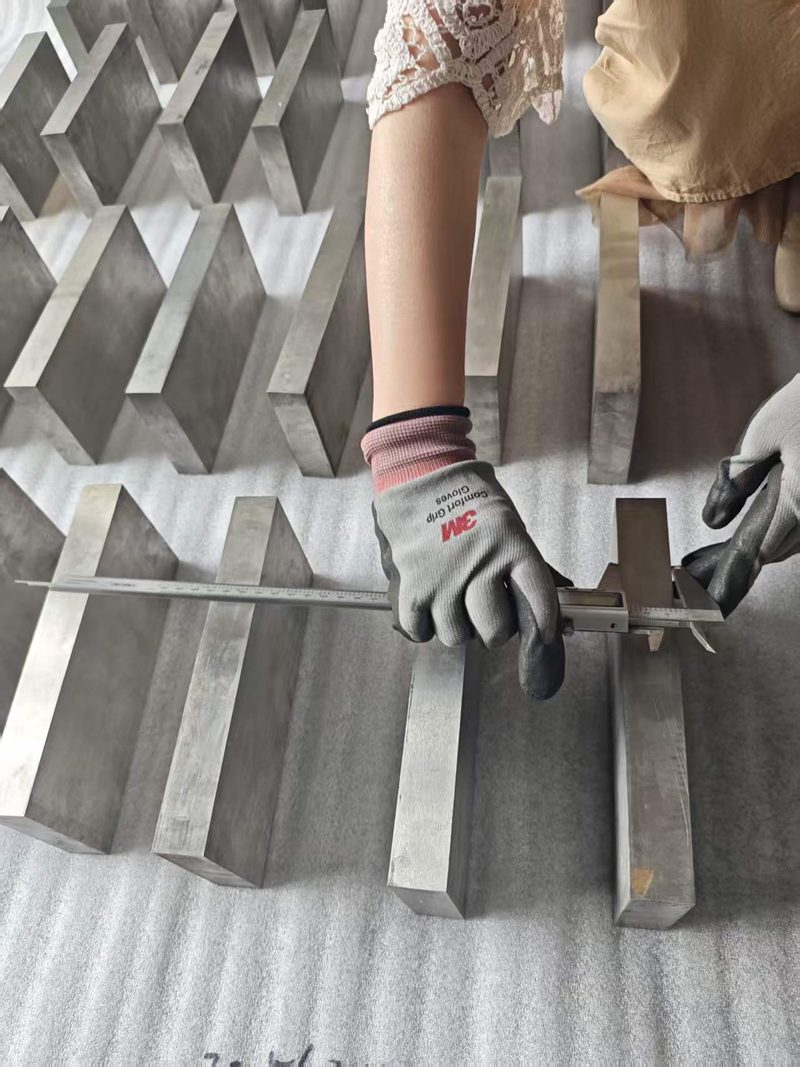
Alloy 602CA (UNS N06025 / W.Nr. 2.4633, also marketed as Nicrofer 6025 HT) is a nickel-chromium-iron-aluminum superalloy specifically designed for ultra-high-temperature service in oxidizing and carburizing atmospheres. With a continuous operating temperature capability up to 1200°C (2192°F), it ranks among the most oxidation-resistant wrought nickel alloys commercially available, filling a critical gap between traditional alloys like Inconel 601 (limited to ~1150°C) and cast superalloys that lack fabricability.
The defining feature of Alloy 602CA is its Al2O3+Cr2O3 composite oxide scale, which forms naturally during high-temperature exposure. Unlike purely Cr2O3-forming alloys (such as Inconel 600 or RA330), the aluminum oxide sub-layer provides a dense, slow-growing barrier that dramatically reduces oxidation rates at temperatures above 1100°C. The addition of yttrium (0.01–0.10%) enhances oxide scale adhesion by pegging the scale into the metal substrate and reducing spallation during thermal cycling — a critical factor for furnace components that undergo repeated heating and cooling.
Alloy 602CA also benefits from a deliberate carbon content of 0.15–0.25%, higher than most wrought nickel alloys. This elevated carbon level serves two important functions: it provides carbide strengthening that improves creep-rupture resistance at temperatures where gamma-prime precipitation is no longer effective, and it increases the alloy's tolerance for carbon-rich service environments by raising the equilibrium carbon activity in the matrix, thereby reducing the driving force for carburization ingress. This dual role makes the alloy uniquely suited to ethylene cracking furnaces and catalytic reformer environments where both oxidation and carburization occur simultaneously.
The alloy's high chromium content (24–26%) further strengthens the outer oxide layer and provides resistance to sulfidation and hot corrosion in environments containing sulfur compounds. At Hangbo Alloy Group, we supply Alloy 602CA in round bars, seamless tubes, plates, sheets, and welding wire, with full certification per ASTM standards and VdTÜV approval for European pressure vessel applications.
The chemistry of Alloy 602CA is carefully balanced to maximize both oxidation resistance and high-temperature structural stability. The aluminum content is kept above 1.8% to ensure continuous Al2O3 sub-layer formation, while yttrium is controlled within a narrow range to optimize scale adhesion without forming excessive internal oxide particles. The deliberately elevated carbon content provides carbide strengthening and carburization tolerance.
| Element | Min % | Max % |
|---|---|---|
| Nickel (Ni) | 60.0 | 66.0 |
| Chromium (Cr) | 24.0 | 26.0 |
| Iron (Fe) | 8.0 | 11.0 |
| Aluminum (Al) | 1.80 | 2.40 |
| Carbon (C) | 0.15 | 0.25 |
| Manganese (Mn) | — | 0.50 |
| Silicon (Si) | — | 0.50 |
| Copper (Cu) | — | 0.50 |
| Yttrium (Y) | 0.01 | 0.10 |
| Zirconium (Zr) | — | 0.10 |
| Titanium (Ti) | — | 0.20 |
| Sulfur (S) | — | 0.015 |
| Phosphorus (P) | — | 0.015 |
Alloy 602CA has a face-centered cubic (FCC) austenitic structure throughout its service temperature range. No phase transformations occur up to the melting point, ensuring dimensional stability in prolonged high-temperature service. The alloy's relatively low thermal expansion coefficient — lower than Inconel 600 or Incoloy 800H — reduces thermal fatigue in cycling applications such as batch furnace components.
| Property | Value | Unit |
|---|---|---|
| Density | 8.0 | g/cm3 |
| Melting Range | 1300 – 1380 | °C |
| Specific Heat (20°C) | 450 | J/kg·K |
| Thermal Conductivity (20°C) | 11.5 | W/m·K |
| Thermal Conductivity (1000°C) | 26.0 | W/m·K |
| Electrical Resistivity (20°C) | 1.18 | μΩ·m |
| Modulus of Elasticity (20°C) | 205 | GPa |
| Mean CTE (20–1000°C) | 15.5 | μm/m·°C |
In the solution-annealed condition (typically 1100–1200°C, air cool), Alloy 602CA exhibits moderate room-temperature strength with excellent ductility. Unlike precipitation-hardened alloys such as Inconel 718, its strength derives primarily from solid-solution effects and carbide dispersion, making it less sensitive to complex heat treatment schedules. The alloy is designed for high-temperature service rather than room-temperature structural applications, so room-temperature properties are adequate rather than exceptional.
| Property | Value |
|---|---|
| Tensile Strength | 680 MPa (99 ksi) |
| Yield Strength (0.2% offset) | 260 MPa (37 ksi) |
| Elongation in 50 mm | 35 – 50% |
| Reduction of Area | 40 – 60% |
| Hardness (Brinell) | 170 – 220 HB |
Alloy 602CA's primary value lies in its ability to maintain useful mechanical strength at temperatures where most wrought nickel alloys have effectively lost their structural capability. The combination of solid-solution strengthening from chromium and aluminum, plus carbide dispersion from the controlled carbon content, provides creep-rupture resistance that is competitive with or superior to alloys like Inconel 617 and Haynes 230 in the 1000–1200°C range.
| Temperature (°C) | Tensile Strength (MPa) | Yield Strength (MPa) | Elongation (%) |
|---|---|---|---|
| 20 (Room) | 680 | 260 | 40 |
| 600 | 520 | 190 | 45 |
| 800 | 380 | 160 | 50 |
| 900 | 280 | 140 | 55 |
| 1000 | 180 | 110 | 60 |
| 1100 | 95 | 70 | 65 |
| 1200 | 45 | 30 | 70 |
| Temperature (°C) | 10,000h Rupture (MPa) | 100,000h Rupture (MPa) |
|---|---|---|
| 900 | 28 | 18 |
| 1000 | 10 | 6 |
| 1100 | 4 | 2.5 |
| 1200 | 1.5 | 0.8 |
These creep-rupture values place Alloy 602CA among the top-tier wrought alloys for ultra-high-temperature structural service. At 1100°C, its 10,000h rupture strength of approximately 4 MPa is sufficient for thin-wall radiant tubes and furnace baskets, while at 1200°C it remains viable for non-load-bearing components such as thermocouple sheaths and burner nozzles.
The oxidation and carburization resistance of Alloy 602CA is its most distinguishing characteristic and the primary reason engineers select this alloy for ultra-high-temperature service.
At temperatures above 1000°C, Alloy 602CA forms a dual-layer oxide scale: an outer Cr2O3 layer that provides initial protection, and an inner Al2O3 sub-layer that grows slowly and forms a dense, adherent barrier against further oxygen ingress. This composite scale is far more protective than the single Cr2O3 scale formed on Inconel 600, Inconel 601, or RA330, because:
| Test Condition | Alloy 602CA | Inconel 601 | RA330 |
|---|---|---|---|
| 1000h at 1100°C (air), mg/cm2 | 0.3 – 0.5 | 1.5 – 2.0 | 2.5 – 4.0 |
| 1000h at 1200°C (air), mg/cm2 | 0.8 – 1.2 | 5.0 – 8.0 | 8.0 – 12.0 |
| 500 cycles 20°C → 1150°C (air), mg/cm2 | 0.5 – 0.8 | 3.0 – 5.0 | 5.0 – 8.0 |
In high-carbon-potential atmospheres (such as ethylene pyrolysis furnaces with CH4/H2 mixtures), Alloy 602CA shows excellent resistance to carbon pickup. The Al2O3+Cr2O3 composite scale acts as an effective diffusion barrier for carbon atoms, and the elevated carbon content of the base alloy (0.15–0.25%) reduces the thermodynamic driving force for further carbon absorption. Carburization mass gain in standard 1000h tests at 1100°C in 5% CH4/95% H2 atmosphere is typically below 1 mg/cm2, compared to 5–15 mg/cm2 for Incoloy 800H and Inconel 601.
The ultra-high-temperature capability of Alloy 602CA makes it the material of choice for applications where few other wrought alloys can survive:
Hangbo Alloy Group supplies Alloy 602CA across the full range of product forms required by furnace manufacturers, petrochemical fabricators, and power generation engineers:
Alloy 602CA can be welded using standard gas tungsten arc welding (GTAW/TIG) and gas metal arc welding (GMAW/MIG) processes. Matching filler metal ERNiCrFe-12 (UNS N06025 class) is available to maintain the same oxidation resistance in weld joints. For dissimilar welds to other nickel alloys, ERNiCr-3 (Inconel 82) or ERNiCrMo-3 (Inconel 625) filler may be used.
Key welding considerations:
| Standard | Description |
|---|---|
| ASTM B166 | Nickel-Chromium-Aluminum Alloy Rod, Bar & Wire |
| ASTM B167 | Nickel-Chromium-Aluminum Alloy Seamless Tube & Pipe |
| ASTM B168 | Nickel-Chromium-Aluminum Alloy Plate, Sheet & Strip |
| VdTÜV 305 | German Technical Inspection Approval (Pressure Vessels) |
| EN 10095 | Heat-Resisting Steels and Nickel Alloys |
| ISO 6207 | Nickel and Nickel Alloy Seamless Tubes |
| ASME Code Case 2435 | Pressure Vessel Code Case for N06025 |
| AWS A5.14 | Welding Wire (ERNiCrFe-12) |
Shanghai Hangbo Alloy Group is a professional manufacturer and global supplier of Alloy 602CA (UNS N06025 / W.Nr. 2.4633). We provide round bars, seamless tubes, plates, sheets, welding wire, and custom forgings with full material certification per ASTM and VdTÜV standards. Mill-direct pricing, ISO 9001:2015 quality system, and fast delivery to 50+ countries worldwide.
Alloy 602CA can operate continuously up to 1200°C (2192°F) in oxidizing atmospheres, making it one of the few wrought nickel alloys suitable for ultra-high-temperature service. Short-term excursions to 1250°C are possible. The alloy forms a protective Al2O3+Cr2O3 composite oxide scale that provides exceptional long-term oxidation resistance.
Alloy 602CA has a density of 8.0 g/cm³ (0.29 lb/in³), slightly lower than many other nickel superalloys due to its high chromium and aluminum content with lower nickel balance.
Nominal composition: Ni 60–66%, Cr 24–26%, Fe 8–11%, Al 1.8–2.4%, C 0.15–0.25%, with controlled yttrium addition (0.01–0.10%). The aluminum content forms Al2O3 protective oxide, while yttrium enhances oxide scale adhesion and thermal cycling resistance.
Key standards: ASTM B166 (rod/bar/wire), ASTM B167 (seamless tube/pipe), ASTM B168 (plate/sheet/strip), VdTÜV 305 (German pressure vessel approval), EN 10095 (heat-resisting steels), ISO 6207 (nickel alloy tubes). ASME Code Case 2435 covers pressure vessel applications.
Alloy 602CA offers significantly superior oxidation resistance: operating reliably to 1200°C vs Inconel 601's ~1150°C. The higher aluminum (2.4% vs 1.4%) and yttrium addition create a more stable Al2O3+Cr2O3 composite oxide with 5–10x lower mass gain at 1100–1200°C. It also provides better carburization resistance and creep strength at temperatures above 1000°C.
Alloy 602CA is a specialty alloy with limited global production, resulting in higher pricing than standard grades. Typical ranges: round bars $35–55/kg, seamless tubes $60–90/kg, plates $40–65/kg, depending on dimensions, quantity, and market conditions. Contact Hangbo Alloy for competitive mill-direct pricing and availability.
Hangbo Alloy supplies Alloy 602CA in: round bars (6–200mm), seamless tubes/pipes (OD 6–219mm), plates/sheets (0.5–50mm), strips (0.1–3mm), welding wire (ERNiCrFe-12), and custom forgings. All products include material test reports per EN 10204 3.1.
Yes, using GTAW (TIG) and GMAW (MIG) with matching filler ERNiCrFe-12. Dissimilar welds use ERNiCr-3 or ERNiCrMo-3. No preheat required. Post-weld heat treatment at 1050–1150°C is recommended to restore oxidation resistance in the weld zone.
Primary uses: furnace radiant tubes, baskets, and belts at 1100–1200°C; ethylene cracking and reformer tubes in carburizing atmospheres; A-USC power generation tubing; glass melting furnace components; burner nozzles and thermocouple sheaths; and sintering furnace trays.
Yttrium (0.01–0.10%) provides two critical benefits: (1) oxide scale pegging — Y2O3 particles anchor the oxide scale to the substrate, dramatically reducing spallation during thermal cycling; and (2) reactive element effect — yttrium segregates to oxide grain boundaries, slowing scale growth rate and improving adhesion. This effect is especially valuable in batch furnace applications with daily heating/cooling cycles.
Yes, excellently. The Al2O3+Cr2O3 composite scale acts as an effective carbon diffusion barrier, and the alloy's elevated carbon content (0.15–0.25%) reduces the thermodynamic driving force for carbon absorption. Carburization mass gain at 1100°C in 5% CH4/H2 is below 1 mg/cm2 vs 5–15 mg/cm2 for Incoloy 800H.
Hangbo Alloy Group maintains mill-direct supply of Alloy 602CA round bars, seamless tubes, plates, and welding wire with ASTM certification and VdTÜV approval documentation. Our team can assist with material selection for ultra-high-temperature furnace and petrochemical applications, recommend appropriate welding procedures, and provide third-party inspection services.
For quotations, material certifications, or technical consultation, contact our sales team or call +86-136-1165-6360. Email: [email protected]. We typically respond within 10 minutes.
Request a quotation for Alloy 602CA round bars, seamless tubes, plates, or welding wire. We stock standard sizes and accept custom orders for furnace and petrochemical applications.