
Hangbo Alloy Group
Shanghai · Est. 2012
UNS N06690 / W.Nr. 2.4642 — A high-chromium nickel alloy offering outstanding resistance to stress-corrosion cracking and oxidizing environments in nuclear power generation and chemical processing.
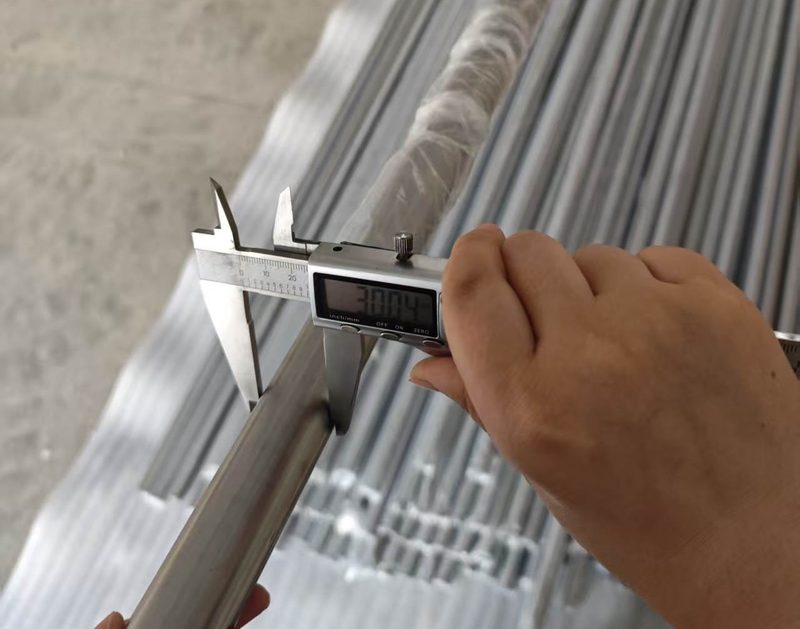
Alloy 690 (UNS N06690 / W.Nr. 2.4642) is a high-chromium nickel alloy developed specifically for service in aggressive aqueous and high-temperature environments where resistance to stress-corrosion cracking (SCC), pitting, and general corrosion is critical. With approximately 30% chromium, it offers substantially better corrosion resistance than the lower-chromium Alloy 600 (UNS N06600), while retaining the excellent fabrication and mechanical characteristics of a solid-solution nickel alloy.
The alloy was developed in the 1970s as a replacement for Alloy 600 steam generator tubing in pressurized water reactors (PWRs), where Alloy 600 had experienced intergranular stress-corrosion cracking in high-purity water at elevated temperatures. Alloy 690's higher chromium content forms a more stable and protective chromium oxide film, which dramatically improves resistance to caustic, acidic, and chloride-containing environments. It has since become the standard material for nuclear steam generator tubing, tube supports, and other reactor internals.
Unlike precipitation-hardening superalloys, Alloy 690 derives its mechanical properties from solid-solution strengthening and careful control of carbon content and grain size. It is non-magnetic, has excellent toughness at both room and cryogenic temperatures, and can be readily fabricated by forming, welding, and machining using standard nickel-alloy practices. The alloy remains stable in long-term service at temperatures up to 650°C (1200°F) and exhibits minimal thermal expansion.
Alloy 690 is produced by vacuum induction melting (VIM) and vacuum arc remelting (VAR) or electroslag remelting (ESR) to ensure low levels of impurities such as sulfur, phosphorus, and lead, which can degrade corrosion resistance. The alloy is available in a wide range of wrought product forms, including seamless tubes, sheets, plates, strips, bars, and forgings, and is supplied primarily in the annealed condition to optimize corrosion resistance and formability.
At Hangbo Alloy Group, we supply Alloy 690 to nuclear, chemical, and power generation customers with full material certification and traceability. Typical deliveries include ASTM B167 seamless tubes, ASTM B168 sheet and plate, and ASTM B829 heat exchanger tubing, all supported by inspection reports and third-party testing on request.
The defining feature of Alloy 690 is its high chromium content, approximately three times that of Alloy 600. The chromium provides the oxide film responsible for the alloy's outstanding corrosion resistance in oxidizing and mixed acid environments. Nickel is controlled at a minimum of 58% to ensure austenitic stability and chloride SCC resistance, while iron is intentionally limited to preserve thermal stability and corrosion performance.
| Element | Min % | Max % |
|---|---|---|
| Nickel (Ni) | 58.0 | — |
| Chromium (Cr) | 27.0 | 31.0 |
| Iron (Fe) | 7.0 | 11.0 |
| Carbon (C) | — | 0.05 |
| Manganese (Mn) | — | 0.50 |
| Silicon (Si) | — | 0.50 |
| Sulfur (S) | — | 0.015 |
| Copper (Cu) | — | 0.50 |
| Cobalt (Co) | — | 0.10* |
| Phosphorus (P) | — | 0.020 |
* Cobalt content is often restricted to lower levels for nuclear applications due to radiation activation concerns.
Alloy 690 has a face-centered cubic (FCC) austenitic structure that remains stable across the entire service temperature range. The high nickel content provides low magnetic permeability, while the chromium content increases density slightly compared to pure nickel. Its thermal expansion coefficient is comparable to other austenitic nickel alloys, and it maintains good thermal conductivity and electrical resistivity values for heat exchanger design.
| Property | Value | Unit |
|---|---|---|
| Density | 8.19 | g/cm3 |
| Melting Range | 1343 - 1377 | °C |
| Specific Heat (21°C) | 450 | J/kg·K |
| Thermal Conductivity (21°C) | 12.5 | W/m·K |
| Electrical Resistivity (21°C) | 1.15 | μΩ·m |
| Modulus of Elasticity (21°C) | 211 | GPa |
| Mean CTE (21-93°C) | 13.3 | μm/m·°C |
| Magnetic Permeability | < 1.01 | — |
Mechanical properties of Alloy 690 depend strongly on the annealing condition and grain size. Annealing is typically performed at 1000-1100°C followed by rapid cooling to dissolve carbides and produce a uniform austenitic microstructure. The values below are typical for annealed sheet, strip, and seamless tubing in accordance with ASTM B167 and ASTM B168.
| Property | Value |
|---|---|
| Tensile Strength | 700 - 900 MPa (100 - 130 ksi) |
| Yield Strength (0.2% offset) | 275 - 350 MPa (40 - 51 ksi) |
| Elongation in 2 inches | 35 - 45% |
| Reduction of Area | 55 - 70% |
| Hardness | 88 - 95 HRB |
| Charpy V-notch Impact | ≥ 200 J |
Alloy 690 is supplied almost exclusively in the annealed condition. The heat treatment is designed to produce a uniform austenitic microstructure with fine, equiaxed grains and dissolved carbides, which maximizes corrosion resistance and ductility. For some nuclear applications, a controlled low-temperature anneal is used to optimize intergranular corrosion resistance.
Hangbo Alloy Group supplies Alloy 690 with certified heat treatment documentation and can perform additional testing such as intergranular corrosion tests (ASTM A262 Practice E or similar), ultrasonic testing, and eddy current inspection for tubing.
Alloy 690 maintains adequate strength and excellent oxidation resistance at temperatures up to 650°C. Its oxidation resistance is superior to Alloy 600 due to the higher chromium content, which forms a more stable Cr2O3 scale. The alloy is not designed for the highest-temperature structural applications, but it excels in long-term, moderate-temperature service where corrosion resistance is paramount.
| Temperature (°C) | Tensile Strength (MPa) | Yield Strength (MPa) | Elongation (%) |
|---|---|---|---|
| 21 (Room) | 800 | 310 | 40 |
| 204 | 715 | 260 | 42 |
| 316 | 680 | 240 | 44 |
| 427 | 630 | 220 | 46 |
| 538 | 560 | 200 | 48 |
| 649 | 480 | 180 | 50 |
Alloy 690 is one of the most corrosion-resistant nickel alloys available in solid-solution form. Its high chromium content provides a tenacious, self-healing oxide film that protects against a wide range of oxidizing and reducing media. The alloy is particularly valued for its resistance to intergranular attack and stress-corrosion cracking in high-purity water systems.
Alloy 690 is selected wherever the combination of high corrosion resistance, low magnetic permeability, and reliable mechanical properties is required in demanding service conditions. Its dominant use remains in nuclear power generation, but it also serves important roles in chemical processing and pollution control.
Hangbo Alloy Group manufactures and supplies Alloy 690 in a comprehensive range of product forms and sizes, with material test reports and optional third-party inspection. Our typical supply scope includes:
| Standard | Description |
|---|---|
| ASTM B166 | Bar, Rod, and Wire |
| ASTM B167 | Seamless Pipe and Tube |
| ASTM B168 | Plate, Sheet, and Strip |
| ASTM B564 | Forgings |
| ASTM B829 | Seamless Nickel and Nickel Alloy Condenser and Heat-Exchanger Tubes |
| ASME SB-166 | Boiler and Pressure Vessel Code (Bar) |
| ASME SB-167 | Boiler and Pressure Vessel Code (Tube) |
| ASME SB-168 | Boiler and Pressure Vessel Code (Plate/Sheet) |
| ASME SB-564 | Boiler and Pressure Vessel Code (Forgings) |
Hangbo Alloy Group supplies Alloy 690 seamless tubes, plates, sheets, and bars for nuclear, chemical, and power generation applications. We provide material with full traceability, ASTM/ASME certification, and optional third-party inspection. Our technical team can assist with material selection, corrosion assessment, and custom specifications.
For quotations, material certifications, or technical consultation, contact our sales team or call +86-136-1165-6360. We typically respond within 10 minutes.
Request a quotation for Alloy 690 tubes, plates, sheets, or bars. We stock standard sizes and accept custom orders.