
Hangbo Alloy Group
Shanghai · Est. 2012
UNS N07718A — An advanced nickel-based precipitation-hardening superalloy that extends the service temperature of Inconel 718 by 55°C to 704°C, with superior creep-rupture strength for next-generation gas turbine engines.
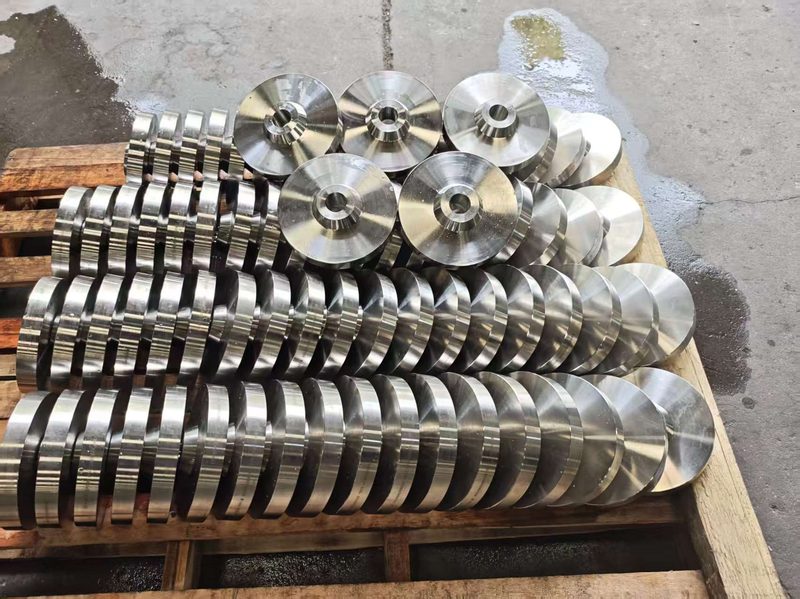
Alloy 718 Plus (UNS N07718A) is an advanced nickel-based precipitation-hardening superalloy developed by ATI Technologies as an evolution of the industry-standard Inconel 718. The alloy was specifically engineered to push the maximum service temperature of the 718 family from approximately 650°C (1200°F) to 704°C (1300°F), filling the performance gap between Inconel 718 and more expensive gamma-prime alloys such as Waspaloy and Udimet 720. This 55°C temperature extension is achieved through precise modifications to the chemical composition that shift the strengthening mechanism from gamma-double-prime (Ni3Nb) toward gamma-prime (Ni3(Al,Ti)) precipitation.
The key compositional changes in Alloy 718 Plus include a significant increase in cobalt content to approximately 9%, the addition of approximately 1% tungsten, a reduction in iron from about 17% to approximately 9%, and tighter control of the aluminum-to-titanium ratio. Cobalt lowers the stacking fault energy of the austenitic matrix and slows the coarsening kinetics of gamma-prime precipitates at elevated temperatures, which directly translates to improved creep-rupture life. Tungsten provides solid-solution strengthening and contributes to high-temperature stability.
The alloy retains much of the processability that made Inconel 718 the most widely used superalloy in the world. It can be melted using the same VIM + VAR or VIM + ESR routes, hot-worked on standard equipment, and machined with similar tooling. However, the higher gamma-prime volume fraction and the presence of cobalt and tungsten require modifications to heat treatment cycles and tighter control of forging temperatures to avoid delta phase formation and ensure uniform grain structure.
Alloy 718 Plus has been qualified by major engine OEMs including GE Aviation, Pratt & Whitney, and Rolls-Royce for use in high-pressure turbine discs, seal rings, and compressor components in next-generation aero engines. Its adoption is growing as engine designers seek to increase combustion temperatures for improved fuel efficiency without incurring the significant cost penalty of switching to powder metallurgy superalloys like Rene 95 or IN 100.
At Hangbo Alloy Group, we supply Alloy 718 Plus in forged bar, billet, ring, and disc forms to aerospace material specifications including AMS 5962. Our material is produced via triple-melt (VIM + ESR + VAR) processing for critical rotating applications, with full material test reports, ultrasonic testing, and non-destructive examination.
The composition of Alloy 718 Plus represents a careful rebalancing of the Inconel 718 system. The dramatic increase in cobalt from a residual/tramp element to a deliberate 9% addition is the single most important change. Cobalt reduces the antiphase boundary energy of gamma-prime, making the precipitates more resistant to coarsening at temperatures where standard 718's gamma-double-prime would rapidly degrade. The addition of tungsten provides additional solid-solution strengthening and slows diffusion-controlled creep processes. The reduction in iron content reduces phase instability and helps maintain creep strength, though it slightly increases raw material cost.
| Element | Min % | Max % | Typical % |
|---|---|---|---|
| Nickel (Ni) | 50.0 | 55.0 | 52.5 |
| Chromium (Cr) | 17.0 | 21.0 | 18.0 |
| Iron (Fe) | 8.0 | 10.0 | 9.0 |
| Cobalt (Co) | 8.0 | 10.0 | 9.0 |
| Niobium (Nb) | 5.2 | 5.8 | 5.45 |
| Molybdenum (Mo) | 2.5 | 3.1 | 2.7 |
| Tungsten (W) | 0.8 | 1.2 | 1.0 |
| Titanium (Ti) | 0.5 | 1.0 | 0.7 |
| Aluminum (Al) | 1.2 | 1.7 | 1.45 |
| Carbon (C) | — | 0.05 | 0.03 |
| Manganese (Mn) | — | 0.35 | 0.05 |
| Silicon (Si) | — | 0.35 | 0.05 |
| Phosphorus (P) | — | 0.015 | 0.005 |
| Sulfur (S) | — | 0.005 | 0.001 |
| Boron (B) | 0.003 | 0.008 | 0.005 |
| Element | Inconel 718 | Alloy 718 Plus | Effect |
|---|---|---|---|
| Cobalt (Co) | ≤1.0% | 8.0-10.0% | Slows gamma-prime coarsening, improves creep |
| Tungsten (W) | — | 0.8-1.2% | Solid-solution strengthening |
| Iron (Fe) | ~17% (bal.) | 8.0-10.0% | Reduces phase instability |
| Aluminum (Al) | 0.2-0.8% | 1.2-1.7% | Increases gamma-prime volume fraction |
| Titanium (Ti) | 0.65-1.15% | 0.5-1.0% | Optimized Al/Ti ratio for stability |
| Niobium (Nb) | 4.75-5.50% | 5.2-5.8% | Slightly higher for combined strengthening |
Alloy 718 Plus shares the face-centered cubic (FCC) austenitic matrix of Inconel 718 but with a modified precipitation structure. The higher cobalt and tungsten content slightly increases density and reduces thermal conductivity compared to standard 718. The elastic modulus is marginally higher due to the tungsten addition, which benefits fatigue life in cyclic loading applications.
| Property | Value | Unit |
|---|---|---|
| Density | 8.24 | g/cm3 |
| Melting Range | 1260 - 1350 | °C |
| Specific Heat (21°C) | 430 | J/kg·K |
| Thermal Conductivity (21°C) | 10.8 | W/m·K |
| Electrical Resistivity (21°C) | 1.28 | μΩ·m |
| Modulus of Elasticity (21°C) | 208 | GPa |
| Poisson's Ratio | 0.29 | — |
| Mean CTE (21-93°C) | 12.8 | μm/m·°C |
| Mean CTE (21-704°C) | 15.2 | μm/m·°C |
The mechanical properties of Alloy 718 Plus are comparable to or slightly exceed those of standard Inconel 718 at room temperature, but its true advantage emerges at elevated temperatures. The standard heat treatment produces a uniform distribution of fine gamma-prime precipitates (30-50 nm) that provide exceptional strength retention. The following values are typical for forged bars in the solution-annealed and aged condition per AMS 5962.
| Property | Value |
|---|---|
| Tensile Strength | 1310 MPa (190 ksi) |
| Yield Strength (0.2% offset) | 1050 MPa (152 ksi) |
| Elongation in 2 inches | 15 - 22% |
| Reduction of Area | 18 - 35% |
| Hardness | 38 - 48 HRC |
| Charpy V-notch Impact (room temp) | 25 - 45 J |
| Fracture Toughness KIC | 85 - 110 MPa√m |
The heat treatment of Alloy 718 Plus is modified from the standard Inconel 718 schedule to account for the shift in strengthening phase from gamma-double-prime to gamma-prime. The solution annealing temperature is similar, but the aging temperatures are raised to optimize the precipitation of the finer, more thermally stable gamma-prime phase. Careful control of the solution temperature is critical: too high promotes abnormal grain growth and delta phase coarsening; too low fails to dissolve the strengthening phases adequately.
The total heat treatment cycle takes approximately 18-20 hours from start to finish. Hangbo Alloy Group performs all heat treatment in computer-controlled vacuum furnaces with calibrated thermocouples, and provides full thermal cycle records with each shipment.
The defining advantage of Alloy 718 Plus over Inconel 718 is its superior strength retention at temperatures above 650°C. At 704°C, Alloy 718 Plus retains approximately 60% of its room-temperature yield strength, whereas standard Inconel 718 retains only about 45%. This improvement is directly attributable to the thermal stability of the gamma-prime phase, which resists coarsening far better than the gamma-double-prime that dominates in standard 718.
| Temperature (°C) | Tensile Strength (MPa) | Yield Strength (MPa) | Elongation (%) |
|---|---|---|---|
| 21 (Room) | 1310 | 1050 | 20 |
| 316 | 1230 | 990 | 20 |
| 427 | 1180 | 960 | 20 |
| 538 | 1120 | 920 | 19 |
| 649 | 1010 | 830 | 20 |
| 704 | 860 | 690 | 22 |
| 760 | 620 | 500 | 28 |
| 816 | 400 | 320 | 38 |
Creep-rupture performance is where Alloy 718 Plus most dramatically outperforms Inconel 718. At 704°C and 345 MPa stress, Alloy 718 Plus achieves over 1,000 hours of rupture life, while standard Inconel 718 fails in less than 100 hours under the same conditions. This represents a 10x improvement in creep life at the critical operating temperature for next-generation turbine engines.
| Temperature (°C) | Stress (MPa) | Rupture Life (hours) | Elongation at Rupture (%) |
|---|---|---|---|
| 649 | 690 | >1,000 | 8-12 |
| 649 | 760 | 300-500 | 10-15 |
| 704 | 345 | >1,000 | 10-18 |
| 704 | 415 | 200-400 | 8-14 |
| 704 | 485 | 50-150 | 6-10 |
| 760 | 240 | 300-600 | 12-20 |
Alloy 718 Plus provides corrosion and oxidation resistance comparable to standard Inconel 718, thanks to its similar chromium content (17-21%). The alloy forms a protective chromium oxide scale that provides excellent oxidation resistance in combustion gas atmospheres up to 704°C for extended service periods. The molybdenum and tungsten additions contribute to resistance against pitting and crevice corrosion in chloride-containing environments.
Alloy 718 Plus was designed to occupy the performance and cost space between Inconel 718 and Waspaloy. The table below summarizes the key differences that guide material selection for turbine engine applications.
| Property | Inconel 718 | Alloy 718 Plus | Waspaloy |
|---|---|---|---|
| UNS Designation | N07718 | N07718A | N07001 |
| Max Service Temp (°C) | 650 | 704 | 730 |
| Strengthening Phase | γ′′ + γ′ | γ′ + minor γ′′ | γ′ |
| Cobalt Content (%) | ≤1.0 | 9.0 | 13.5 |
| Room Temp Tensile (MPa) | 1275 | 1310 | 1275 |
| 704°C Yield (MPa) | ~480 | ~690 | ~720 |
| Weldability | Excellent | Moderate | Poor |
| Relative Cost | 1.0x | 1.3-1.6x | 1.8-2.2x |
| Primary Use | Turbine discs, shafts | HP turbine discs | HP turbine discs, blades |
Alloy 718 Plus is primarily used in aerospace gas turbine engines where the 55°C temperature advantage over standard Inconel 718 enables designers to increase engine operating temperatures, improving fuel efficiency and reducing CO2 emissions. Its applications include:
Alloy 718 Plus has reduced weldability compared to Inconel 718 due to its higher gamma-prime volume fraction and tighter composition control. The alloy is more susceptible to strain-age cracking during post-weld heat treatment, particularly in highly restrained joints. When welding is required, the following practices are recommended:
Machining characteristics are similar to Inconel 718, with the alloy work-hardening rapidly and requiring rigid setups, carbide or ceramic tooling, and generous coolant flow. Recommended parameters include surface speeds of 15-25 m/min for turning with coated carbide inserts, feed rates of 0.1-0.3 mm/rev, and depths of cut of 0.5-2.0 mm. Many aerospace suppliers rough-machine in the solution-annealed condition, then perform final age hardening and finish machining to achieve tight tolerances.
Hangbo Alloy Group supplies Alloy 718 Plus in the following product forms, all backed by full material certifications, ultrasonic testing per AMS 2630, and dimensional inspection:
| Standard | Description |
|---|---|
| AMS 5962 | Bars, Forgings, and Ring Forgings, Solution and Aged |
| ASTM B637 | Bar, Forging, and Forging Stock (general nickel alloy spec) |
| ASME SB-637 | Boiler and Pressure Vessel Code (referenced) |
| GE Aviation Spec | GE B50TF14 (718 Plus forged bar and disc) |
| P&W Spec | PWA 1072 (718 Plus forging specification) |
| Rolls-Royce Spec | MSRR 7165 (718 Plus aerospace forging) |
| UNS N07718A | Unified Numbering System designation |
Alloy 718 Plus (UNS N07718A) is an advanced derivative of Inconel 718 developed by ATI. It extends the maximum service temperature from approximately 650°C to 704°C through higher cobalt (9% vs ≤1%), added tungsten (1%), reduced iron (~9% vs ~17%), and a tighter Al/Ti ratio. This shifts strengthening from gamma-double-prime to gamma-prime, improving high-temperature creep-rupture life by up to 10x at 704°C.
The density of Alloy 718 Plus is approximately 8.24 g/cm3, slightly higher than Inconel 718 (8.19 g/cm3) due to the additions of cobalt (9%) and tungsten (1%). This minor increase is accounted for in component weight calculations for aerospace applications.
The melting range of Alloy 718 Plus is approximately 1260-1350°C (2300-2460°F), similar to Inconel 718. The solidus temperature is slightly lower due to the higher cobalt and reduced iron content, but this does not affect service performance since the alloy is used well below its melting range.
The major differences are: cobalt increases from ≤1% to 9%, tungsten is added at 1%, iron decreases from ~17% to ~9%, aluminum increases from 0.2-0.8% to 1.2-1.7%, and titanium is slightly reduced. These changes promote gamma-prime (Ni3(Al,Ti)) precipitation over gamma-double-prime (Ni3Nb), providing superior thermal stability above 650°C.
The primary specification is AMS 5962 for bars, forgings, and ring forgings in the solution-and-aged condition. Major engine OEMs also have proprietary specifications (GE B50TF14, PWA 1072, MSRR 7165). The UNS designation is N07718A. There is no dedicated European Werkstoff number for this grade.
The standard heat treatment is: solution anneal at 954-982°C for 1-2 hours, air cool; then age at 788°C for 8 hours, furnace cool to 704°C and hold 8 hours, air cool. The aging temperatures are higher than Inconel 718's (718°C/621°C) to optimize gamma-prime precipitation and avoid excessive gamma-double-prime formation.
Alloy 718 Plus typically costs 30-60% more than standard Inconel 718 due to the higher cobalt and tungsten content and lower production volumes. Indicative pricing for forged bars ranges from $55-85 per kg depending on size, specification, and order quantity. For a formal quotation, contact Hangbo Alloy Group.
The primary forms are forged bars (25-300 mm diameter), billets (up to 400 mm), ring forgings (OD 200-1500 mm), and disc forgings per customer drawings. Plate is available in limited sizes (6-50 mm thick). Seamless tubing and welding wire are not commonly produced for this grade.
Alloy 718 Plus has reduced weldability compared to Inconel 718 due to its higher gamma-prime volume fraction. Welding is possible using GTAW with matching filler or EBW, but the alloy is more susceptible to strain-age cracking. Material should be welded in the solution-annealed condition, followed by a modified aging cycle with slow heating rates to minimize cracking risk.
The maximum continuous service temperature is approximately 704°C (1300°F), which is about 55°C higher than standard Inconel 718 (650°C). This temperature extension is the primary reason for the alloy's development and its growing adoption in next-generation gas turbine engines.
Alloy 718 Plus offers similar temperature capability to Waspaloy (704°C vs 730°C) but with better weldability, lower raw material cost (30-60% premium over 718 vs 80-120% for Waspaloy), and superior notch rupture sensitivity. It was specifically developed to replace Waspaloy in some turbine disc applications while retaining the processing infrastructure of the 718 family.
Due to limited melting capacity, aerospace certification requirements, and the need for triple-melt processing (VIM+ESR+VAR) for critical applications, typical lead times range from 12-20 weeks for forged bars and rings. Hangbo Alloy Group maintains select stock for expedited delivery on urgent projects.
For forged bars, the typical MOQ is 100 kg. For custom ring or disc forgings, minimum batch sizes may apply due to tooling and setup costs. Contact Hangbo Alloy Group with your specific requirements for an accurate MOQ and quotation.
Hangbo Alloy Group provides mill-direct supply of Alloy 718 Plus forged bars, billets, rings, and discs to AMS 5962 and OEM specifications. Our team assists with material selection, heat treatment specification, NDT requirements, and export documentation. We support aerospace engine manufacturers, Tier-1 suppliers, and MRO facilities worldwide with triple-melt material, full traceability, and rapid response.
For quotations, material certifications, or technical consultation, contact our sales team or call +86-136-1165-6360. We typically respond within 10 minutes.
Request a quotation for Alloy 718 Plus forged bars, rings, or discs to AMS 5962. Triple-melt certified material with full NDT and aerospace documentation.