
Hangbo Alloy Group
Shanghai · Est. 2012
UNS N07041 / W.Nr. 2.4667 — Chemical composition, mechanical properties, heat treatment, creep-rupture data, and applications in aerospace gas turbine engines and rocket motor components.
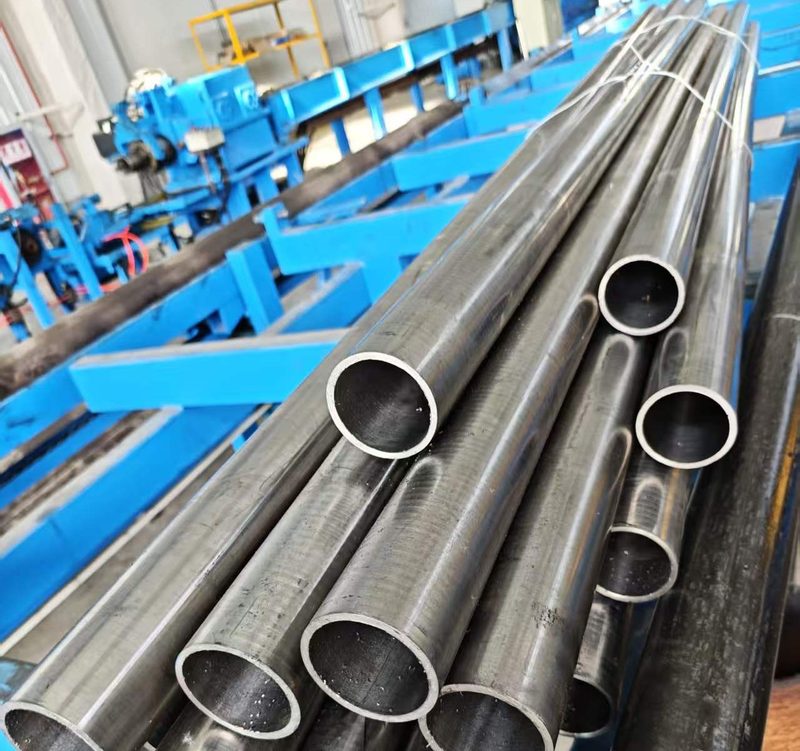
Rene 41 (UNS N07041 / W.Nr. 2.4667) is a nickel-based precipitation-hardened superalloy developed by General Electric in the 1950s for gas turbine engine components requiring high creep-rupture strength at temperatures up to 870°C (1600°F). The alloy achieves its exceptional strength through a combination of solid-solution hardening from molybdenum and cobalt, and precipitation hardening from the gamma prime (Ni3(Al,Ti)) phase formed by aluminum and titanium additions.
Rene 41 was one of the first nickel-based superalloys specifically designed for wrought product forms (bars, forgings, and sheet) rather than investment castings. It has been extensively used in military and commercial gas turbine engines for turbine discs, shafts, casings, afterburner components, and rocket motor cases. Although newer alloys like Waspaloy and Inconel 718 have superseded Rene 41 in some applications, it remains in active production for legacy engine programs and specialized high-temperature structural applications.
The alloy's high titanium content (3.0–3.3%) and aluminum content (1.4–1.6%) produce a gamma prime volume fraction of approximately 20–25%, providing strong precipitation hardening. However, this same high precipitate-forming tendency makes the alloy susceptible to strain-age cracking during post-weld heat treatment, which limits its weldability and requires specialized fabrication procedures.
The chemical composition of Rene 41 is designed to produce a high volume fraction of gamma prime precipitates while maintaining adequate solid-solution strengthening. The high titanium-to-aluminum ratio (approximately 2:1) produces coarse gamma prime that contributes to both tensile and creep strength. Molybdenum provides essential solid-solution hardening, while cobalt raises the solvus temperature of the gamma prime phase, allowing the alloy to maintain precipitate stability at higher temperatures.
| Element | Min % | Max % |
|---|---|---|
| Nickel (Ni) | Balance | Balance |
| Chromium (Cr) | 18.0 | 20.0 |
| Cobalt (Co) | 10.0 | 12.0 |
| Molybdenum (Mo) | 9.0 | 10.5 |
| Titanium (Ti) | 3.0 | 3.3 |
| Aluminum (Al) | 1.4 | 1.6 |
| Iron (Fe) | — | 5.0 |
| Boron (B) | 0.003 | 0.010 |
| Zirconium (Zr) | — | 0.07 |
| Carbon (C) | — | 0.12 |
| Silicon (Si) | — | 0.40 |
| Manganese (Mn) | — | 0.50 |
| Sulfur (S) | — | 0.015 |
| Phosphorus (P) | — | 0.015 |
| Copper (Cu) | — | 0.50 |
Rene 41 exhibits physical properties typical of high-alloy nickel-based superalloys. The relatively low thermal conductivity and high electrical resistivity are characteristic of alloys with high levels of solid-solution alloying elements (Mo, Co, Cr). The elastic modulus is somewhat lower than Inconel 718 at room temperature but maintains a higher fraction of its room-temperature value at elevated temperatures, which is important for turbine disc applications where elastic strain limits are critical.
| Property | Value | Unit |
|---|---|---|
| Density | 8.20 | g/cm³ |
| Melting Point (Range) | 1260–1343 | °C |
| Specific Heat (21°C) | 440 | J/kg·K |
| Thermal Conductivity (21°C) | 9.6 | W/m·K |
| Electrical Resistivity (21°C) | 1.34 | μΩ·m |
| Modulus of Elasticity (21°C) | 200 | GPa |
| Mean Coefficient of Thermal Expansion (21–93°C) | 13.5 | μm/m·°C |
| Mean Coefficient of Thermal Expansion (21–538°C) | 15.3 | μm/m·°C |
The mechanical properties of Rene 41 are strongly dependent on heat treatment condition. In the solution-annealed condition, the alloy has moderate strength and high ductility, suitable for forming operations. After the standard dual aging treatment, tensile and yield strengths increase dramatically due to gamma prime precipitation, while ductility decreases accordingly. The data below represents typical values for fully heat-treated bar and forgings per AMS 5713.
| Property | Solution Annealed | Fully Heat Treated |
|---|---|---|
| Tensile Strength | 760 MPa (110 ksi) | 1240 MPa (180 ksi) |
| Yield Strength (0.2% offset) | 415 MPa (60 ksi) | 1035 MPa (150 ksi) |
| Elongation in 2 inches | 35–40% | 10–15% |
| Reduction of Area | 45–55% | 12–18% |
| Hardness (Rockwell C) | 20–25 HRC | 38–44 HRC |
| Impact Strength (Charpy V-notch) | 60 J | 20 J |
The heat treatment of Rene 41 is critical for achieving its intended mechanical properties. The alloy requires a solution anneal followed by a dual aging sequence that produces an optimal distribution of gamma prime precipitates. Incorrect heat treatment can result in inadequate strength, excessive grain growth, or strain-age cracking in welded components.
The dual aging sequence is essential because it creates two distinct gamma prime size populations: coarse precipitates (~0.3μm) for creep resistance and fine precipitates (~0.05μm) for tensile strength. This bimodal distribution provides the best overall balance of properties for gas turbine disc and shaft applications.
Rene 41 is specifically designed for prolonged service at elevated temperatures. Its creep-rupture properties are among the best of the early-generation wrought nickel superalloys, making it suitable for gas turbine components that must withstand thousands of hours of sustained loading at temperatures above 650°C. The molybdenum content provides solid-solution creep resistance, while the gamma prime precipitates impede dislocation climb at elevated temperatures.
| Temperature (°C) | Tensile Strength (MPa) | Yield Strength (MPa) | Elongation (%) |
|---|---|---|---|
| 21 (Room) | 1240 | 1035 | 12 |
| 316 | 1100 | 900 | 14 |
| 427 | 1060 | 860 | 14 |
| 538 | 980 | 790 | 15 |
| 649 | 860 | 700 | 16 |
| 760 | 700 | 580 | 18 |
| 816 | 550 | 460 | 20 |
| 871 | 380 | 310 | 25 |
| 982 | 180 | 140 | 40 |
Rene 41 exhibits excellent creep-rupture strength in the 650–870°C temperature range, which is its primary service domain. The 100-hour rupture stress at 650°C is approximately 690 MPa, at 760°C approximately 340 MPa, and at 815°C approximately 230 MPa. These values are significantly higher than those of solid-solution strengthened alloys like Hastelloy X or Inconel 625 at the same temperatures. The gamma prime precipitate stability at these temperatures provides long-term structural integrity for rotating turbine components where creep-induced dimensional changes must be minimized.
Rene 41 has moderate corrosion resistance, typical of precipitation-hardened nickel superalloys designed primarily for structural strength rather than chemical resistance. The 18–20% chromium content provides adequate oxidation resistance at elevated temperatures, but the alloy is not intended for use in aggressively corrosive chemical environments like those served by Hastelloy or Inconel 625.
Rene 41 was developed specifically for gas turbine engine components that require high creep-rupture strength at elevated temperatures. Its applications are concentrated in aerospace and high-performance power generation, where the combination of tensile strength, creep resistance, and metallurgical stability at 650–870°C is essential.
Hangbo Alloy Group manufactures and supplies Rene 41 in the following product forms. All material is produced via vacuum induction melting (VIM) followed by vacuum arc remelting (VAR) to meet the cleanliness requirements of aerospace specifications.
| Standard | Description |
|---|---|
| AMS 5545 | Sheet, Strip, and Plate, Solution Annealed |
| AMS 5546 | Sheet, Strip, and Plate, Heat Treated |
| AMS 5712 | Bars and Forgings, Solution Annealed |
| AMS 5713 | Bars and Forgings, Heat Treated |
| UNS N07041 | Unified Numbering System Designation |
| W.Nr. 2.4667 | European Werkstoff Number |
| AWS A5.14 ERNiFeCr-2 | Welding Wire (Compatible Filler) |
Rene 41 has a density of 8.20 g/cm³ (0.296 lb/in³), which is typical for nickel-based precipitation-hardened superalloys. This density is slightly higher than Inconel 718 (8.19 g/cm³) due to the higher cobalt and molybdenum content.
Rene 41 has a melting range of 1260–1343°C (2300–2449°F). The solidus temperature is approximately 1260°C and the liquidus is approximately 1343°C, providing a useful operating range for high-temperature structural components.
Rene 41 is a nickel-cobalt-chromium-molybdenum-titanium-aluminum superalloy: Nickel 51–54%, Chromium 18–20%, Cobalt 10–12%, Molybdenum 9–10.5%, Titanium 3.0–3.3%, Aluminum 1.4–1.6%, Iron max 5%, with minor additions of Boron (0.003–0.010%), Zirconium, Carbon, and trace elements. The Ti+Al combination provides strong precipitation hardening through gamma prime formation.
Rene 41 is covered by AMS 5712 (bars and forgings, solution annealed), AMS 5713 (bars and forgings, heat treated), AMS 5545 (sheet and plate, solution annealed), and AMS 5546 (sheet and plate, heat treated). It appears under UNS N07041 in the Unified Numbering System.
Rene 41 is designed for service temperatures up to approximately 870°C (1600°F) for long-term creep-rupture applications, and can withstand short-term exposures up to 980°C (1800°F). Above 870°C, the gamma prime precipitates begin to coarsen, reducing long-term strength.
Both are precipitation-hardened nickel superalloys for gas turbine applications. Rene 41 has higher molybdenum (9–10.5% vs. 3.5–4.3% in Waspaloy), while Waspaloy has higher cobalt (12.5–13.5% vs. 10–12%). Waspaloy generally has slightly better creep strength above 760°C, while Rene 41 offers excellent short-time tensile strength at intermediate temperatures. Both require careful welding procedures.
Rene 41 can be welded but is susceptible to strain-age cracking during post-weld heat treatment. The alloy precipitates gamma prime rapidly during heating through the 760–870°C range. Recommended practices include welding in the solution-annealed condition and rapid heating through the precipitation range. Fusion welding is generally limited to non-critical joints; resistance and electron beam welding are preferred for critical applications.
In the fully heat-treated condition (solution annealed + dual aged), Rene 41 exhibits tensile strength of 1240 MPa (180 ksi), yield strength of 1035 MPa (150 ksi), and elongation of 10–15%. In the solution-annealed condition, tensile strength is approximately 760 MPa with 35–40% elongation.
Hangbo Alloy Group supplies Rene 41 as round bars (6–250 mm diameter per AMS 5712/5713), sheet and plate (0.5–50 mm per AMS 5545/5546), custom forgings, welding wire, and precision strip. All material can be supplied in solution-annealed or fully heat-treated condition.
Rene 41 is primarily used in aerospace gas turbine engines (turbine discs, shafts, afterburner components), rocket motor casings and nozzles, industrial gas turbine hot-section components, high-temperature fasteners, springs, and hot-forming dies for titanium and superalloy forging.
The standard heat treatment: Solution anneal at 1066–1177°C for 1–4 hours, air cool; then dual aging: First age at 760°C (1400°F) for 16 hours, air cool; Second age at 649°C (1200°F) for 32 hours, air cool. This produces the optimal bimodal gamma prime distribution for maximum creep-rupture strength.
Rene 41 is a premium superalloy with relatively low commercial production volume. Round bars typically range from $60–$120 per kg depending on size, quantity, and specification. Sheet and plate are generally $80–$150 per kg. The high titanium/aluminum content and vacuum melting requirements contribute to premium pricing. Contact our sales team for current pricing.
Hangbo Alloy Group maintains mill-direct supply of Rene 41 round bars, sheet, plate, forgings, and welding wire per AMS 5712, AMS 5713, AMS 5545, and AMS 5546 specifications. Our team can assist with material selection, heat treatment specification, strain-age cracking mitigation, NDT requirements, and export documentation. We support gas turbine manufacturers, aerospace contractors, and rocket engine builders worldwide with reliable quality and competitive delivery.
For quotations, material certifications, or technical consultation, contact our sales team or call +86-136-1165-6360. We typically respond within 10 minutes.
Request a quotation for Rene 41 round bars, forgings, sheet, or plate per AMS 5712/5713. We supply both solution-annealed and fully heat-treated conditions with complete certification.