
Hangbo Alloy Group
Shanghai · Est. 2012
UNS N07001 / W.Nr. 2.4654 — Nickel-chromium-cobalt precipitation-hardening superalloy with excellent creep resistance, oxidation resistance, and strength retention up to 870°C.
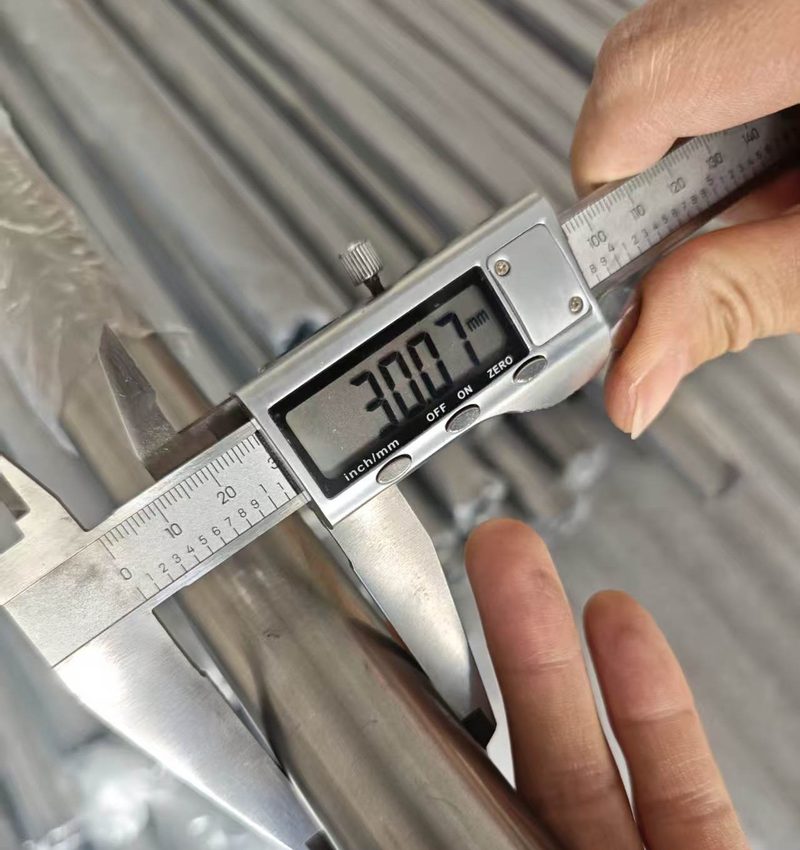
Waspaloy (UNS N07001 / W.Nr. 2.4654) is a nickel-chromium-cobalt-based precipitation-hardening superalloy strengthened primarily by gamma-prime (Ni3(Al,Ti)) precipitates. Developed for aerospace gas turbine engine applications, it combines high tensile strength, excellent creep resistance, and outstanding oxidation resistance at temperatures well above those suitable for Inconel 718. Waspaloy retains useful mechanical properties at service temperatures up to approximately 870°C (1600°F), making it a preferred material for the most demanding rotating components in jet engines and industrial gas turbines.
The alloy is characterized by its higher cobalt and lower iron content compared to Inconel 718, which provides superior solid-solution strengthening and improved thermal stability at elevated temperatures. The addition of chromium gives good oxidation and hot corrosion resistance, while titanium and aluminum form the coherent gamma-prime strengthening phase that dominates the mechanical response. Molybdenum and cobalt further enhance creep resistance and high-temperature strength.
Waspaloy is typically produced by vacuum induction melting (VIM) followed by vacuum arc remelting (VAR) or electroslag remelting (ESR) to ensure the cleanliness and microstructural uniformity required for rotating aerospace components. Hot working is performed in the 1100-1150°C range, and the alloy is generally supplied in the solution-treated and aged condition. Because of its high strength and tendency toward strain-age cracking, fabrication and welding require more care than Inconel 718, but it remains weldable using matching filler metals under controlled conditions.
At Hangbo Alloy Group, Waspaloy is supplied in round bars, forgings, and precision-machined components per AMS 5544, AMS 5546, AMS 5704, and customer-specific aerospace and power generation specifications. We support demanding applications in gas turbine engines, aerospace fasteners, and high-temperature instrumentation with full material certification and NDT inspection.
Waspaloy chemistry is designed to balance high-temperature strength, oxidation resistance, and microstructural stability. Cobalt and molybdenum provide solid-solution strengthening, while titanium and aluminum form the gamma-prime precipitates. Chromium contributes to oxidation and hot corrosion resistance, and boron plus carbon improve grain boundary strength and creep resistance.
| Element | Min % | Max % |
|---|---|---|
| Nickel (Ni) | Balance | Balance |
| Chromium (Cr) | 18.0 | 21.0 |
| Cobalt (Co) | 12.0 | 15.0 |
| Molybdenum (Mo) | 3.50 | 5.00 |
| Titanium (Ti) | 2.75 | 3.25 |
| Aluminum (Al) | 1.20 | 1.60 |
| Iron (Fe) | — | 2.00 |
| Carbon (C) | — | 0.10 |
| Manganese (Mn) | — | 0.10 |
| Silicon (Si) | — | 0.15 |
| Phosphorus (P) | — | 0.015 |
| Sulfur (S) | — | 0.015 |
| Boron (B) | 0.003 | 0.010 |
| Zirconium (Zr) | — | 0.05 |
| Copper (Cu) | — | 0.10 |
Waspaloy has a face-centered cubic (FCC) austenitic matrix. Its physical properties are typical of high-nickel superalloys, with moderate thermal conductivity and thermal expansion, and a high melting range. The relatively low thermal expansion helps minimize thermal fatigue during repeated engine startup and shutdown cycles.
| Property | Value | Unit |
|---|---|---|
| Density | 8.19 | g/cm3 |
| Melting Range | 1330 - 1350 | °C |
| Specific Heat (21°C) | 419 | J/kg·K |
| Thermal Conductivity (21°C) | 11.2 | W/m·K |
| Electrical Resistivity (21°C) | 1.24 | μΩ·m |
| Modulus of Elasticity (21°C) | 210 | GPa |
| Mean Coefficient of Thermal Expansion (21-93°C) | 12.6 | μm/m·°C |
| Curie Temperature | -150 | °C |
Mechanical properties of Waspaloy depend strongly on heat treatment and product form. The standard heat treatment for sheet and bar consists of solution treatment at approximately 1010°C, followed by a two-step age: 843°C for 4 hours, air cool, then 760°C for 16 hours, air cool. This produces a microstructure with fine, uniform gamma-prime precipitates and strong grain boundaries, giving an excellent combination of strength, ductility, and creep resistance.
| Property | Value |
|---|---|
| Tensile Strength | 1275 MPa (185 ksi) |
| Yield Strength (0.2% offset) | 860 MPa (125 ksi) |
| Elongation in 2 inches | 15 - 25% |
| Reduction of Area | 20 - 35% |
| Hardness | 33 - 42 HRC |
| Charpy V-notch Impact (room temp) | 25 - 45 J |
Waspaloy is usually supplied in the solution-treated and aged condition to achieve the best balance of high-temperature strength and ductility. The heat treatment schedule is tailored to product form and application requirements, with tighter control than simpler alloys to avoid harmful topologically close-packed (TCP) phases or excessive grain growth.
Careful atmosphere control and rapid air cooling are essential to prevent surface oxidation and to maintain the fine gamma-prime distribution that gives Waspaloy its outstanding properties. Hangbo Alloy Group provides material with full heat treatment certification and can perform ultrasonic testing, dye penetrant inspection, and dimensional verification on request.
Waspaloy was developed specifically for service at temperatures where Inconel 718 loses significant strength. Its combination of solid-solution strengthening from cobalt and molybdenum, plus the stable gamma-prime precipitation structure, gives excellent creep resistance and stress-rupture life up to about 870°C. Long-term exposure above 900°C is generally avoided because of gamma-prime coarsening and possible formation of detrimental TCP phases.
| Temperature (°C) | Tensile Strength (MPa) | Yield Strength (MPa) | Elongation (%) |
|---|---|---|---|
| 21 (Room) | 1275 | 860 | 20 |
| 316 | 1200 | 795 | 22 |
| 427 | 1140 | 760 | 22 |
| 538 | 1070 | 725 | 21 |
| 649 | 965 | 690 | 23 |
| 704 | 825 | 620 | 26 |
| 760 | 650 | 515 | 28 |
| 816 | 450 | 345 | 35 |
Waspaloy offers excellent oxidation and hot corrosion resistance at elevated temperatures, thanks to its high chromium content and the protective oxide scale that forms in oxidizing atmospheres. It is particularly well suited for combustion environments in gas turbines where both high temperature and oxidizing gases are present.
The combination of high-temperature strength, creep resistance, and oxidation resistance makes Waspaloy a natural choice for critical gas turbine engine components that operate above the practical limit of Inconel 718. Its reliability in rotating and hot-section applications has been proven over decades of aerospace service.
Hangbo Alloy Group manufactures and supplies Waspaloy in a range of product forms and sizes for aerospace, power generation, and industrial applications. All material is supplied with material test reports and can be inspected to customer specifications.
| Standard | Description |
|---|---|
| AMS 5544 | Sheet, Strip, and Plate, Solution and Aged |
| AMS 5546 | Sheet and Strip, Annealed |
| AMS 5704 | Bar, Forging, and Ring, Solution and Aged |
| AMS 5707 | Bar, Forging, and Ring, Annealed |
| AMS 5708 | Bar, Forging, and Ring, Solution Treated |
| ASTM B637 | Bar, Forging, and Forging Stock (N07001) |
| ASME SB-637 | Boiler and Pressure Vessel Code |
| AWS A5.14 | Welding Wire (ERNiCrCoMo-1) |
Waspaloy is a nickel-chromium-cobalt precipitation-hardening superalloy with high strength, creep resistance, and oxidation resistance up to 870°C. It is used in gas turbine discs, rings, and aerospace fasteners.
Waspaloy is designated as UNS N07001 and W.Nr. 2.4654. Its aerospace specifications include AMS 5544, AMS 5546, and AMS 5704.
Waspaloy is balanced nickel with 18-21% chromium, 12-15% cobalt, 3.5-5% molybdenum, 2.75-3.25% titanium, and 1.2-1.6% aluminum, plus controlled carbon and boron for grain boundary strength.
Waspaloy can operate continuously up to approximately 870°C (1600°F) and retains useful strength at temperatures where Inconel 718 would lose significant capability.
In the aged condition, Waspaloy typically exhibits tensile strength of 1275 MPa, yield strength of 860 MPa, and elongation of 15-25%, with hardness between 33 and 42 HRC.
Waspaloy has higher cobalt, lower iron, and better high-temperature strength and creep resistance than Inconel 718, but it is less weldable and more susceptible to strain-age cracking during fabrication.
Waspaloy is available as round bars, forgings, sheet, plate, seamless tubes, and welding wire. Hangbo Alloy Group supplies these in solution-treated and aged conditions per AMS specifications.
Standard heat treatment includes solution annealing at 1010°C, aging at 843°C for 4 hours, and final aging at 760°C for 16 hours, all air cooled.
Main applications include gas turbine discs, compressor discs, rings, shafts, aerospace fasteners, industrial gas turbine combustion hardware, and high-temperature instrumentation.
Waspaloy is weldable but requires more care than Inconel 718. Matching filler metals such as ERNiCrCoMo-1 are used, and welding procedures must control heat input and restraint to avoid cracking.
Waspaloy has a density of 8.19 g/cm³ and a melting range of 1330-1350°C, typical of high-nickel superalloys.
Standard round bars and forgings can typically be supplied in 2-6 weeks depending on size and quantity. Minimum order quantities vary by product form; contact Hangbo Alloy Group for a specific quotation.
Hangbo Alloy Group maintains supply of Waspaloy round bars, forgings, sheet, and plate for gas turbine and aerospace applications. Our team can assist with material selection, heat treatment specification, NDT requirements, and export documentation. We support customers in aerospace, power generation, and high-performance industrial sectors with reliable quality and fast delivery.
For quotations, material certifications, or technical consultation, contact our sales team or call +86-136-1165-6360. We typically respond within 10 minutes.
Request a quotation for Waspaloy round bars, forgings, sheet, or plate. We stock standard sizes and accept custom orders.