
Hangbo Alloy Group
Shanghai · Est. 2012
UNS R30556 / W.Nr. 2.4839 — Iron-nickel-chromium-cobalt superalloy engineered for severe sulfidizing, carburizing, and oxidizing environments from 700°C to 1095°C.
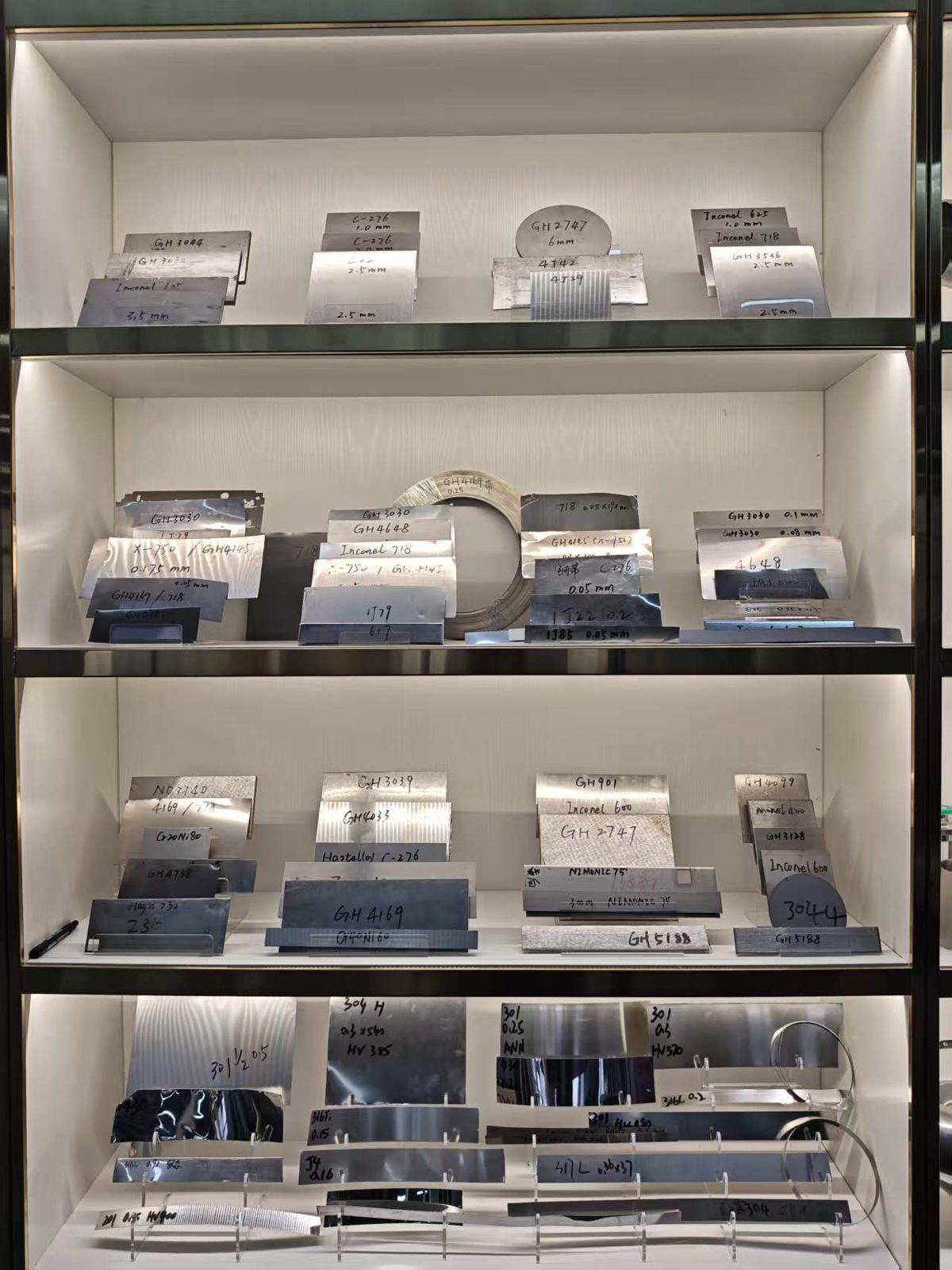
Haynes 556 (UNS R30556 / W.Nr. 2.4839) is an iron-nickel-chromium-cobalt superalloy developed by Haynes International for demanding high-temperature environments where conventional stainless steels and even many nickel alloys fail prematurely. The alloy combines effective resistance to sulfidation, carburization, and chlorine-bearing oxidation with good elevated-temperature strength and excellent fabricability. Its balanced chemistry makes it one of the most cost-effective solutions for mixed-corrosion service between 700°C and 1095°C.
The defining metallurgical feature of Haynes 556 is its high chromium and cobalt content, supplemented by molybdenum, tungsten, nitrogen, and a rare-earth lanthanum addition. Chromium provides the primary oxidation and sulfidation resistance; cobalt improves sulfidation resistance and high-temperature strength; molybdenum and tungsten contribute solid-solution strengthening and resistance to reducing environments; nitrogen boosts creep strength; and lanthanum improves oxide-scale adhesion, reducing spallation during thermal cycling.
Unlike precipitation-hardenable superalloys such as Inconel 718 or Waspaloy, Haynes 556 is strengthened primarily by solid-solution mechanisms and nitrogen interstitial strengthening. This gives it excellent thermal stability and weldability without the risk of strain-age cracking. The alloy can be readily formed, welded, and machined using procedures similar to other Fe-Ni-Cr-Co alloys, making it attractive for complex fabrications such as waste-heat boiler tube bundles, furnace fixtures, and petrochemical reactor internals.
At Hangbo Alloy Group, Haynes 556 is supplied in plates, sheets, bars, seamless tubes, welded tubes, and welding wire per ASTM, ASME, AMS, and DIN/EN specifications. We support waste-to-energy plant operators, petrochemical refineries, cement and lime producers, and industrial furnace manufacturers with mill-direct supply, full certification, and custom cutting and machining services.
The chemistry of Haynes 556 is carefully balanced to provide both high-temperature corrosion resistance and practical mechanical properties. The high chromium and cobalt levels are the foundation of its sulfidation resistance, while nitrogen and the refractory metals molybdenum and tungsten provide solid-solution strengthening for elevated-temperature service. Lanthanum is added in trace amounts to improve the adherence of the protective oxide scale during thermal cycling.
| Element | Min % | Max % |
|---|---|---|
| Iron (Fe) | Balance | Balance |
| Chromium (Cr) | 21.0 | 23.0 |
| Nickel (Ni) | 19.0 | 22.5 |
| Cobalt (Co) | 16.0 | 21.0 |
| Molybdenum (Mo) | 2.5 | 4.0 |
| Tungsten (W) | 2.0 | 3.5 |
| Niobium (Nb) | 0.50 | 1.00 |
| Tantalum (Ta) | 0.30 | 1.25 |
| Nitrogen (N) | 0.10 | 0.30 |
| Carbon (C) | 0.05 | 0.15 |
| Manganese (Mn) | — | 2.00 |
| Silicon (Si) | — | 0.75 |
| Aluminum (Al) | — | 0.50 |
| Lanthanum (La) | 0.005 | 0.10 |
| Phosphorus (P) | — | 0.040 |
| Sulfur (S) | — | 0.015 |
Haynes 556 has a face-centered cubic (FCC) austenitic structure in all standard supply conditions. Its physical properties are comparable to other Fe-Ni-Cr-Co high-temperature alloys, facilitating design calculations and welding to similar base metals. The alloy is essentially non-magnetic in the annealed condition.
| Property | Value | Unit |
|---|---|---|
| Density | 8.23 | g/cm³ |
| Melting Range | 1330 – 1415 | °C |
| Specific Heat (20°C) | 440 | J/kg·K |
| Thermal Conductivity (20°C) | 11.5 | W/m·K |
| Electrical Resistivity (20°C) | 1.20 | μΩ·m |
| Modulus of Elasticity (20°C) | 205 | GPa |
| Mean CTE (20–100°C) | 12.5 | μm/m·°C |
| Mean CTE (20–600°C) | 14.8 | μm/m·°C |
| Magnetic Permeability | 1.003 | (non-magnetic) |
Haynes 556 is supplied in the solution-annealed condition, typically heat treated in the 1100–1175°C range followed by rapid cooling. The alloy exhibits a good combination of strength and ductility, with elongation around 40% that allows bending, spinning, and moderate cold forming. The values below are representative for annealed plate, sheet, and bar products.
| Property | Annealed Value |
|---|---|
| Tensile Strength | 745 MPa (108 ksi) |
| Yield Strength (0.2% offset) | 455 MPa (66 ksi) |
| Elongation in 2 inches | 40% |
| Reduction of Area | 55% |
| Hardness | 90 HRB |
| Charpy V-notch Impact (RT) | 100 J min |
Haynes 556 was specifically developed to resist the combined effects of high temperature and aggressive corrosive gases. Its performance in sulfidizing, carburizing, and chloridizing environments is superior to most austenitic stainless steels and many nickel-base alloys, while its cost is lower than premium cobalt-base or high-nickel corrosion alloys.
Sulfidation is one of the most aggressive forms of high-temperature corrosion in refineries, waste incinerators, and coal-conversion plants. In H2S-bearing or sulfur-oxide-bearing atmospheres, chromium forms protective sulfide-oxide scales, while cobalt improves the thermodynamic stability and mechanical integrity of these scales. Laboratory and field data show that Haynes 556 can last 2–4 times longer than Inconel 625 and Alloy 800H in mixed oxidation-sulfidation environments, making it a preferred upgrade for superheater tubes, reformer tubes, and calciner components.
The high chromium and nickel content of Haynes 556 provides good resistance to carbon ingress in carburizing atmospheres such as those found in ethylene pyrolysis, direct reduction iron (DRI) processes, and carbon regeneration units. The alloy also resists nitridation in ammonia-rich or combustion exhaust environments better than many stainless steels, although Alloy 602CA or RA330 may be preferred for the most extreme carburizing or nitridizing conditions.
Thanks to nitrogen and refractory-metal solid-solution strengthening, Haynes 556 retains useful creep and rupture strength above 870°C. While it is not as strong as precipitation-hardened alloys such as Waspaloy or Inconel 718 at intermediate temperatures, it offers a better combination of strength and corrosion resistance than solid-solution alloys such as Alloy 800H or Inconel 625 in sulfidizing service.
| Temperature (°C) | Tensile Strength (MPa) | Yield Strength (MPa) | Elongation (%) |
|---|---|---|---|
| 20 (Room) | 745 | 455 | 40 |
| 538 | 620 | 310 | 45 |
| 760 | 415 | 220 | 50 |
| 871 | 290 | 170 | 55 |
| 982 | 180 | 110 | 60 |
| 1093 | 100 | 65 | 70 |
Haynes 556 is selected wherever high-temperature strength must be combined with resistance to sulfidation, carburization, or chlorine-bearing oxidation. Its field-proven performance has made it a standard material in several demanding industries.
Hangbo Alloy Group supplies Haynes 556 in the full range of product forms required by waste-to-energy, petrochemical, and industrial heating customers. Material is supplied in the solution-annealed condition with EN 10204 3.1 mill test certificates and full traceability. Custom cutting, machining, and export packaging are available.
Haynes 556 is readily welded by gas tungsten arc welding (GTAW/TIG), gas metal arc welding (GMAW/MIG), and shielded metal arc welding (SMAW). Its austenitic structure and moderate work-hardening rate make it more fabricable than many high-nickel or cobalt-base alloys.
| Standard | Description |
|---|---|
| ASTM B435 | Plate, Sheet, and Strip |
| ASTM B572 | Bar, Rod, and Wire |
| ASTM B622 | Seamless Pipe and Tube |
| ASTM B619 / B775 | Welded Pipe |
| ASTM B626 / B751 | Welded Tube |
| ASTM B366 | Fittings |
| ASTM B472 | Billet and Bar for Reforging |
| AMS 5531 | Sheet, Strip, and Plate |
| AMS 5831 | Bar, Rod, Forging, and Wire |
| AMS 5830 | Welding Wire |
| ASME SB-435 / SB-572 / SB-622 | Boiler and Pressure Vessel Code |
| DIN/EN W.Nr. 2.4839 | German/European Material Designation |
Shanghai Hangbo Alloy Group is a professional manufacturer and global supplier of Haynes 556 (UNS R30556 / W.Nr. 2.4839). We provide plates, sheets, bars, seamless tubes, welded tubes, fittings, and welding wire with full material certification per ASTM, ASME, AMS, and EN standards. Mill-direct pricing, ISO 9001:2015 quality system, and fast delivery to 50+ countries worldwide.
Haynes 556 (UNS R30556 / W.Nr. 2.4839) is an iron-nickel-chromium-cobalt superalloy designed for high-temperature service in severely corrosive environments. It combines excellent resistance to sulfidation, carburization, and oxidation with good high-temperature strength and fabricability.
Nominal composition: Fe balance (~31%), Cr 21.0–23.0%, Ni 19.0–22.5%, Co 16.0–21.0%, Mo 2.5–4.0%, W 2.0–3.5%, Nb 0.50–1.00%, Ta 0.30–1.25%, N 0.10–0.30%, C 0.05–0.15%, plus controlled Mn, Si, Al, La, S, and P. The high Cr-Co-Mo-W combination and rare-earth lanthanum provide its unique corrosion resistance.
Haynes 556 has a density of approximately 8.23 g/cm³ (0.297 lb/in³) and a melting range of 1330–1415°C (2425–2575°F).
Typical annealed properties: tensile strength ~745 MPa (108 ksi), yield strength ~455 MPa (66 ksi), elongation ~40%, hardness ~90 HRB. The alloy retains useful strength and creep resistance from 700°C up to 1095°C.
Key standards: ASTM B435 (plate/sheet/strip), ASTM B572 (bar/rod), ASTM B622 (seamless pipe/tube), ASTM B619/B775 (welded pipe), ASTM B626/B751 (welded tube), ASTM B366 (fittings), AMS 5531/5831/5830, and W.Nr. 2.4839.
Haynes 556 resists sulfidation through its high chromium, cobalt, and molybdenum content, which form stable protective sulfide-oxide scales. In mixed oxidation-sulfidation environments, it typically lasts 2–4 times longer than Inconel 625 and Alloy 800H.
Haynes 556 is designed for continuous service from 700°C up to 1095°C (2000°F). Under low stress and clean oxidizing conditions, short-term exposure to 1150°C is possible without catastrophic scale spallation.
Primary applications: waste incineration boiler and superheater tubes, rotary calciners, petrochemical reformer tubes, catalyst regenerators, industrial furnace fixtures, coal gasification heat exchangers, hot-dip galvanizing hardware, and gas turbine fasteners.
Yes, Haynes 556 has excellent weldability using GTAW, GMAW, and SMAW processes. Matching filler metals such as ERNiCrCoMo-1 or Haynes 556 bare wire are preferred. No preheat is required, and post-weld heat treatment is generally not necessary for corrosion resistance.
Hangbo Alloy Group supplies Haynes 556 in round bars, plates/sheets/strips, seamless tubes/pipes, welded tubes/pipes, fittings, welding wire, and custom forgings. All products are delivered with EN 10204 3.1 mill test certificates and full traceability.
In sulfidizing and carburizing environments, Haynes 556 outperforms both Inconel 625 and Alloy 800H due to its higher Cr-Co content and rare-earth-modified oxide scale. Its creep strength above 870°C is also superior. For strongly reducing acids, Hastelloy C-276 is preferred; for pure oxidation above 1100°C, Alloy 602CA or RA330 may be better choices.
Haynes 556 is a premium specialty alloy. Typical mill-direct pricing ranges from $25–45/kg for bars, $35–60/kg for plates, and $50–90/kg for seamless tubes, depending on size and quantity. Lead times are typically 8–12 weeks for custom mill orders; Hangbo Alloy maintains strategic inventory of common sizes for 2–4 week delivery. MOQ is generally 50 kg for stock sizes and 200–500 kg for custom sizes.
Request a quotation for Haynes 556 plates, tubes, bars, or welding wire for waste incineration, petrochemical, or furnace applications. We stock standard sizes and accept custom orders.