
Hangbo Alloy Group
Shanghai · Est. 2012
UNS N08890 / W.Nr. 1.4978 — Iron-nickel-chromium superalloy engineered for severe oxidation, carburization, and nitridation environments in ethylene cracking, reformer furnaces, and high-temperature heat-treatment equipment.
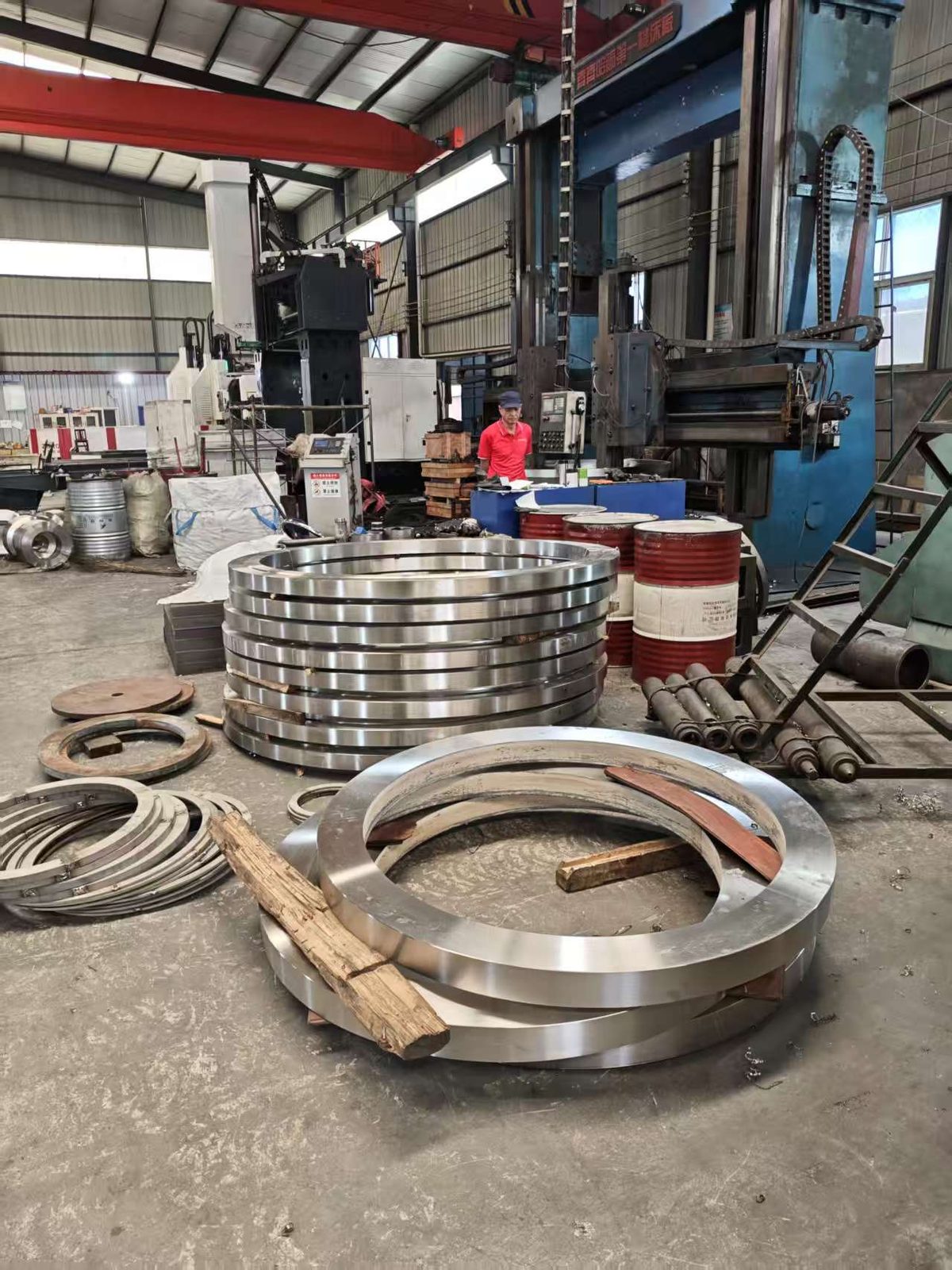
Incoloy 890 (UNS N08890 / W.Nr. 1.4978) is an iron-nickel-chromium austenitic superalloy developed by Special Metals for the most demanding high-temperature service in petrochemical and metallurgical furnace applications. The alloy was designed to provide exceptional resistance to oxidation, carburization, and nitridation at temperatures up to 1150°C (2100°F), filling the cost-performance gap between standard Incoloy 800H and premium nickel-chromium alloys such as Alloy 602CA and RA253MA.
The defining feature of Incoloy 890 is its 25% chromium content combined with carefully balanced microalloying additions of silicon (1.0–2.0%), titanium, zirconium, aluminum, and rare-earth elements. The high chromium level produces a slow-growing, very adherent Cr2O3 scale that protects the base metal from further attack. Silicon further enhances oxidation resistance and helps block carbon ingress in carburizing atmospheres. The rare-earth and reactive-metal additions improve scale adhesion dramatically, reducing spallation during thermal cycling and extending service life.
Compared to standard Incoloy 800H (20% Cr) and Incoloy 800HT, Incoloy 890 typically delivers 2–3 times longer tube life in ethylene cracking furnaces, reformer service, and other high-temperature carburizing atmospheres. The alloy is supplied in the solution-annealed condition and is fully austenitic, non-magnetic, and readily fabricated using standard procedures for Fe-Ni-Cr alloys. Hangbo Alloy Group stocks Incoloy 890 in plates, sheets, bars, seamless tubes, and forgings per ASTM, ASME, and EN standards.
The chemistry of Incoloy 890 is engineered to deliver the best combination of high-temperature strength, oxidation, and carburization resistance at a competitive cost. The 25% chromium and 1.0–2.0% silicon provide the primary oxidation and carburization protection, while microalloying with titanium, zirconium, aluminum, and rare-earth elements pins the oxide scale and minimizes spallation during thermal cycling.
| Element | Min % | Max % |
|---|---|---|
| Iron (Fe) | 30.0 | 34.0 (balance) |
| Nickel (Ni) | 42.0 | 46.0 |
| Chromium (Cr) | 23.0 | 27.0 |
| Silicon (Si) | 1.00 | 2.00 |
| Manganese (Mn) | — | 1.00 |
| Titanium (Ti) | 0.10 | 0.40 |
| Zirconium (Zr) | 0.05 | 0.20 |
| Aluminum (Al) | 0.10 | 0.50 |
| Carbon (C) | — | 0.05 |
| Copper (Cu) | — | 0.40 |
| Molybdenum (Mo) | — | 0.50 |
| Rare Earth / Ce + La | 0.02 | 0.10 |
| Phosphorus (P) | — | 0.015 |
| Sulfur (S) | — | 0.005 |
Incoloy 890 has a fully austenitic face-centered cubic (FCC) structure in the solution-annealed condition and is essentially non-magnetic. Its physical properties are comparable to the Incoloy 800 family, which simplifies the design of components that may need to be welded to or replaced alongside existing 800H equipment.
| Property | Value | Unit |
|---|---|---|
| Density | 7.85 | g/cm³ |
| Melting Range | 1330 – 1400 | °C |
| Specific Heat (20°C) | 460 | J/kg·K |
| Thermal Conductivity (20°C) | 12.5 | W/m·K |
| Thermal Conductivity (1000°C) | 26.0 | W/m·K |
| Electrical Resistivity (20°C) | 1.05 | μΩ·m |
| Modulus of Elasticity (20°C) | 195 | GPa |
| Mean CTE (20–100°C) | 13.5 | μm/m·°C |
| Mean CTE (20–800°C) | 16.8 | μm/m·°C |
| Magnetic Permeability | 1.003 | (non-magnetic) |
Incoloy 890 is supplied in the solution-annealed condition, typically heat treated at 1150–1200°C followed by rapid cooling. The alloy exhibits a good balance of strength and ductility at room temperature, with elongation around 40% that allows bending, rolling, and moderate cold forming for shop fabrication. The values below are representative for plate, sheet, and bar products per ASTM B511/B512.
| Property | Annealed Value |
|---|---|
| Tensile Strength | 585 MPa (85 ksi) |
| Yield Strength (0.2% offset) | 275 MPa (40 ksi) |
| Elongation in 2 inches | 42% |
| Reduction of Area | 60% |
| Hardness | 85 HRB |
| Charpy V-notch Impact (RT) | 120 J min |
Incoloy 890 was specifically designed to resist the combined effects of high temperature, oxidation, carburization, and thermal cycling in petrochemical and metallurgical furnace service. Its performance significantly exceeds Incoloy 800H and 800HT in most aggressive atmospheres, while remaining cost-competitive.
The 25% chromium level produces a very protective Cr2O3 scale that grows slowly and adheres tenaciously to the base metal, even under repeated thermal cycling. In laboratory cyclic oxidation tests at 1100°C, Incoloy 890 typically shows metal loss rates of <0.2 mm/year, roughly one-third that of Incoloy 800H. The addition of silicon further reinforces the scale and helps block inward diffusion of oxygen. Field experience in ethylene pyrolysis furnaces has shown Incoloy 890 tubes lasting 5–8 years compared to 2–3 years for standard 800H.
The combination of high chromium, silicon, and rare-earth additions forms a dense, glassy oxide layer that effectively blocks carbon and nitrogen ingress in carburizing and nitriding atmospheres. In petrochemical ethylene cracking service where hydrocarbon decomposition continuously generates carbon, Incoloy 890 demonstrates metal wastage rates 50–70% lower than 800H. The alloy is also resistant to nitridation in ammonia-rich environments and to high-temperature attack by sulfur-containing gases.
Like other Incoloy 800-family alloys, Incoloy 890 is a solid-solution-strengthened austenitic alloy. It does not have the precipitation-hardening response of Waspaloy or Inconel 718, but it offers stable, predictable creep-rupture strength up to about 1100°C. The alloy is well suited for the radiant sections, pigtails, and transfer lines of ethylene crackers, reformer furnaces, and similar equipment where the dominant failure mode is high-temperature corrosion rather than mechanical creep.
| Temperature (°C) | Tensile Strength (MPa) | Yield Strength (MPa) | Elongation (%) |
|---|---|---|---|
| 20 (Room) | 585 | 275 | 42 |
| 538 | 490 | 195 | 40 |
| 760 | 370 | 165 | 45 |
| 871 | 275 | 140 | 50 |
| 982 | 175 | 100 | 55 |
| 1093 | 105 | 65 | 60 |
Incoloy 890 is selected wherever the dominant design challenge is high-temperature oxidation and carburization combined with moderate mechanical loading. It has become a standard material of construction in several furnace-intensive industries.
Hangbo Alloy Group supplies Incoloy 890 in the full range of product forms required by petrochemical, metallurgical, and heat-treatment customers. Material is delivered in the solution-annealed condition with EN 10204 3.1 mill test certificates, full traceability, and optional third-party inspection. Custom cutting, bending, machining, and export packaging are available.
Incoloy 890 is readily welded by gas tungsten arc welding (GTAW/TIG), gas metal arc welding (GMAW/MIG), and shielded metal arc welding (SMAW). Its austenitic structure and moderate work-hardening rate make it as fabricable as standard 800H.
| Standard | Description |
|---|---|
| ASTM B511 | Plate, Sheet, and Strip |
| ASTM B512 | Bar, Rod, and Billet |
| ASTM B407 | Seamless Pipe and Tube (Incoloy 800 family) |
| ASTM B408 | Seamless Tube (Incoloy 800 family) |
| ASTM B546 | Welded Pipe and Tube |
| ASTM B564 | Forgings |
| ASTM B472 | Billet and Bar for Reforging |
| ASME SB-511 / SB-512 / SB-564 | Boiler and Pressure Vessel Code |
| EN 10095 | Heat-Resistant Steels and Nickel Alloys |
| DIN/EN W.Nr. 1.4978 | German/European Material Designation |
| ISO 6207 / 6208 | Seamless and Welded Tubes (Nickel and Nickel Alloys) |
Shanghai Hangbo Alloy Group is a professional manufacturer and global supplier of Incoloy 890 (UNS N08890 / W.Nr. 1.4978). We provide plates, sheets, bars, seamless tubes, welded tubes, fittings, and welding wire with full material certification per ASTM, ASME, and EN standards. Mill-direct pricing, ISO 9001:2015 quality system, and fast delivery to 50+ countries worldwide.
Incoloy 890 (UNS N08890 / W.Nr. 1.4978) is an iron-nickel-chromium austenitic superalloy designed for severe high-temperature service. With 25% chromium, silicon, and rare-earth microalloying, it offers outstanding resistance to oxidation, carburization, and nitridation up to 1150°C in furnace and petrochemical environments.
Nominal composition: Fe 30-34% (balance), Ni 42-46%, Cr 23-27%, Si 1.0-2.0%, Ti 0.10-0.40%, Zr 0.05-0.20%, Al 0.10-0.50%, C ≤0.05%, plus controlled Mn, Cu, Mo, S, P, and rare-earth additions. The high Cr-Si combination provides the unique oxidation and carburization resistance.
Incoloy 890 has a density of approximately 7.85 g/cm³ (0.284 lb/in³) and a melting range of 1330–1400°C (2425–2550°F).
Typical annealed properties: tensile strength ~585 MPa (85 ksi), yield strength ~275 MPa (40 ksi), elongation ~42%, hardness ~85 HRB. The alloy retains useful creep strength up to about 1100°C and is well suited for furnace tubes and pigtails.
Key standards: ASTM B511 (plate/sheet/strip), ASTM B512 (bar/billet), ASTM B407/B408 (seamless tube), ASTM B546 (welded tube), ASTM B564 (forgings), ASME SB-511/SB-512/SB-564, EN 10095, and W.Nr. 1.4978.
The 25% chromium content forms a very adherent, slow-growing Cr2O3 scale that blocks further attack. Microalloying with Si, Ti, Zr, and rare-earths improves scale adhesion and reduces spallation. Incoloy 890 typically lasts 2–3 times longer than Incoloy 800H in ethylene cracking and reformer service.
Incoloy 890 is designed for continuous service up to 1150°C (2100°F) in oxidizing, carburizing, and nitriding environments. In clean oxidizing atmospheres, short-term exposure to 1200°C is possible.
Primary applications: ethylene cracking furnace tubes and pigtails, reformer furnace tubes and manifolds, industrial furnace radiant tubes, calciner internals, heat-treatment fixtures and baskets, cement kiln preheater components, and metallurgical furnace parts.
Yes, Incoloy 890 has good weldability using GTAW, GMAW, and SMAW processes. Matching or near-matching filler metals such as ERNiCrCoMo-1 or Incoloy 890 bare wire are preferred. No preheat is required, and post-weld heat treatment is generally not needed for corrosion resistance.
Hangbo Alloy Group supplies Incoloy 890 in plates/sheets/strips, bars and billets, seamless tubes/pipes, welded tubes/pipes, forgings, and welding wire. All products are delivered with EN 10204 3.1 mill test certificates and full traceability.
Compared to Incoloy 800H, Incoloy 890 offers significantly better oxidation and carburization resistance due to its higher chromium (25% vs 20%) and rare-earth additions, often doubling service life in ethylene cracking and reformer service. Compared to Alloy 602CA, Incoloy 890 has similar oxidation resistance at lower cost but lower high-temperature strength; Alloy 602CA is preferred for the most demanding creep service above 1100°C.
Incoloy 890 is a premium specialty alloy. Typical mill-direct pricing ranges from $18–35/kg for bars, $25–45/kg for plates, and $40–75/kg for seamless tubes, depending on size and quantity. Lead times are typically 8–14 weeks for custom mill orders; Hangbo Alloy maintains strategic inventory of common tube and plate sizes for 3–6 week delivery. MOQ is generally 100 kg for stock sizes and 300–1000 kg for custom sizes.
Request a quotation for Incoloy 890 plates, tubes, bars, or welding wire for ethylene cracking, reformer, or industrial furnace applications. We stock standard sizes and accept custom orders.