
Hangbo Alloy Group
Shanghai · Est. 2012
UNS N06693 / W.Nr. 2.4646 — Nickel-chromium-aluminum superalloy engineered for extreme resistance to metal dusting, carburization, and high-temperature oxidation in syngas, ammonia, and petrochemical service.
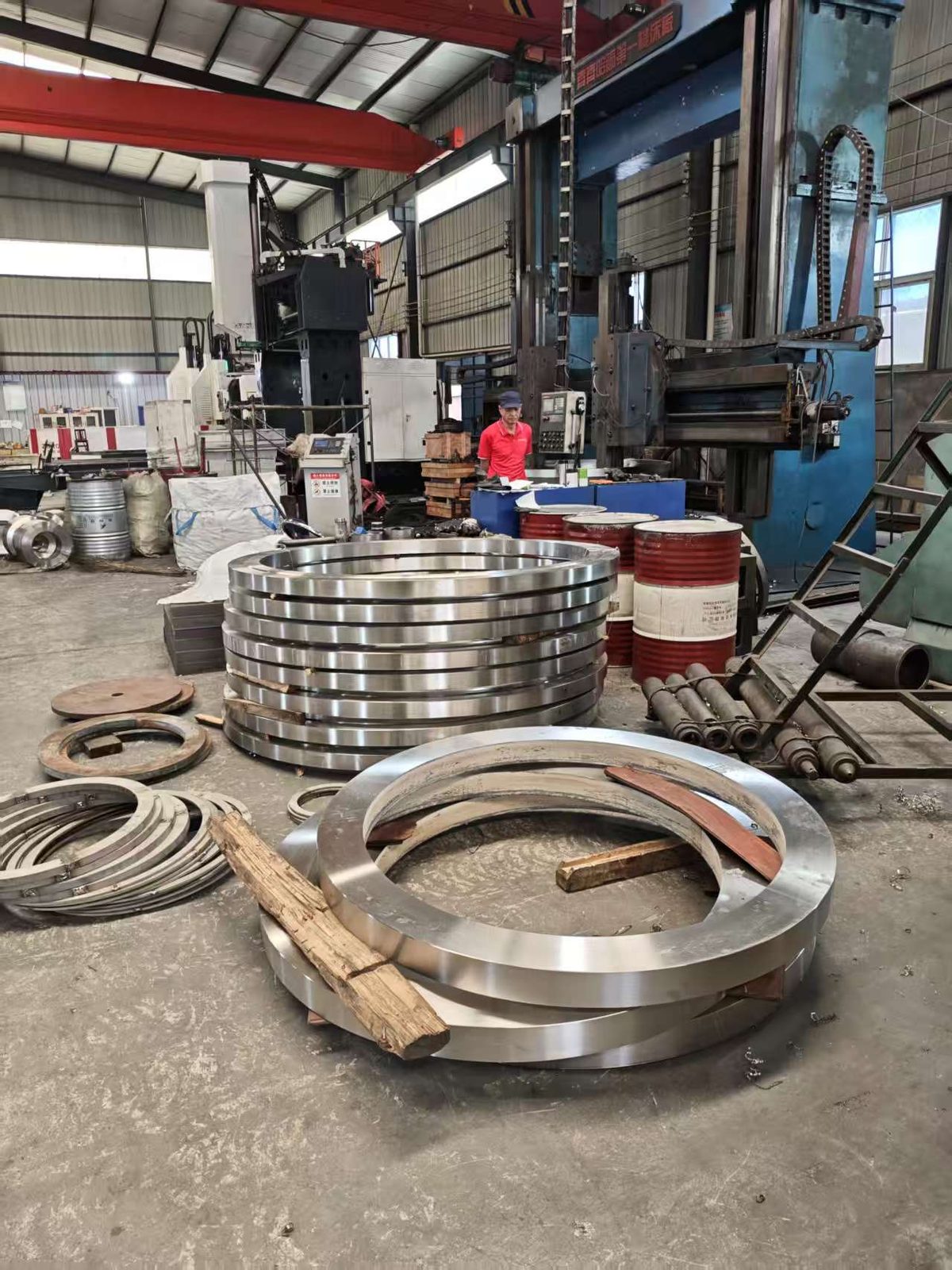
Inconel 693 (UNS N06693 / W.Nr. 2.4646) is a nickel-chromium-aluminum superalloy specifically developed by Special Metals to combat metal dusting, a catastrophic form of high-temperature corrosion that occurs in carbon-supersaturated atmospheres at temperatures between approximately 400°C and 800°C. The alloy achieves its remarkable resistance through an exceptionally high aluminum content (3.0–3.5% typical) that promotes the formation of a continuous, self-healing aluminum oxide (Al2O3) layer on the metal surface. This alumina scale is essentially impermeable to carbon atoms, blocking the carbon ingress that drives the metal dusting mechanism.
Metal dusting is a leading cause of unscheduled downtime in syngas coolers, ammonia reformers, methanol synthesis loops, and direct reduction iron (DRI) process equipment. Conventional alloys such as Incoloy 800H, 304H stainless, or HK40 cast tubes can experience metal loss rates of several millimeters per year in such environments, sometimes perforating tube walls within months. Inconel 693 was engineered to provide decades of service in these conditions, dramatically extending inspection intervals and reducing total cost of ownership.
Beyond its anti-dusting capability, Inconel 693 offers solid high-temperature oxidation resistance up to approximately 1100°C in air, comparable to many Fe-Ni-Cr alloys. The 30% chromium level provides adequate sulfidation resistance for low-to-moderate sulfur environments, while the high aluminum improves carburization resistance in CO-rich and hydrocarbon atmospheres. The alloy is supplied in the solution-annealed condition and is non-age-hardenable, with strength derived from solid-solution strengthening and the fine grain size maintained by aluminum and niobium additions.
At Hangbo Alloy Group, we supply Inconel 693 round bars, seamless tubes, plates, sheets, and welding wire to syngas technology licensors, ammonia plant operators, methanol producers, and petrochemical engineering contractors worldwide. Our mill-direct supply chain ensures full traceability, EN 10204 3.1 certification, and competitive delivery to 50+ countries.
The defining feature of Inconel 693's chemistry is its high aluminum content. While conventional austenitic nickel and Fe-Ni-Cr alloys contain 0.1–0.5% aluminum to improve oxidation resistance, Inconel 693 contains 2.5–4.0% aluminum — sufficient to form a continuous, protective Al2O3 scale instead of the more common Cr2O3 scale. This single compositional change is what makes the alloy uniquely resistant to metal dusting. Niobium (0.5–2.5%) contributes to grain refinement and creep strength, while chromium (27–31%) ensures adequate sulfidation resistance and supports the alumina scale formation in transitional atmospheres.
| Element | Min % | Max % |
|---|---|---|
| Nickel + Cobalt (Ni+Co) | 58.0 | 63.0 |
| Chromium (Cr) | 27.0 | 31.0 |
| Aluminum (Al) | 2.50 | 4.00 |
| Iron (Fe) | 3.0 | 5.0 |
| Niobium (Nb) | 0.50 | 2.50 |
| Manganese (Mn) | — | 1.0 |
| Titanium (Ti) | — | 1.0 |
| Copper (Cu) | — | 0.50 |
| Carbon (C) | — | 0.15 |
| Silicon (Si) | — | 0.50 |
| Sulfur (S) | — | 0.010 |
| Phosphorus (P) | — | 0.020 |
Inconel 693 has a face-centered cubic (FCC) austenitic matrix in all standard supply conditions. Its physical constants reflect the lower density typical of high-aluminum nickel alloys and the moderate thermal conductivity expected for austenitic Ni-Cr compositions. These values are used in thermal stress, heat transfer, and pressure vessel design calculations per ASME and EN standards.
| Property | Value | Unit |
|---|---|---|
| Density | 7.77 | g/cm³ |
| Melting Range | 1310 – 1370 | °C |
| Specific Heat (20°C) | 450 | J/kg·K |
| Thermal Conductivity (20°C) | 11.7 | W/m·K |
| Electrical Resistivity (20°C) | 1.18 | μΩ·m |
| Modulus of Elasticity (20°C) | 196 | GPa |
| Mean CTE (20–100°C) | 12.2 | μm/m·°C |
| Mean CTE (20–600°C) | 14.4 | μm/m·°C |
| Magnetic Permeability | 1.001 | (non-magnetic) |
Inconel 693 is supplied in the solution-annealed condition (typically 1100–1150°C followed by rapid cooling) and is not age-hardenable. Strength is derived from solid-solution strengthening by chromium and niobium, plus fine grain size stabilization by aluminum and niobium. The values below represent typical room-temperature tensile properties for annealed bar, plate, and tube products per ASTM B166/B168.
| Property | Annealed Value |
|---|---|
| Tensile Strength | 700 MPa (102 ksi) min |
| Yield Strength (0.2% offset) | 340 MPa (49 ksi) min |
| Elongation in 2 inches | 35% min |
| Reduction of Area | 50% min |
| Hardness | 85 HRB max (180 HB) |
| Charpy V-notch Impact (RT) | 120 J min |
The high ductility (35% elongation) is a significant advantage for fabricators: Inconel 693 can be cold-bent, hot-bent, and formed into complex tube bends, header boxes, and pressure vessel heads without cracking. This is in contrast to high-chromium cast alloys such as HK40 or HP40, which are limited to straight tubes and require expensive welding procedures for branch connections.
Although Inconel 693 is not a high-strength superalloy in the Waspaloy or Inconel 718 sense, it retains useful strength and creep resistance at temperatures up to about 800°C. Its primary use temperature range is 400–800°C (the metal dusting window) where its combination of strength, ductility, and protective scale is unmatched. For short-term exposure, the alloy can be used up to 1100°C with acceptable oxidation behavior.
| Temperature (°C) | Tensile Strength (MPa) | Yield Strength (MPa) | Elongation (%) |
|---|---|---|---|
| 20 (Room) | 720 | 360 | 42 |
| 200 | 680 | 320 | 40 |
| 400 | 620 | 280 | 42 |
| 600 | 580 | 260 | 45 |
| 700 | 510 | 240 | 48 |
| 800 | 380 | 210 | 55 |
| 900 | 240 | 170 | 65 |
| 1000 | 140 | 110 | 75 |
For comparison, the 100,000-hour rupture stress at 700°C is approximately 30–40 MPa, and at 800°C approximately 15–20 MPa. These values are adequate for headers, transfer lines, and pressure vessel shells but are not sufficient for highly stressed rotating components.
Metal dusting is a form of catastrophic high-temperature corrosion that occurs when alloys are exposed to strongly carburizing atmospheres (high carbon activity, low oxygen partial pressure) at temperatures typically between 400°C and 800°C. The mechanism involves the decomposition of CO or hydrocarbons on the metal surface, dissolution of carbon into the alloy, and subsequent precipitation of graphite particles that disrupt the metal matrix, causing it to disintegrate into a powder of metal particles, graphite, and oxides. Affected components can lose several millimeters of wall thickness per year and fail suddenly through perforation.
Conventional austenitic stainless steels and Fe-Ni-Cr alloys rely on a Cr2O3 oxide scale for protection. Unfortunately, chromia is permeable to carbon at elevated temperatures, and in CO-rich syngas, the chromia layer cannot prevent carbon from reaching the metal below. Once carbon saturates the underlying metal, metal dusting initiates and proceeds rapidly. The traditional mitigation strategy — increasing chromium content — only delays the attack.
Inconel 693 solves this problem by switching the protective oxide from chromia to alumina. The 3% aluminum content is sufficient to form a continuous Al2O3 layer on the metal surface, which is far more thermodynamically stable and essentially impermeable to carbon. Alumina does not catalyze the Boudouard reaction (2CO → CO2 + C), so the carbon deposition step that initiates metal dusting is suppressed at the surface.
The table below shows typical mass loss and pit depth data from a 500-hour laboratory test in 50% CO / 50% H2 / 1% H2O at 650°C (severe metal dusting conditions):
| Alloy | Mass Loss (mg/cm²) | Max Pit Depth (μm) | Visual Rating |
|---|---|---|---|
| Inconel 693 | < 0.5 | 0 – 5 | No attack |
| Alloy 602CA | 2 – 5 | 20 – 40 | Light pitting |
| Incoloy 800H | 25 – 50 | 200 – 400 | Severe dusting |
| Type 304H SS | 60 – 100 | 500 – 800 | Catastrophic failure |
| HK40 (25Cr/20Ni cast) | 15 – 35 | 150 – 300 | Severe dusting |
Under identical test conditions, Inconel 693 is essentially unattacked while 304H stainless and Incoloy 800H suffer catastrophic metal loss. In real plant service, this translates to inspection intervals measured in years for Inconel 693 versus weeks or months for unprotected alloys.
Beyond metal dusting, Inconel 693 also resists bulk carburization in high-carbon-activity environments. The same Al2O3 layer that blocks dusting also blocks the slower carbon diffusion process responsible for carburization. Carburized layers in 800H after 10,000 hours at 700°C can reach depths of 1–3 mm, while Inconel 693 typically shows carbon ingress of less than 0.05 mm — essentially background noise. This dramatically reduces the risk of brittle fracture in reformer outlet piping and transfer line systems.
Inconel 693 is selected wherever metal dusting or severe carburization threatens the integrity of process equipment. Its primary applications are concentrated in syngas, ammonia, methanol, and direct reduction iron service, but it is increasingly specified in petrochemical and chemical processing where carbon activities are high.
Hangbo Alloy Group supplies Inconel 693 in the full range of product forms required by syngas plant designers and ammonia plant operators. All products are supplied in the solution-annealed condition and accompanied by EN 10204 3.1 mill test certificates with full traceability.
Inconel 693 is readily welded using conventional gas tungsten arc welding (GTAW/TIG) and gas metal arc welding (GMAW/MIG) processes. Its high ductility and resistance to hot cracking make it significantly more weldable than high-chromium nickel alloys or iron-nickel-chromium alloys prone to weld sensitization.
Key welding considerations:
| Standard | Description |
|---|---|
| ASTM B166 | Nickel-Chromium-Iron Alloy Rod, Bar & Wire |
| ASTM B167 | Nickel-Chromium-Iron Alloy Seamless Pipe & Tube |
| ASTM B168 | Nickel-Chromium-Iron Alloy Plate, Sheet & Strip |
| ASTM B516 | Welded Nickel-Chromium-Iron Alloy Tubes |
| ASME SB-166 / SB-167 / SB-168 | Boiler and Pressure Vessel Code (Section II) |
| ASME Code Case 2680 | Use of N06693 in Pressure Vessels |
| DIN 17742 | German Standard for NiCrAl Alloy |
| EN 10095 | Heat-Resisting Steels and Nickel Alloys |
| VDTÜV 305 | German Pressure Vessel Approval (Material 2.4646) |
Shanghai Hangbo Alloy Group is a professional manufacturer and global supplier of Inconel 693 (UNS N06693 / W.Nr. 2.4646). We provide seamless tubes, plates, round bars, welding wire, and custom forgings with full material certification per ASTM, ASME, and EN standards. Mill-direct pricing, ISO 9001:2015 quality system, and fast delivery to 50+ countries worldwide.
Inconel 693 is designed for continuous service up to approximately 700°C (1290°F) in strongly carburizing atmospheres where metal dusting is the dominant failure mode. The alloy retains its protective Al2O3 oxide scale up to about 1100°C in oxidizing environments, but its primary use is in the 450–700°C metal dusting range.
Inconel 693 has a density of approximately 7.77 g/cm³ (0.281 lb/in³), which is lower than most nickel superalloys due to its high aluminum content (around 3.1%) and the absence of heavy molybdenum or tungsten additions.
Nominal composition: Ni+Co 58–63%, Cr 27–31%, Al 2.5–4.0%, Fe 3.0–5.0%, Nb 0.5–2.5%, plus C ≤0.15%, Mn ≤1.0%, Ti ≤1.0%. The high aluminum (3.1% typical) forms a continuous Al2O3 oxide layer that is impermeable to carbon and provides exceptional metal dusting resistance.
Key standards: ASTM B166 (rod/bar/wire), ASTM B167 (seamless tube/pipe), ASTM B168 (plate/sheet/strip), ASTM B516 (welded tube), ASME Code Case 2680 (pressure vessels), DIN 17742, EN 10095, and VdTÜV 305. The alloy is also known commercially as Nicrofer 6030 or Alloy 693.
Inconel 693 resists metal dusting through its high aluminum content (3.1%), which forms a continuous, self-healing Al2O3 oxide layer on the surface. This aluminum oxide scale is highly impermeable to carbon atoms, preventing the carbon supersaturation and graphite nucleation that initiate metal dusting attack. In standard 500-hour tests at 650°C in CO-H2-H2O atmospheres, Inconel 693 shows essentially no metal dusting, while standard alloys like 800H or HK40 suffer severe attack.
Inconel 693 is a specialty alloy with limited global production. Typical mill-direct pricing: round bars $30–50/kg, seamless tubes $55–85/kg, plates $40–60/kg, welding wire $80–120/kg. Pricing depends on dimensions, quantity, and current market conditions. Contact Hangbo Alloy for quotation.
Hangbo Alloy Group supplies Inconel 693 in: round bars (8–200mm diameter), seamless tubes/pipes (OD 10–168mm), plates/sheets (1–30mm), welding wire, and custom forgings. All products are delivered with material test certificates per EN 10204 3.1 and full traceability. Bimetallic tubes (Inconel 693 clad over carbon steel) are available for cost-effective reformer outlet piping.
Yes, Inconel 693 can be welded using GTAW (TIG) and GMAW (MIG) processes. Matching filler metal is typically ERNiCrAl-1 or ERNiCrFe-12 (with caution on dilution). Dissimilar welds to other nickel alloys commonly use ERNiCr-3 (Inconel 82) or ERNiCrMo-3 (Inconel 625). Post-weld solution annealing at 1100–1150°C is recommended to restore the optimal aluminum oxide formation in the weld zone.
Primary applications: syngas coolers and heat exchangers in coal-to-chemicals and gasification plants, ammonia primary reformer outlet piping and headers, methanol synthesis reactor internals, ethylene pyrolysis transfer line exchangers, direct reduction iron (DRI) process equipment, and any environment where carbon activity exceeds 1 and temperatures are between 400–800°C.
Inconel 693 is dramatically superior to Alloy 800H in metal dusting environments. While 800H is not designed for metal dusting and typically shows severe pitting and metal loss within weeks in CO-rich syngas at 600°C, Inconel 693 remains essentially unattacked for thousands of hours. The performance difference is primarily due to the Al2O3 vs Cr2O3 oxide chemistry: alumina is far more impermeable to carbon than chromia. Inconel 693 is the preferred upgrade for plant operators experiencing metal dusting failures.
Inconel 693 has moderate sulfidation resistance due to its 30% chromium content, but it is not optimized for high-sulfur environments. In atmospheres containing H2S above 0.5% or sulfur partial pressures above 10 Pa, Inconel 693 may experience accelerated attack. For high-sulfur service, Alloy 602CA or specialized nickel-cobalt alloys may be more suitable.
Standard Inconel 693 mill products have typical lead times of 8–14 weeks due to limited global production. Hangbo Alloy maintains strategic inventory of common bar and tube sizes with 2–4 week delivery for stocked items. MOQ is generally 50 kg for stock products and 200–500 kg for custom sizes. Mill test certificates, PMI verification, and third-party inspection (SGS/BV/TUV) are available on request.
Request a quotation for Inconel 693 seamless tubes, plates, or round bars for syngas, ammonia, or petrochemical service. We stock standard sizes and accept custom orders.