
Hangbo Alloy Group
Shanghai · Est. 2012
UNS N07208 / W.Nr. 2.4638 — Chemical composition, mechanical properties, temperature limits, and corrosion resistance data for engineers and procurement professionals.
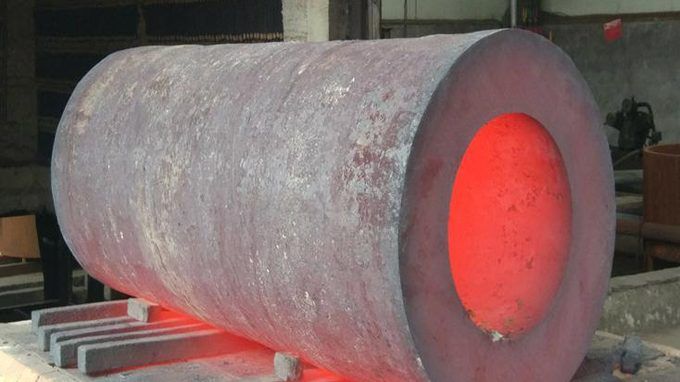
Haynes 282 (UNS N07208 / W.Nr. 2.4638) is a wrought nickel-based superalloy developed to provide a unique combination of high-temperature creep strength, excellent oxidation resistance, and superior weldability. Its chemistry is based on the proven Waspaloy family but with reduced aluminum and titanium content to improve weldability and thermal stability. The alloy contains approximately 20% chromium, 10% cobalt, and 8.5% molybdenum, strengthened by gamma-prime (γ') precipitates of Ni₃(Ti,Al). Haynes 282 offers creep strength comparable to Waspaloy up to about 800-900 °C, while maintaining much better resistance to strain-age cracking during welding and post-weld heat treatment. It is widely used in modern gas turbine combustors, transition ducts, and industrial heat treatment fixtures where long-term high-temperature performance and fabrication economy are both critical.
The chemical composition of Haynes 282 is carefully balanced to achieve its unique combination of high-temperature strength, corrosion resistance, and fabricability. Tight control of trace elements ensures consistent mechanical properties and weldability.
| Element | Min % | Max % |
|---|---|---|
| Nickel (Ni) | Balance | Balance |
| Chromium (Cr) | 19.0 | 21.0 |
| Cobalt (Co) | 9.0 | 11.0 |
| Molybdenum (Mo) | 8.0 | 9.5 |
| Titanium (Ti) | 2.0 | 2.5 |
| Aluminum (Al) | 1.4 | 1.7 |
| Iron (Fe) | — | 1.5 |
| Carbon (C) | 0.05 | 0.08 |
| Silicon (Si) | — | 0.50 |
| Manganese (Mn) | — | 0.30 |
| Boron (B) | 0.005 | 0.015 |
| Phosphorus (P) | — | 0.015 |
| Sulfur (S) | — | 0.015 |
Haynes 282 exhibits a face-centered cubic (FCC) austenitic matrix, which provides excellent ductility and toughness from cryogenic temperatures up to its maximum service limit. The physical properties below are typical values at room temperature.
| Property | Value | Unit |
|---|---|---|
| Density | 8.27 | g/cm³ |
| Melting Point | 1380 | °C |
| Specific Heat (21°C) | 420 | J/kg·K |
| Thermal Conductivity (21°C) | 11.0 | W/m·K |
| Electrical Resistivity (21°C) | 1.21 | μΩ·m |
| Modulus of Elasticity (21°C) | 222 | GPa |
| Mean CTE (21-93°C) | 11.9 | μm/m·°C |
The mechanical properties of Haynes 282 vary depending on product form, cold work, and heat treatment condition. The data below represents typical values for solution-annealed and aged material according to applicable ASTM and AMS specifications.
| Property | Value |
|---|---|
| Tensile Strength (solution annealed) | 1100 MPa (160 ksi) |
| Yield Strength (solution annealed) | 725 MPa (105 ksi) |
| Tensile Strength (aged) | 1250 MPa (181 ksi) |
| Yield Strength (aged) | 950 MPa (138 ksi) |
| Elongation in 2 inches | 25-30% |
| Hardness (solution annealed) | 25-30 HRC |
| Hardness (aged) | 36-42 HRC |
| Impact Strength (Charpy V) | Good |
Haynes 282 maintains useful strength at elevated temperatures, with performance dependent on the strengthening mechanisms active in the alloy. The following table summarizes typical tensile strength, yield strength, and elongation values across a range of elevated temperatures.
| Temperature (°C) | Tensile Strength (MPa) | Yield Strength (MPa) | Elongation (%) |
|---|---|---|---|
| 21 (Room) | 1100 | 725 | 28 |
| 316 | 1010 | 650 | 30 |
| 538 | 940 | 580 | 32 |
| 650 | 880 | 540 | 34 |
| 760 | 760 | 470 | 38 |
| 871 | 580 | 360 | 45 |
| 982 | 310 | 220 | 60 |
Haynes 282 provides excellent oxidation resistance at temperatures up to 980 °C thanks to its high chromium content and carefully balanced cobalt and molybdenum additions. The alloy forms a protective chromium oxide scale that resists both high-temperature oxidation and cyclic oxidation damage. In combustion environments, it demonstrates good resistance to carburization, sulfidation, and nitridation, making it suitable for gas turbine hot-section components and industrial furnace fixtures. At lower temperatures, Haynes 282 resists a wide range of oxidizing acids and chloride-bearing environments, although its primary design advantage is high-temperature performance rather than room-temperature aqueous corrosion resistance. Weld joints in Haynes 282 retain good corrosion resistance after proper post-weld aging, which is a key advantage over more hardenable superalloys such as Waspaloy and Rene 41.
The unique combination of high strength, corrosion resistance, and fabricability makes Haynes 282 suitable for a wide range of demanding industrial applications:
Hangbo Alloy Group manufactures and supplies Haynes 282 in the following product forms, conforming to ASTM, AMS, and industry specifications:
| Standard | Description |
|---|---|
| ASTM B637 | Precipitation-Hardening and Cold-Worked Nickel Alloy Bars, Forgings, and Forging Stock |
| AMS 5913 | Haynes 282 Sheet, Plate, and Strip |
| AMS 5951 | Haynes 282 Bars, Forgings, Rings, and Drawn Shapes |
| AWS A5.14 | Welding Wire (ERNiCoCrMo-1 and similar) |
| ASME SB-637 | Boiler and Pressure Vessel Code |
| GE Aircraft Engines | Approved for gas turbine hot-section applications |
Haynes 282 has a density of approximately 8.27 g/cm³, making it comparable to other nickel-based superalloys such as Waspaloy and Inconel 718.
The melting point of Haynes 282 is approximately 1380 °C (2515 °F), which is typical for high-chromium nickel superalloys.
Haynes 282 contains nickel with about 19-21% chromium, 9-11% cobalt, 8-9.5% molybdenum, 2-2.5% titanium, 1.4-1.7% aluminum, and controlled carbon, boron, and trace elements for precipitation hardening and weldability.
Haynes 282 is commonly specified under ASTM B637, AMS 5913 (sheet and plate), AMS 5951 (bars and forgings), ASME SB-637, and AWS A5.14 for welding consumables.
Haynes 282 is typically solution annealed at 1120-1140 °C, followed by aging at 718 °C for 8 hours and then 621 °C for 8 hours to develop γ' strengthening and optimal creep resistance.
Haynes 282 is available as sheet, plate, round bar, forgings, and welding wire. Seamless tube is produced in limited quantities for specialized orders.
Haynes 282 is a premium superalloy. Pricing depends on product form, size, quantity, heat treatment, and certification requirements. Contact us for a detailed quotation.
Yes, Haynes 282 is specifically designed for excellent weldability. It is much less prone to strain-age cracking than Waspaloy or Rene 41, and it can be welded using GTAW, GMAW, and SMAW processes with matching filler metals.
Haynes 282 offers creep strength comparable to Waspaloy up to about 800-900 °C but with significantly better weldability and thermal stability. Waspaloy retains slightly higher strength at the highest temperatures but is more difficult to weld.
Standard sheet and bar sizes are typically available in 3-6 weeks. Minimum order quantities vary by form; sheet orders often start at 100 kg, while bar and forgings may start at 200-500 kg.
Haynes 282 is designed for continuous service up to approximately 980 °C (1800 °F) in oxidizing combustion environments. Short-term excursions above this temperature may be acceptable depending on stress and exposure time.
Haynes 282 is widely used in gas turbine combustors and transition ducts, industrial heat-treatment furnace fixtures, power-generation hardware, and welded high-temperature fabrications.
Yes, Haynes 282 forms a protective chromium oxide scale that provides excellent oxidation resistance up to 980 °C and good resistance to cyclic oxidation and hot corrosion.
Yes, Haynes 282 offers good resistance to carburization and sulfidation at elevated temperatures, making it suitable for furnace fixtures and heat-treatment baskets.
Haynes 282 provides excellent creep resistance, with 1000-hour rupture strength at 815 °C typically exceeding 100 MPa, depending on heat treatment and product form.
Hangbo Alloy Group maintains extensive inventory of Haynes 282 in all standard product forms. We can provide mill test certificates, third-party inspection reports (SGS, TUV), and custom processing services including cutting, machining, and surface finishing.
For quotations, material certifications, or technical consultation, contact our sales team or call +86-136-1165-6360. We typically respond within 10 minutes.
Request a quotation for Haynes 282 round bars, tubes, plates, or forgings. We stock standard sizes and accept custom orders.