
Hangbo Alloy Group
Shanghai · Est. 2012
UNS N10665 / W.Nr. 2.4617 — Nickel-molybdenum alloy engineered for exceptional resistance to hydrochloric acid at all concentrations and temperatures.
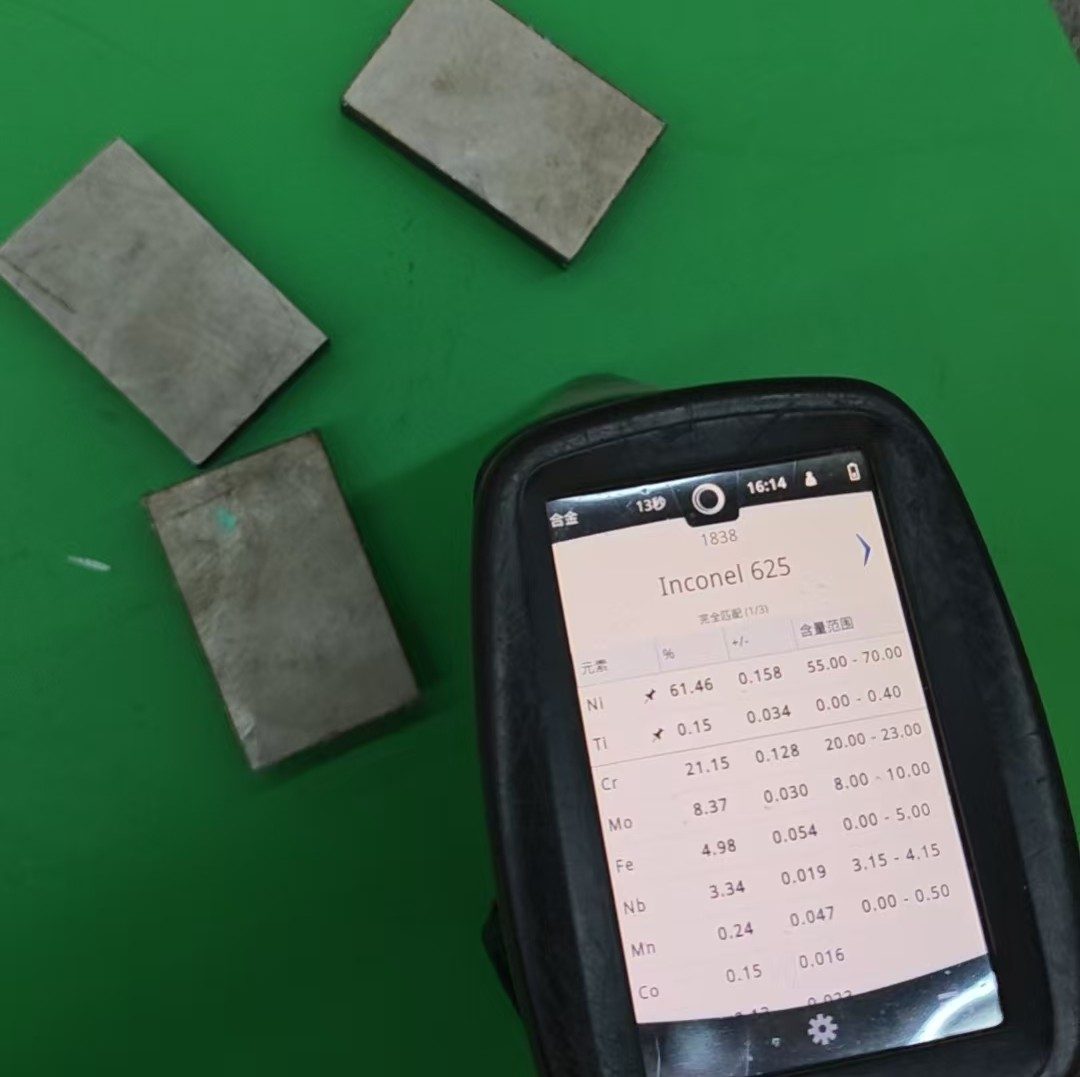
Hastelloy B-2 (UNS N10665 / W.Nr. 2.4617) is a nickel-molybdenum alloy renowned for its exceptional resistance to hydrochloric acid at all concentrations and temperatures, including the boiling point. Developed by Haynes International as a low-carbon, low-silicon evolution of the original Hastelloy B, B-2 addresses the intergranular corrosion susceptibility that plagued its predecessor in the weld heat-affected zone. Today, it remains one of the most cost-effective solutions for severe hydrochloric acid service in chemical processing, pharmaceutical manufacturing, and acid recovery operations.
The defining metallurgical feature of Hastelloy B-2 is its high molybdenum content (26-30%) combined with extremely low carbon (≤0.02%) and silicon (≤0.10%) levels. Molybdenum provides the primary corrosion resistance in reducing acid environments, while the stringent control of carbon and silicon minimizes the precipitation of carbides and intermetallic phases during welding and thermal cycling. This ensures that the alloy retains its full corrosion resistance even in the as-welded condition, a critical requirement for fabricated chemical process equipment.
Unlike austenitic stainless steels and even many nickel-chromium alloys, Hastelloy B-2 does not rely on a chromium-based passive film for corrosion protection. Instead, its nickel-molybdenum matrix remains thermodynamically stable in strongly reducing environments where chromium oxides dissolve. This makes B-2 uniquely suited for hydrochloric acid, sulfuric acid in the absence of oxidizing agents, and other aggressive reducing media where conventional alloys fail rapidly.
At Hangbo Alloy Group, Hastelloy B-2 is supplied in plates, sheets, bars, seamless tubes, welded tubes, fittings, and welding wire per ASTM, ASME, and DIN/EN specifications. We support chemical plant operators, pharmaceutical manufacturers, and acid recovery system builders with mill-direct supply, full certification, and custom fabrication services.
The chemistry of Hastelloy B-2 is carefully controlled to maximize corrosion resistance in reducing acids while maintaining good fabricability. The extremely low carbon and silicon limits are critical for preventing sensitization during welding, while the high molybdenum content provides the alloy's signature resistance to hydrochloric acid.
| Element | Min % | Max % |
|---|---|---|
| Nickel (Ni) | Balance | Balance |
| Molybdenum (Mo) | 26.0 | 30.0 |
| Iron (Fe) | 1.0 | 3.0 |
| Chromium (Cr) | — | 1.0 |
| Cobalt (Co) | — | 1.0 |
| Carbon (C) | — | 0.02 |
| Manganese (Mn) | — | 1.0 |
| Silicon (Si) | — | 0.10 |
| Phosphorus (P) | — | 0.040 |
| Sulfur (S) | — | 0.030 |
Hastelloy B-2 has a face-centered cubic (FCC) austenitic structure in the solution-annealed condition. Its physical properties are typical of high-nickel alloys, with relatively high density and low thermal conductivity compared to carbon steels.
| Property | Value | Unit |
|---|---|---|
| Density | 9.22 | g/cm³ |
| Melting Range | 1330 – 1380 | °C |
| Specific Heat (20°C) | 377 | J/kg·K |
| Thermal Conductivity (20°C) | 11.1 | W/m·K |
| Electrical Resistivity (20°C) | 1.37 | μΩ·m |
| Modulus of Elasticity (20°C) | 217 | GPa |
| Mean CTE (20–100°C) | 10.3 | μm/m·°C |
| Mean CTE (20–600°C) | 12.2 | μm/m·°C |
| Magnetic Permeability | 1.001 | (non-magnetic) |
Hastelloy B-2 is supplied in the solution-annealed condition, typically heat treated at 1065°C followed by rapid cooling. The alloy exhibits excellent ductility and toughness, with elongation around 40% that allows bending, forming, and moderate cold working.
| Property | Annealed Value |
|---|---|
| Tensile Strength | 760 MPa (110 ksi) |
| Yield Strength (0.2% offset) | 350 MPa (51 ksi) |
| Elongation in 2 inches | 40% |
| Reduction of Area | 50% |
| Hardness | 100 HRB |
| Charpy V-notch Impact (RT) | 200 J min |
Hastelloy B-2 was specifically developed to resist hydrochloric acid, one of the most difficult acids for metallic materials. Its performance in HCl service is unmatched by virtually all other wrought alloys, making it the material of choice for critical HCl process equipment.
Hastelloy B-2 resists hydrochloric acid at all concentrations up to the boiling point. In laboratory corrosion tests, B-2 exhibits corrosion rates well below 0.5 mm/year in boiling HCl up to 20% concentration, and remains serviceable in concentrated HCl at moderate temperatures. This performance is enabled by the alloy's high molybdenum content, which forms a protective molybdenum-rich film in reducing acid environments. The alloy is particularly valuable in processes where HCl concentration and temperature vary, as it maintains protection across a wide range of conditions.
In the absence of oxidizing agents, Hastelloy B-2 also offers excellent resistance to sulfuric acid at all concentrations. However, the presence of even small amounts of oxidizing species (such as ferric ions, cupric ions, or dissolved oxygen) can significantly increase corrosion rates. For sulfuric acid service containing oxidizing contaminants, Hastelloy C-276 or C-22 is generally preferred.
Hastelloy B-2 is not recommended for oxidizing acid environments, including nitric acid, chromic acid, and chlorine dioxide solutions. The absence of significant chromium (≤1%) means the alloy cannot form a protective chromium oxide passive film. In oxidizing media, corrosion rates can be unacceptably high. For mixed oxidizing-reducing environments, Hastelloy C-276 (with its Cr-Mo-W balance) is the appropriate choice.
Hastelloy B-2 is selected wherever hydrochloric acid or strongly reducing acids are present. Its field-proven performance has made it a standard material in several demanding industries.
Hangbo Alloy Group supplies Hastelloy B-2 in the full range of product forms required by chemical processing and pharmaceutical customers. Material is supplied in the solution-annealed condition with EN 10204 3.1 mill test certificates and full traceability.
Hastelloy B-2 can be welded by gas tungsten arc welding (GTAW/TIG), gas metal arc welding (GMAW/MIG), and shielded metal arc welding (SMAW). However, special care is required to maintain the alloy's corrosion resistance in the heat-affected zone.
| Standard | Description |
|---|---|
| ASTM B333 | Plate, Sheet, and Strip |
| ASTM B335 | Bar, Rod, and Wire |
| ASTM B622 | Seamless Pipe and Tube |
| ASTM B619 / B775 | Welded Pipe |
| ASTM B626 / B751 | Welded Tube |
| ASTM B366 | Fittings |
| ASTM B564 | Forgings |
| ASME SB-333 / SB-335 / SB-622 | Boiler and Pressure Vessel Code |
| DIN/EN W.Nr. 2.4617 | German/European Material Designation |
Shanghai Hangbo Alloy Group is a professional manufacturer and global supplier of Hastelloy B-2 (UNS N10665 / W.Nr. 2.4617). We provide plates, sheets, bars, seamless tubes, welded tubes, fittings, and welding wire with full material certification per ASTM, ASME, and EN standards. Mill-direct pricing, ISO 9001:2015 quality system, and fast delivery to 50+ countries worldwide.
Hastelloy B-2 (UNS N10665 / W.Nr. 2.4617) is a nickel-molybdenum alloy with exceptional resistance to hydrochloric acid at all concentrations and temperatures. It is one of the few alloys that can withstand boiling hydrochloric acid, making it indispensable for chemical processing, pharmaceutical manufacturing, and acid recovery systems.
Nominal composition: Ni balance (min 65%), Mo 26.0–30.0%, Fe 1.0–3.0%, Cr ≤1.0%, Co ≤1.0%, C ≤0.02%, Mn ≤1.0%, Si ≤0.10%, plus controlled P and S. The extremely low carbon and silicon content minimizes precipitation of carbides and intermetallic phases during welding.
Hastelloy B-2 has a density of approximately 9.22 g/cm³ (0.333 lb/in³) and a melting range of 1330–1380°C (2425–2515°F).
Typical annealed properties: tensile strength ~760 MPa (110 ksi), yield strength ~350 MPa (51 ksi), elongation ~40%, hardness ~100 HRB. The alloy exhibits excellent ductility and can be cold-formed to a significant degree.
Key standards: ASTM B333 (plate/sheet/strip), ASTM B335 (bar/rod), ASTM B622 (seamless pipe/tube), ASTM B619/B775 (welded pipe), ASTM B626/B751 (welded tube), ASTM B366 (fittings), ASTM B564 (forgings), and W.Nr. 2.4617.
Hastelloy B-2 resists hydrochloric acid through its high molybdenum content (26-30%), which forms a protective molybdenum-rich passive film in reducing acid environments. Unlike stainless steels, B-2's nickel-molybdenum matrix remains stable in strongly reducing conditions where chromium-based passive films break down. It resists HCl at all concentrations up to the boiling point.
Hastelloy B-2 is suitable for continuous service up to 425°C (800°F) in corrosive environments. Above this temperature, the alloy becomes susceptible to intermetallic phase precipitation, which can reduce ductility and corrosion resistance. For higher temperature applications, Hastelloy B-3 is recommended.
Primary applications: chemical processing equipment for HCl service (reactors, heat exchangers, columns, valves, pumps), pharmaceutical manufacturing vessels, acid recovery and regeneration systems, pickling line equipment, chlorine dioxide bleach plants, geothermal well components, and pollution control scrubbers.
Yes, Hastelloy B-2 can be welded using GTAW, GMAW, and SMAW processes. Matching filler metals such as ERNiMo-7 or ENiMo-7 are recommended. The alloy must be in the solution-annealed condition before welding, and interpass temperature should be kept below 120°C to minimize sensitization.
Hangbo Alloy Group supplies Hastelloy B-2 in round bars, plates/sheets/strips, seamless tubes/pipes, welded tubes/pipes, fittings, forgings, and welding wire. All products are delivered with EN 10204 3.1 mill test certificates and full traceability.
Hastelloy B-2 and B-3 both offer excellent HCl resistance, but B-3 has superior thermal stability and better resistance to knife-line attack during welding. Hastelloy C-276 offers broader corrosion resistance including oxidizing media, but its HCl resistance is inferior to B-2 in concentrated and high-temperature HCl. For pure HCl service, B-2 or B-3 is preferred; for mixed environments, C-276 is better.
Hastelloy B-2 is a premium specialty alloy. Typical mill-direct pricing ranges from $35–55/kg for bars, $45–70/kg for plates, and $60–100/kg for seamless tubes, depending on size and quantity. Lead times are typically 8–12 weeks for custom mill orders; Hangbo Alloy maintains strategic inventory of common sizes for 2–4 week delivery. MOQ is generally 50 kg for stock sizes and 200–500 kg for custom sizes. Contact [email protected] for a competitive quote.
Request a quotation for Hastelloy B-2 plates, tubes, bars, or welding wire for chemical processing, pharmaceutical, or acid recovery applications. We stock standard sizes and accept custom orders.