
Hangbo Alloy Group
Shanghai · Est. 2012
UNS N07214 — Ni-Cr-Al-Fe superalloy with unique Al2O3 protective scale for extreme-temperature furnace fixtures, heat treatment baskets, and combustion hardware up to 1315°C.
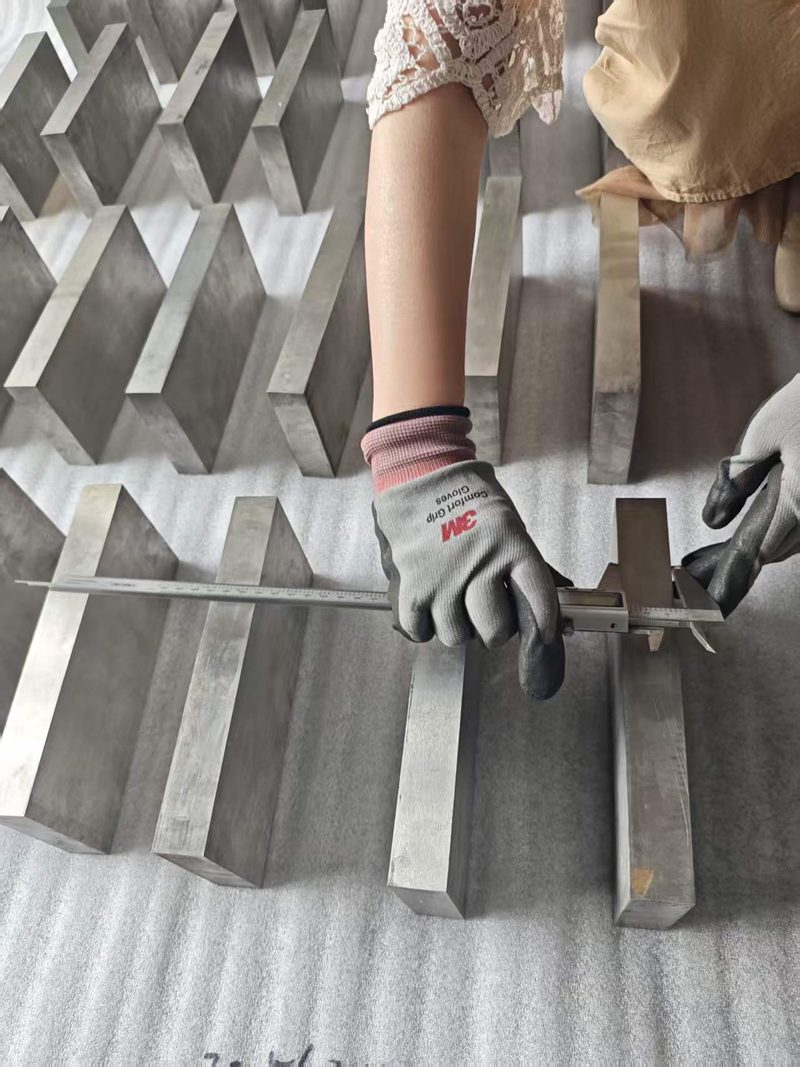
Haynes 214 (UNS N07214) is a wrought nickel-chromium-aluminum-iron superalloy purpose-engineered for extreme-temperature oxidation resistance. Developed by Haynes International in the 1990s, it is one of the few wrought nickel alloys that forms a continuous, adherent aluminum oxide (Al2O3) protective scale rather than relying on chromium oxide (Cr2O3). This alumina scale provides an order-of-magnitude improvement in oxidation resistance at temperatures above 1100°C, enabling service at continuous operating temperatures up to 1260°C (2300°F) and intermittent exposure up to 1315°C (2400°F).
The fundamental innovation in Haynes 214 is its high aluminum content — nominally 4.5% — combined with a precisely balanced chromium level of 16%. Most nickel-based superalloys and stainless steels contain less than 2% aluminum (and many contain none at all), limiting their high-temperature oxidation protection to Cr2O3 scales. While Cr2O3 is effective up to approximately 1050-1100°C, it becomes volatile above 1100°C through the formation of CrO3, leading to accelerated metal loss and eventual failure. The Al2O3 scale on Haynes 214 remains stable and protective well beyond 1200°C, making it the preferred choice for the most demanding furnace and heat treatment applications.
What makes Haynes 214 particularly remarkable is that it achieves this exceptional oxidation resistance in a wrought, fabricable alloy form. Many alumina-forming materials — such as FeCrAl alloys (Kanthal) and certain intermetallics — are brittle and difficult to fabricate into complex shapes. Haynes 214, by contrast, can be formed, welded, and machined using standard nickel alloy fabrication techniques, giving design engineers the flexibility to create intricate furnace fixtures, radiant tubes, and combustion hardware that simply cannot be made from brittle alternatives.
The alloy's microstructure in the solution-annealed condition consists of a single-phase face-centered cubic (FCC) gamma matrix with fine dispersions of gamma-prime (Ni3Al) precipitates. Upon exposure to high temperatures in air, the aluminum in the alloy diffuses to the surface and reacts with oxygen to form a thin, dense, tightly adherent Al2O3 layer typically 2-5 microns thick. This scale is self-healing: if damaged by thermal cycling or mechanical abrasion, the aluminum reservoir in the alloy rapidly re-forms the protective oxide layer. Trace additions of yttrium (~0.01%) and zirconium (~0.01%) dramatically improve scale adhesion and spallation resistance by pegging the oxide to the metal substrate, a technique borrowed from advanced thermal barrier coating technology.
Haynes 214 also exhibits outstanding resistance to carburization, metal dusting, and chlorine-bearing atmospheres at elevated temperatures, making it suitable for petrochemical reformers, ethylene cracking furnaces, and waste incineration components. Its resistance to molten glass and molten salts further extends its applicability into the glass, ceramic, and heat treatment industries. At Hangbo Alloy Group, we supply Haynes 214 in sheet, plate, bar, tube, and welding wire forms, with full material certification and optional NDT services.
The chemistry of Haynes 214 is deliberately simple yet precisely engineered. The high aluminum content (4.5%) is the defining feature, far exceeding the aluminum levels in alloys like Inconel 601 (~1.4% Al) or Hastelloy X (~0% Al). Chromium at 16% provides a baseline of oxidation resistance and contributes to the alloy's solid-solution strengthening. Iron is restricted to 3% maximum to maintain phase stability and oxidation performance. The microalloying additions of yttrium and zirconium are critical — they dramatically improve the adhesion of the Al2O3 scale, reducing spallation during thermal cycling by factors of 5-10 compared to yttrium-free alloys.
| Element | Min % | Max % | Role |
|---|---|---|---|
| Nickel (Ni) | Balance | Balance | Matrix element; provides high-temperature strength and ductility |
| Chromium (Cr) | 15.0 | 17.0 | Solid-solution strengthening; secondary oxidation protection |
| Aluminum (Al) | 4.0 | 5.0 | Primary Al2O3 scale former; gamma-prime precipitation |
| Iron (Fe) | 2.0 | 4.0 | Controlled addition for cost and workability |
| Carbon (C) | 0.03 | 0.10 | Carbide former for grain boundary strengthening |
| Manganese (Mn) | — | 0.50 | Deoxidizer; residual from melting |
| Silicon (Si) | — | 0.20 | Deoxidizer; kept low to avoid scale degradation |
| Yttrium (Y) | 0.005 | 0.05 | Reactive element for Al2O3 scale adhesion |
| Zirconium (Zr) | 0.005 | 0.05 | Reactive element; grain boundary strengthening |
| Boron (B) | 0.002 | 0.015 | Grain boundary strengthening |
| Phosphorus (P) | — | 0.015 | Controlled impurity |
| Sulfur (S) | — | 0.015 | Controlled impurity; detrimental to oxidation |
Haynes 214 has an austenitic FCC crystal structure that remains stable from cryogenic temperatures to its melting point. The alloy's moderate density (8.05 g/cm³) and relatively low thermal expansion coefficient make it well-suited for furnace fixtures where thermal cycling resistance is critical. Its thermal conductivity is higher than many austenitic stainless steels, promoting uniform temperature distribution in radiant tube and heat exchanger applications.
| Property | Value | Unit |
|---|---|---|
| Density (20°C) | 8.05 | g/cm³ |
| Melting Range | 1355 - 1400 | °C |
| Specific Heat (20°C) | 452 | J/kg·K |
| Thermal Conductivity (20°C) | 11.2 | W/m·K |
| Thermal Conductivity (500°C) | 18.5 | W/m·K |
| Thermal Conductivity (800°C) | 24.3 | W/m·K |
| Electrical Resistivity (20°C) | 1.37 | μΩ·m |
| Modulus of Elasticity (20°C) | 217 | GPa |
| CTE (20-200°C) | 13.3 | μm/m·°C |
| CTE (20-600°C) | 14.8 | μm/m·°C |
| CTE (20-1000°C) | 16.2 | μm/m·°C |
| Poisson's Ratio | 0.31 | — |
Haynes 214 is supplied in the solution-annealed condition (typically 1095-1175°C followed by rapid cooling). The room-temperature mechanical properties reflect the alloy's solid-solution strengthened austenitic matrix with some contribution from gamma-prime precipitates. While Haynes 214 was not designed primarily for high mechanical strength (unlike Inconel 718 or Waspaloy), it offers respectable tensile and yield strengths that are more than adequate for most furnace fixture and heat treatment applications. The alloy retains good ductility with elongation typically exceeding 30% in the annealed condition.
| Property | Value (Sheet/Plate) | Value (Bar) |
|---|---|---|
| Tensile Strength | 965 MPa (140 ksi) | 895 MPa (130 ksi) |
| Yield Strength (0.2% offset) | 585 MPa (85 ksi) | 515 MPa (75 ksi) |
| Elongation in 2 inches | 35 - 45% | 40 - 50% |
| Reduction of Area | 45 - 55% | 50 - 60% |
| Hardness | 90 - 96 HRB | 88 - 95 HRB |
While Haynes 214's primary design intent is oxidation resistance rather than creep strength, the alloy maintains useful mechanical properties at elevated temperatures. The gamma-prime (Ni3Al) precipitates contribute to strength retention up to approximately 900-950°C. Above this temperature, the precipitates coarsen and dissolve, and the alloy transitions to primarily solid-solution strengthening. For load-bearing applications above 1000°C, oxide-dispersion-strengthened (ODS) alloys or refractory metals should be considered. However, for self-supporting furnace fixtures, radiant tubes, and similar components where dead-weight loading is the primary mechanical requirement, Haynes 214 performs excellently up to its maximum temperature limit.
| Temperature (°C) | Tensile Strength (MPa) | Yield Strength (MPa) | Elongation (%) |
|---|---|---|---|
| 20 (Room) | 965 | 585 | 40 |
| 400 | 830 | 490 | 38 |
| 600 | 730 | 435 | 40 |
| 800 | 450 | 310 | 55 |
| 900 | 280 | 195 | 70 |
| 1000 | 155 | 105 | 85 |
| 1100 | 80 | 50 | 95 |
| 1200 | 38 | 22 | 110 |
The defining characteristic of Haynes 214 is its exceptional oxidation resistance, which stems directly from its ability to form and maintain a continuous, adherent aluminum oxide (Al2O3) protective scale. This capability sets Haynes 214 apart from virtually all other wrought nickel alloys and stainless steels, which rely on chromium oxide (Cr2O3) for oxidation protection.
Chromium oxide scales provide excellent oxidation protection up to approximately 1050-1100°C. Above this temperature range, two degradation mechanisms become significant: (1) Cr2O3 reacts with oxygen to form volatile CrO3, causing progressive metal loss through scale evaporation, and (2) the Cr2O3 scale thickens and spalls during thermal cycling, exposing fresh metal to further oxidation. Aluminum oxide (Al2O3) does not form volatile species in air at any temperature below 1600°C and grows at a much slower rate, remaining thin and adherent even after thousands of hours of exposure.
In cyclic oxidation testing (1-hour cycles at 1150°C), Haynes 214 exhibits metal loss rates that are 10-20 times lower than Inconel 601, 15-30 times lower than RA330, and over 50 times lower than 310S stainless steel. This dramatic advantage becomes even more pronounced at 1200°C and 1260°C, where chromium-oxide-forming alloys experience rapid catastrophic oxidation while Haynes 214 continues to show minimal degradation. The self-healing nature of the Al2O3 scale means that even if localized spalling occurs, the aluminum reservoir in the alloy rapidly re-forms a protective layer.
In burner rig tests simulating gas turbine combustion environments (Mach 0.3-0.5 gas velocity, 1150-1200°C), Haynes 214 demonstrates excellent resistance to high-velocity hot gas corrosion. The Al2O3 scale is mechanically robust and resists erosion from particulate-laden gas streams better than Cr2O3 scales on competing alloys.
| Alloy | Scale Type | Max Continuous Temp (°C) | Relative Metal Loss at 1150°C | Cyclic Oxidation Rating |
|---|---|---|---|---|
| Haynes 214 | Al2O3 | 1260 | 1.0 (baseline) | Excellent |
| Alloy 602CA | Al2O3 | 1200 | 1.2 - 1.5 | Excellent |
| Inconel 601 | Cr2O3 + minor Al2O3 | 1100 | 10 - 20 | Good |
| RA330 | Cr2O3 | 1150 | 15 - 30 | Moderate |
| 310S Stainless | Cr2O3 | 1050 | 50+ | Poor above 1100°C |
| Incoloy 800H | Cr2O3 | 1000 | 80+ | Poor above 1050°C |
In addition to its outstanding oxidation resistance, Haynes 214 performs well in several other aggressive high-temperature environments that are commonly encountered in industrial heat treatment, petrochemical processing, and waste incineration.
In carburizing atmospheres (endothermic gas, CO/CO2/H2 mixtures), Haynes 214 shows excellent resistance due to the dense Al2O3 scale acting as an effective carbon diffusion barrier. Carbon penetration into the alloy matrix is dramatically reduced compared to chromium-oxide-forming alloys, maintaining ductility and preventing the embrittlement that plagues conventional heat-resistant alloys in carburizing service. This makes Haynes 214 an excellent choice for furnace retorts, muffles, and radiant tubes used in gas carburizing and carbonitriding processes.
Metal dusting is a catastrophic form of carburization that occurs in high-carbon-activity, low-oxygen environments typically found in syngas production, methanol reformers, and direct reduced iron (DRI) plants. The Al2O3 scale on Haynes 214 provides a highly effective barrier against carbon ingress, giving it metal dusting resistance that approaches that of Inconel 693 (which also relies on Al2O3 protection) and far exceeds conventional nickel alloys.
Haynes 214 exhibits good resistance to chlorine-bearing atmospheres at elevated temperatures, making it suitable for waste incineration, PVC pyrolysis, and certain chemical processing applications. The Al2O3 scale is more resistant to chlorine attack than Cr2O3 scales, which can form volatile chromium chlorides and oxychlorides.
The alloy shows good resistance to molten glass attack and is used in glass industry thermocouple protection tubes and stirrer components. It also resists attack by many molten salt baths used in heat treatment (cyanide, neutral salts), though high-basicity salts containing sodium hydroxide may attack the Al2O3 scale over extended periods.
Haynes 214 can be fabricated using standard nickel alloy techniques, though its high aluminum content requires some specific considerations to achieve optimal results.
The alloy can be cold-formed in the solution-annealed condition using conventional equipment. Due to its higher work-hardening rate compared to austenitic stainless steels, more frequent intermediate anneals may be required for severe forming operations. The alloy exhibits good deep drawability and can be formed into complex shapes such as corrugated radiant tubes, ribbed furnace muffles, and intricate heat treatment baskets. Hot forming should be performed in the 980-1175°C range, with finishing operations above 870°C to avoid strain-age cracking.
Haynes 214 is weldable using gas tungsten arc welding (GTAW/TIG), gas metal arc welding (GMAW/MIG), and plasma arc welding (PAW). Matching filler metal (Haynes 214 composition) is recommended for optimal high-temperature oxidation performance. Key welding considerations include:
Haynes 214 machines similarly to other nickel-based alloys, requiring rigid setups, sharp carbide tools, low cutting speeds, and generous coolant flow. Recommended cutting speeds are approximately 25-35 m/min for turning with carbide tools, with feed rates of 0.15-0.30 mm/rev. The alloy does not age-harden significantly during machining (unlike Inconel 718), which simplifies machining strategy. Annealed material is significantly easier to machine than cold-worked material.
Haynes 214's unique combination of extreme oxidation resistance, good fabricability, and adequate mechanical strength has made it the material of choice for the most demanding high-temperature industrial applications. It is particularly valued in industries where component life is measured in months at 1150-1260°C and where unplanned shutdowns due to material failure are prohibitively expensive.
Hangbo Alloy Group supplies Haynes 214 in a comprehensive range of product forms and sizes, with full material test reports (MTR) to EN 10204 3.1 or 3.2, and optional third-party inspection. Our typical supply scope includes:
| Standard | Description |
|---|---|
| AMS 5876 | Sheet, Strip, and Plate, Solution Heat Treated |
| AMS 5877 | Bar, Forging, and Ring, Solution Heat Treated |
| ASTM B435 | UNS N07214 Plate, Sheet, and Strip |
| ASTM B572 | UNS N07214 Rod, Bar, and Wire |
| ASME SB-435 | Boiler and Pressure Vessel Code (Plate/Sheet/Strip) |
| ASME SB-572 | Boiler and Pressure Vessel Code (Rod/Bar/Wire) |
| EN 2.4646 | European designation for NiCr16Al4Fe (Haynes 214 type) |
| ISO 6208 | Nickel alloy sheet, plate and strip for general purposes |
Hangbo Alloy Group is a trusted global supplier of Haynes 214 in sheet, plate, bar, tube, and welding wire forms. We provide full material certification, competitive pricing, and fast worldwide delivery. Our technical team can assist with material selection, welding recommendations, and custom fabrication requirements for your specific high-temperature application.
Request a quotation for Haynes 214 sheet, plate, bar, tube, or custom fabrications. We stock standard sizes and accept custom orders with fast worldwide delivery.