
Hangbo Alloy Group
Shanghai · Est. 2012
UNS R30188 / W.Nr. 2.4964 — Cobalt-nickel-chromium-tungsten superalloy with outstanding oxidation resistance up to 1095°C, superior sulfidation resistance, and excellent long-term structural stability for combustion chambers and turbine components.
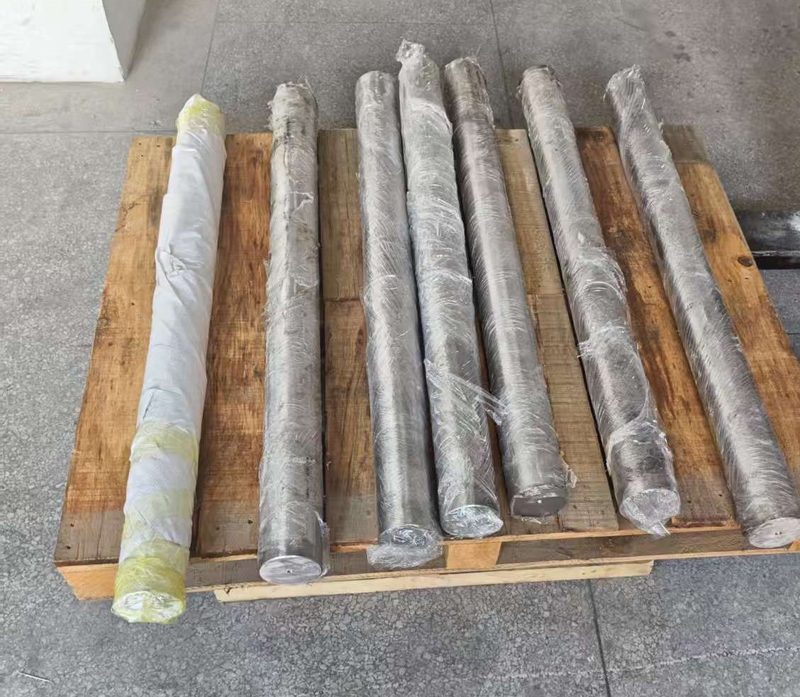
Haynes 188 (UNS R30188 / W.Nr. 2.4964) is a solid-solution strengthened cobalt-nickel-chromium-tungsten superalloy developed by Haynes International specifically for the most demanding high-temperature applications in gas turbine engines. Unlike precipitation-hardened nickel superalloys such as Inconel 718 or Waspaloy, Haynes 188 relies on tungsten as its primary solid-solution strengthening element and a unique lanthanum addition that dramatically improves oxidation resistance at temperatures above 1000°C.
The alloy's cobalt-rich matrix provides inherent advantages over nickel-based alternatives at extreme temperatures. Cobalt has a higher solidus temperature than nickel, which translates to better structural stability and creep resistance at temperatures approaching 1100°C. The face-centered cubic (FCC) crystal structure of the cobalt matrix remains stable throughout the entire service temperature range, unlike some nickel alloys that can undergo phase transformations at very high temperatures. This makes Haynes 188 particularly suitable for combustion chamber liners, transition ducts, and other components exposed to the hottest gas paths in turbine engines.
One of the most distinctive features of Haynes 188 is its lanthanum content (0.02–0.12%). Lanthanum is a reactive element that modifies the morphology and adhesion of the chromium oxide scale formed during high-temperature exposure. This "reactive element effect" (REE) suppresses scale spallation during thermal cycling and significantly extends the alloy's useful life in oxidizing environments. The benefit is most pronounced above 980°C, where conventional nickel-chromium alloys begin to suffer rapid oxide loss and accelerated degradation.
Haynes 188 also exhibits outstanding resistance to sulfidation attack, which is a critical concern in gas turbine environments where residual sulfur in fuel can cause rapid deterioration of high-temperature components. The alloy's tungsten and lanthanum additions work synergistically with chromium to form a protective scale that resists both oxidation and sulfidation simultaneously. This dual-protection capability makes it one of the most reliable alloys for land-based and marine gas turbine combustors operating with sulfur-containing fuels.
At Hangbo Alloy Group, Haynes 188 is supplied per AMS 5608 (sheet and strip), AMS 5772 (bar and wire), and custom specifications. We produce round bars, sheet, plate, seamless tubes, and welding wire for gas turbine manufacturers, aerospace contractors, and high-temperature furnace builders worldwide. Full material certifications, heat treatment records, and NDT reports are provided with every shipment.
The chemistry of Haynes 188 is designed to optimize solid-solution strengthening, oxidation resistance, and structural stability at extreme temperatures. Cobalt provides the stable FCC matrix; tungsten is the primary strengthener at 13–15%; chromium delivers oxidation and sulfidation resistance; and nickel improves workability and ductility. The lanthanum addition is uniquely effective at enhancing oxide scale adhesion during thermal cycling above 980°C.
| Element | Min % | Max % |
|---|---|---|
| Cobalt (Co) | 36.0 | 41.0 |
| Nickel (Ni) | 20.0 | 24.0 |
| Chromium (Cr) | 19.0 | 23.0 |
| Tungsten (W) | 13.0 | 15.0 |
| Iron (Fe) | — | 3.0 |
| Lanthanum (La) | 0.02 | 0.12 |
| Manganese (Mn) | — | 1.25 |
| Silicon (Si) | — | 0.35 |
| Carbon (C) | — | 0.10 |
| Boron (B) | — | 0.015 |
| Sulfur (S) | — | 0.015 |
| Phosphorus (P) | — | 0.015 |
Haynes 188 exhibits physical properties consistent with its cobalt-rich matrix. The density of 8.91 g/cm³ is higher than typical nickel-based superalloys, reflecting the heavy tungsten addition. Thermal conductivity increases significantly with temperature, which helps dissipate heat from hot combustion zone surfaces. The coefficient of thermal expansion is moderate, reducing thermal stress in cyclic applications.
| Property | Value | Unit |
|---|---|---|
| Density | 8.91 | g/cm3 |
| Melting Range | 1300 - 1370 | °C |
| Specific Heat (21°C) | 410 | J/kg·K |
| Thermal Conductivity (21°C) | 9.4 | W/m·K |
| Thermal Conductivity (800°C) | 23.0 | W/m·K |
| Electrical Resistivity (21°C) | 0.92 | μΩ·m |
| Modulus of Elasticity (21°C) | 207 | GPa |
| Mean Coefficient of Thermal Expansion (21-93°C) | 12.6 | μm/m·°C |
| Mean Coefficient of Thermal Expansion (21-1093°C) | 16.0 | μm/m·°C |
As a solid-solution strengthened alloy, Haynes 188 does not require precipitation hardening heat treatment. The alloy is supplied in the solution-annealed condition, typically at 1175°C followed by rapid cooling. The tungsten content provides substantial room-temperature strength, while the high nickel content ensures excellent ductility and toughness. The elongation values of 45–50% are among the highest for any superalloy, which greatly facilitates forming and fabrication operations.
| Property | Value |
|---|---|
| Tensile Strength | 860 MPa (125 ksi) |
| Yield Strength (0.2% offset) | 380 MPa (55 ksi) |
| Elongation in 2 inches | 45 - 50% |
| Reduction of Area | 60 - 65% |
| Hardness | 90 - 100 HRB (approx. 18 HRC) |
| Charpy V-notch Impact (room temp) | 50 - 80 J |
Haynes 188 is a solid-solution alloy and does not undergo precipitation hardening. The standard heat treatment is a solution anneal at 1175°C (2150°F) for a time proportional to section thickness, followed by rapid cooling (water quenching or air cooling for thin sections). This treatment dissolves any carbides formed during prior processing and restores the alloy to its optimum ductile condition.
The absence of aging requirements simplifies the manufacturing workflow significantly. Fabricated components can be solution annealed after welding and immediately placed into service without additional heat treatment cycles. This is a major advantage for complex combustor assemblies that require extensive welding.
Haynes 188 is specifically engineered to retain useful strength at temperatures where most nickel-based superalloys have lost a significant fraction of their room-temperature capability. The tungsten-strengthened cobalt matrix provides inherent thermal stability, and the alloy does not suffer from the precipitate coarsening problems that limit nickel alloys above 700°C. Its strength retention above 800°C is superior to Hastelloy X, Inconel 625, and other solid-solution nickel alloys.
| Temperature (°C) | Tensile Strength (MPa) | Yield Strength (MPa) | Elongation (%) |
|---|---|---|---|
| 21 (Room) | 860 | 380 | 48 |
| 316 | 770 | 300 | 50 |
| 538 | 650 | 260 | 52 |
| 649 | 540 | 230 | 55 |
| 816 | 480 | 210 | 58 |
| 871 | 420 | 195 | 60 |
| 982 | 280 | 165 | 65 |
| 1093 | 140 | 100 | 70 |
Haynes 188 exhibits excellent creep-rupture strength at temperatures above 815°C, which is its primary service domain. The 100-hour rupture stress at 815°C is approximately 170 MPa, and at 980°C it is approximately 70 MPa. These values are significantly higher than those of Hastelloy X at the same temperatures. The cobalt matrix's inherent thermal stability, combined with tungsten solid-solution strengthening and fine carbide dispersion, provides long-term creep resistance essential for combustor components that must withstand thousands of hours at design temperature.
The oxidation and sulfidation resistance of Haynes 188 is its most celebrated property and the primary reason for its selection in the hottest zones of gas turbine engines. Three mechanisms work together to provide exceptional protection:
The combination of outstanding oxidation/sulfidation resistance, useful strength at extreme temperatures, and excellent fabricability makes Haynes 188 the alloy of choice for the most demanding hot-section components in gas turbine engines and related high-temperature systems.
Hangbo Alloy Group manufactures and supplies Haynes 188 in a comprehensive range of product forms. All material is produced via vacuum induction melting (VIM) followed by electroslag remelting (ESR) to meet the cleanliness requirements of aerospace specifications.
| Standard | Description |
|---|---|
| AMS 5608 | Sheet, Strip, and Plate, Solution Annealed |
| AMS 5772 | Bar and Wire, Solution Annealed |
| ASTM F3056 | Additive Manufacturing (Powder Bed Fusion) |
| AWS A5.14 ERCoCr-1 | Welding Wire (Cobalt-Chromium-Tungsten-Nickel) |
| ASME SA-5608 | Boiler and Pressure Vessel Code (Case 2458) |
| UNS R30188 | Unified Numbering System Designation |
| W.Nr. 2.4964 | European Werkstoff Number |
Haynes 188 has a density of 8.91 g/cm³ (0.324 lb/in³), which is typical for cobalt-based superalloys. This is slightly higher than nickel-based superalloys like Inconel 718 (8.19 g/cm³) due to the high cobalt and tungsten content.
Haynes 188 has a melting range of 1300–1370°C (2370–2498°F). The high solidus temperature contributes to the alloy's excellent high-temperature structural stability and creep resistance.
Haynes 188 is a cobalt-nickel-chromium-tungsten alloy: Cobalt 36–41%, Nickel 20–24%, Chromium 19–23%, Tungsten 13–15%, Iron max 3%, Manganese max 1.25%, with minor additions of La (0.02–0.12%), Si, C, and B. The tungsten provides solid-solution strengthening, while lanthanum improves oxidation resistance.
Haynes 188 is covered by AMS 5608 (sheet and strip), AMS 5772 (bar and wire), ASTM F3056 (additive manufacturing), and AWS A5.14 ERCoCr-1 (welding wire). It also appears in ASME SA-5608 for boiler and pressure vessel applications.
Haynes 188 can be used continuously at temperatures up to 1095°C (2000°F) in oxidizing environments. For short-term exposures, it can withstand temperatures approaching 1200°C. The alloy is specifically designed for gas turbine combustion zone temperatures.
Both are high-temperature superalloys, but Haynes 188 is cobalt-based while Hastelloy X is nickel-based. Haynes 188 offers superior oxidation resistance above 980°C and better sulfidation resistance, making it preferred for the hottest combustion zones. Hastelloy X has better weldability and lower cost, suitable for slightly lower temperature applications.
Yes, Haynes 188 can be welded using GTAW (TIG) and GMAW (MIG) processes with matching ERCoCr-1 filler wire. It does not suffer from strain-age cracking like some precipitation-hardened nickel superalloys. However, careful interpass temperature control and proper joint preparation are essential.
In the solution-annealed condition, Haynes 188 exhibits tensile strength of 860 MPa (125 ksi), yield strength of 380 MPa (55 ksi), and elongation of 45–50%. These properties are maintained at a high level even at elevated temperatures, with tensile strength of approximately 480 MPa at 815°C.
Hangbo Alloy Group supplies Haynes 188 as round bars (6–200 mm diameter), sheet and plate (0.5–50 mm thickness), seamless tubes, strip, and welding wire (ERCoCr-1). Custom forgings and precision-machined components are also available.
Haynes 188 is primarily used in aerospace gas turbine engines (combustion chambers, transition ducts, turbine vanes), industrial gas turbines, rocket engine nozzles, high-temperature furnace hardware, and nuclear reactor components requiring long-term oxidation resistance above 1000°C.
The 0.02–0.12% lanthanum addition in Haynes 188 promotes the formation of a more adherent and protective chromium oxide scale. This reactive element effect dramatically reduces oxide spallation during thermal cycling and extends the alloy's useful life in oxidizing environments above 1000°C.
Due to its high cobalt and tungsten content, Haynes 188 is significantly more expensive than nickel-based alternatives. Round bars typically range from $80–$150 per kg depending on size, quantity, and specification. Sheet and plate are generally $100–$200 per kg. Contact our sales team for current pricing.
Hangbo Alloy Group maintains mill-direct supply of Haynes 188 round bars, sheet, plate, tubes, and welding wire per AMS 5608 and AMS 5772 specifications. Our team can assist with material selection, heat treatment specification, NDT requirements, and export documentation. We support gas turbine manufacturers, aerospace contractors, and high-temperature equipment builders worldwide with reliable quality and competitive delivery.
For quotations, material certifications, or technical consultation, contact our sales team or call +86-136-1165-6360. We typically respond within 10 minutes.
Request a quotation for Haynes 188 round bars, sheet, plate, tubes, or welding wire. We stock standard sizes and accept custom orders per AMS 5608/5772.