
Hangbo Alloy Group
Shanghai · Est. 2012
UNS R30605 / W.Nr. 2.4964 — Cobalt-nickel-chromium-tungsten solid-solution strengthened superalloy with outstanding oxidation resistance up to 980°C, excellent wear resistance, and proven performance in gas turbines, aerospace, and medical implants.
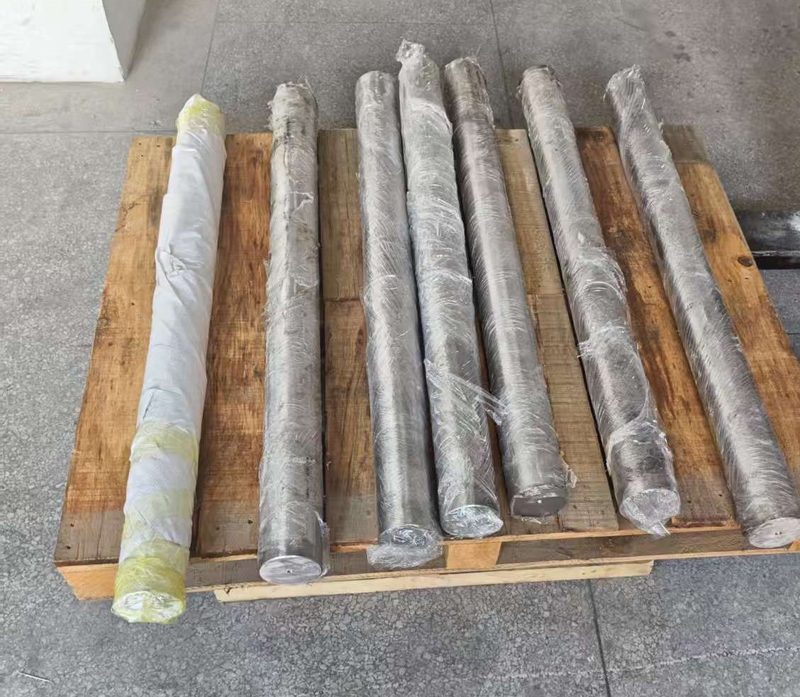
Haynes 25 (also known as L605, UNS R30605 / W.Nr. 2.4964) is a cobalt-nickel-chromium-tungsten solid-solution strengthened superalloy developed by Haynes International. First introduced in the 1950s for gas turbine engine components, it has become one of the most widely used cobalt-based superalloys, second only to Haynes 188 in high-temperature aerospace applications. The alloy combines excellent high-temperature strength, good oxidation resistance up to approximately 980°C (1800°F), and outstanding wear and galling resistance—properties that make it uniquely suited to both structural and tribological applications.
Unlike nickel-based precipitation-hardening superalloys such as Inconel 718 or Waspaloy, Haynes 25 derives its strength primarily from solid-solution strengthening of tungsten in the cobalt-chromium FCC matrix, supplemented by fine carbide precipitation. This mechanism provides an important advantage: the alloy retains good ductility and does not undergo the over-aging embrittlement that can affect gamma-prime strengthened alloys after prolonged high-temperature exposure. Even after thousands of hours at elevated temperatures, Haynes 25 maintains significant residual ductility, making it a reliable choice for long-life components.
The chemistry of Haynes 25 is dominated by cobalt (~50%), chromium (19-21%), tungsten (14-16%), and nickel (9-11%). Tungsten is the primary solid-solution strengthener, while chromium provides oxidation and hot corrosion resistance. Nickel is added to stabilize the FCC austenitic structure and improve fabricability. The controlled carbon content (0.05-0.15%) ensures a fine dispersion of M6C and M23C6 carbides that contribute to grain boundary pinning and wear resistance without causing embrittlement.
Haynes 25 is supplied in the solution-annealed condition, typically at 1175-1230°C followed by rapid cooling. In this condition, it exhibits a fine-grained, fully recrystallized microstructure with uniform carbide distribution. The alloy can be cold worked to increase strength, with cold reduction of 20-40% capable of doubling the yield strength. For applications requiring maximum ductility or subsequent welding, the solution-annealed condition is preferred.
Machining Haynes 25 requires rigid setups, sharp carbide or ceramic tools, and adequate coolant flow. The alloy work-hardens rapidly and produces tough, stringy chips. Low cutting speeds and positive rake angles are recommended. For complex components, rough machining in the annealed condition followed by finish machining is standard practice. Welding can be performed using GTAW, GMAW, and resistance welding with matching cobalt-base filler metals such as AWS A5.14 ERCoCr-C (AMS 5796).
At Hangbo Alloy Group, Haynes 25 is supplied per AMS 5759 (bars/forgings), AMS 5537 (sheet/plate), and ASTM F90 (surgical implant quality). We stock round bars, forgings, seamless tubes, plates, and welding wire for gas turbine manufacturers, medical device companies, and high-temperature industrial equipment builders worldwide.
The chemistry of Haynes 25 is carefully controlled to balance high-temperature strength, oxidation resistance, and fabricability. Tungsten provides the majority of solid-solution strengthening, chromium forms a protective oxide scale, and nickel stabilizes the austenitic structure. Carbon is intentionally maintained in the 0.05-0.15% range to form fine carbides that enhance creep strength and wear resistance without causing sensitization or embrittlement.
| Element | Min % | Max % |
|---|---|---|
| Cobalt (Co) | Balance | Balance |
| Chromium (Cr) | 19.0 | 21.0 |
| Tungsten (W) | 14.0 | 16.0 |
| Nickel (Ni) | 9.0 | 11.0 |
| Iron (Fe) | — | 3.00 |
| Manganese (Mn) | 1.00 | 2.00 |
| Silicon (Si) | — | 1.00 |
| Carbon (C) | 0.05 | 0.15 |
| Phosphorus (P) | — | 0.03 |
| Sulfur (S) | — | 0.03 |
Haynes 25 has a face-centered cubic (FCC) austenitic matrix that is stable from cryogenic temperatures up to the melting point. The high tungsten content contributes to its relatively high density (9.13 g/cm³) compared to nickel-based superalloys. The alloy is non-magnetic in all conditions. Its thermal expansion and conductivity characteristics are well-suited to high-temperature structural applications where thermal cycling is expected.
| Property | Value | Unit |
|---|---|---|
| Density | 9.13 | g/cm³ |
| Melting Range | 1329 - 1410 | °C |
| Specific Heat (21°C) | 385 | J/kg·K |
| Thermal Conductivity (21°C) | 9.4 | W/m·K |
| Electrical Resistivity (21°C) | 0.89 | μΩ·m |
| Modulus of Elasticity (21°C) | 225 | GPa |
| Mean Coeff. of Thermal Expansion (21-93°C) | 12.3 | μm/m·°C |
| Mean Coeff. of Thermal Expansion (21-538°C) | 14.4 | μm/m·°C |
| Magnetic Permeability | < 1.002 | — |
Haynes 25 is supplied in the solution-annealed condition (typically 1175-1230°C, rapid quench). Unlike nickel-based superalloys, it is not age-hardenable. Strength increases are achieved through cold work, which can approximately double the yield strength with 30-40% reduction. The values below represent typical properties for sheet and bar products in the solution-annealed condition.
| Property | Sheet (0.04-0.08 in) | Bar (1 in dia.) |
|---|---|---|
| Tensile Strength | 930 - 1000 MPa (135 - 145 ksi) | 1035 MPa (150 ksi) |
| Yield Strength (0.2% offset) | 380 - 460 MPa (55 - 67 ksi) | 460 MPa (67 ksi) |
| Elongation in 2 inches | 45 - 62% | 65% |
| Hardness | 22 - 28 HRC | 22 - 28 HRC |
| Modulus of Elasticity | 225 GPa (32.6 Msi) | 225 GPa (32.6 Msi) |
Haynes 25 maintains useful strength to temperatures well above the capability of most nickel-based superalloys. At 980°C (1800°F), the alloy retains approximately 30-35 ksi tensile strength, and at 1095°C (2000°F) it still retains about 20 ksi. This exceptional strength retention is due to the high tungsten content and the stability of the cobalt-rich FCC matrix, which resists recovery and recrystallization at elevated temperatures. The data below shows short-time tensile properties for 0.109-inch sheet.
| Temperature (°C) | Temperature (°F) | Tensile Strength (MPa) | Yield Strength (MPa) | Elongation (%) |
|---|---|---|---|---|
| 21 | 70 | 930 | 450 | 60 |
| 316 | 600 | 830 | 305 | 80 |
| 538 | 1000 | 732 | 269 | 72 |
| 649 | 1200 | 710 | 244 | 35 |
| 760 | 1400 | 583 | 242 | 28 |
| 871 | 1600 | 321 | 238 | 30 |
| 982 | 1800 | 231 | 125 | 40 |
Long-term creep and stress-rupture behavior is a critical design consideration for gas turbine and aerospace components. Haynes 25 exhibits a 100-hour stress-rupture strength of approximately 48 MPa (7 ksi) at 980°C. For comparison, at 870°C (1600°F), the 1000-hour rupture strength is approximately 55 MPa (8 ksi). These values, while modest in absolute terms, represent excellent performance for a solid-solution alloy at temperatures approaching 1000°C.
| Temperature (°C) | Temperature (°F) | 100-hr Rupture Stress (MPa) | 1000-hr Rupture Stress (MPa) |
|---|---|---|---|
| 649 | 1200 | 255 | 195 |
| 732 | 1350 | 150 | 105 |
| 816 | 1500 | 95 | 65 |
| 871 | 1600 | 70 | 48 |
| 982 | 1800 | 48 | 30 |
The high chromium content (19-21%) in Haynes 25 provides effective oxidation resistance by forming a continuous, adherent Cr2O3 protective scale. The alloy performs well in oxidizing environments up to approximately 980°C (1800°F) for continuous service. Unlike Haynes 188, which includes a lanthanum addition for enhanced scale adhesion, Haynes 25 relies on its balanced Cr/W ratio for oxidation protection. For the most demanding oxidation service above 1000°C, Haynes 188 is often preferred, but for applications where strength and wear resistance are the primary concerns, Haynes 25 is the better choice.
Haynes 25 is a solid-solution strengthened alloy and does not respond to age hardening. The standard heat treatment is solution annealing at 1175-1230°C (2150-2250°F) followed by rapid cooling (water quench or air cool, depending on section thickness). This treatment dissolves carbides, produces a uniform fine-grained microstructure, and optimizes ductility for forming or welding.
Haynes 25 occupies a unique position in the superalloy landscape. It bridges the gap between high-temperature structural alloys (like Inconel 718 and Waspaloy) and wear-resistant cobalt alloys (like Stellite). This dual capability—high-temperature strength plus wear resistance—opens a broad range of applications across aerospace, power generation, medical, and industrial sectors.
Engineers frequently compare Haynes 25 (L605) and Haynes 188 since both are cobalt-based solid-solution strengthened superalloys with similar chromium and nickel content. The table below highlights the critical differences:
| Feature | Haynes 25 (L605) | Haynes 188 |
|---|---|---|
| UNS Number | R30605 | R30188 |
| Tungsten Content | 14-16% | 13-15% |
| Manganese Content | 1-2% | ≤1.25% |
| Lanthanum Addition | None | 0.02-0.12% |
| Oxidation Resistance | Good up to 980°C | Superior up to 1095°C |
| Strength at 980°C | Slightly higher | Slightly lower |
| Wear Resistance | Excellent | Good |
| Medical Grade | ASTM F90 | Not typically used |
| Best For | Strength + wear applications | Maximum oxidation resistance |
Hangbo Alloy Group supplies Haynes 25 in a comprehensive range of product forms with full material test certification. Our supply scope includes:
| Standard | Description |
|---|---|
| ASTM F90 | Surgical Implant Applications (Wrought Co-Cr-W-Ni Alloy) |
| AMS 5759 | Bars, Forgings, and Rings, Solution Heat Treated |
| AMS 5537 | Sheet, Strip, and Plate, Solution Heat Treated |
| AMS 5796 | Welding Wire, Cobalt Base (Co-20Cr-15W-10Ni) |
| AMS 5797 | Welding Wire, Cobalt Base, Covered Electrodes |
| AWS A5.14 | ERCoCr-C Welding Electrodes and Rods |
| GB/T 14992 | Chinese Standard: GH5605 (GH605) Equivalent Grade |
| ISO 5832-5 | Implants for Surgery — Wrought Cobalt-Chromium-Tungsten-Nickel |
Haynes 25 (also known as L605, UNS R30605 / W.Nr. 2.4964) is a cobalt-nickel-chromium-tungsten solid-solution strengthened superalloy. It combines excellent high-temperature strength with good oxidation resistance up to 980°C (1800°F). Unlike precipitation-hardening nickel alloys, it derives its strength from tungsten solid-solution strengthening and carbide formation, maintaining ductility after long-term high-temperature exposure. The Chinese equivalent grade is GH5605 (GH605).
The nominal composition is: Cobalt (Co) balance (~50%), Chromium (Cr) 19-21%, Tungsten (W) 14-16%, Nickel (Ni) 9-11%, Iron (Fe) ≤3%, Manganese (Mn) 1-2%, Silicon (Si) ≤1%, Carbon (C) 0.05-0.15%. This unique cobalt-tungsten-chromium combination provides solid-solution strength and oxidation resistance without requiring precipitation hardening.
The density of Haynes 25 is 9.13 g/cm³ (0.330 lb/in³), which is higher than most nickel-based superalloys due to the significant tungsten content (14-16%). The melting range is 1329-1410°C (2425-2570°F). This wide melting range is typical of multi-component alloys and requires careful control during casting and welding.
In solution-annealed condition, typical properties for sheet are: tensile strength 930-1000 MPa (135-145 ksi), yield strength 380-460 MPa (55-67 ksi), elongation 45-62%. For bar products, tensile strength is approximately 1035 MPa (150 ksi) with elongation of 65%. Cold working can approximately double the yield strength with 30-40% reduction.
Haynes 25 maintains good oxidation resistance for continuous service up to 980°C (1800°F). For short-term exposure, it can withstand temperatures up to 1095°C (2000°F). At 980°C, the 100-hour stress-rupture strength is approximately 48 MPa (7 ksi). The alloy retains approximately 30-35 ksi tensile strength at 980°C.
Yes, Haynes 25 has good weldability using GTAW (TIG), GMAW (MIG), resistance welding, electron beam welding, and laser welding. Matching filler metal per AMS 5796 / AWS A5.14 ERCoCr-C should be used. Pre-weld solution annealing and post-weld stress relief at 650-760°C are recommended to minimize distortion. The alloy's solid-solution strengthening mechanism means it does not suffer from strain-age cracking during welding, unlike many precipitation-hardening nickel alloys.
Major applications include: gas turbine combustion chambers and afterburner components; aerospace thermal protection systems and fasteners; medical implants and surgical devices per ASTM F90 (orthopedic implants, stents, dental prosthetics); high-temperature bearings, wear rings, and bushings; furnace hardware such as muffles, radiant tubes, and heat treatment fixtures; and nuclear reactor internal components where cobalt alloys are acceptable.
Key standards include: ASTM F90 (surgical implants), AMS 5759 (bars, forgings, rings), AMS 5537 (sheet, strip, plate), AMS 5796 (welding wire), AMS 5797 (covered electrodes), AWS A5.14 ERCoCr-C, ISO 5832-5 (surgical implants), and GB/T 14992 for the Chinese equivalent grade GH5605 (GH605).
The key difference is that Haynes 188 contains 0.02-0.12% lanthanum (La) for enhanced oxidation resistance through improved scale adhesion, while Haynes 25 does not. Haynes 25 has slightly higher tungsten (14-16% vs 13-15%) and higher manganese (1-2% vs ≤1.25%). As a result, Haynes 188 offers better oxidation resistance above 1000°C, while Haynes 25 is preferred for applications prioritizing strength and wear resistance. Haynes 25 also has an ASTM F90 medical-grade specification that Haynes 188 lacks.
Hangbo Alloy Group supplies Haynes 25 in: round bars (6-350 mm dia.), custom forgings and rings, seamless tubes (6-219 mm OD), plates and sheets (0.5-50 mm), precision strips and foils, and welding wire per AMS 5796. All products include full material test certificates (MTC) and can be supplied with ultrasonic testing, dye penetrant inspection, and third-party certification.
As a premium cobalt-based superalloy with high cobalt (~50%) and tungsten (14-16%) content, Haynes 25 is generally more expensive than nickel-based superalloys. Typical pricing ranges from $55-95 per kg, depending on product form, quantity, and specifications. Bar products are typically at the lower end, while precision strip and medical-grade material command premiums. Mill-direct purchasing from Hangbo Alloy Group can reduce costs significantly compared to distributor pricing.
No, Haynes 25 is non-magnetic in all conditions. The alloy has a stable face-centered cubic (FCC) austenitic structure with magnetic permeability less than 1.002. This property is important for medical implant applications (MRI compatibility) and certain electronic and instrumentation applications where magnetic interference must be avoided.
Hangbo Alloy Group maintains mill-direct supply of Haynes 25 round bars, forgings, tubes, plates, and welding wire per AMS 5759, AMS 5537, and ASTM F90 specifications. Our technical team can assist with material selection, heat treatment specification, NDT requirements, and export documentation. We support customers in gas turbine manufacturing, medical device production, and high-temperature industrial applications with reliable quality and competitive pricing.
For quotations, material certifications, or technical consultation, contact our sales team or call +86-136-1165-6360. We typically respond within 10 minutes.
Request a quotation for Haynes 25 round bars, forgings, tubes, or plates per AMS 5759 and ASTM F90. We stock standard sizes and accept custom orders.