
Hangbo Alloy Group
Shanghai · Est. 2012
UNS N07706 / W.Nr. 2.4662 — Cost-effective nickel-iron-chromium superalloy with outstanding tensile strength, excellent fabricability, and proven performance in large gas turbine discs and shafts.
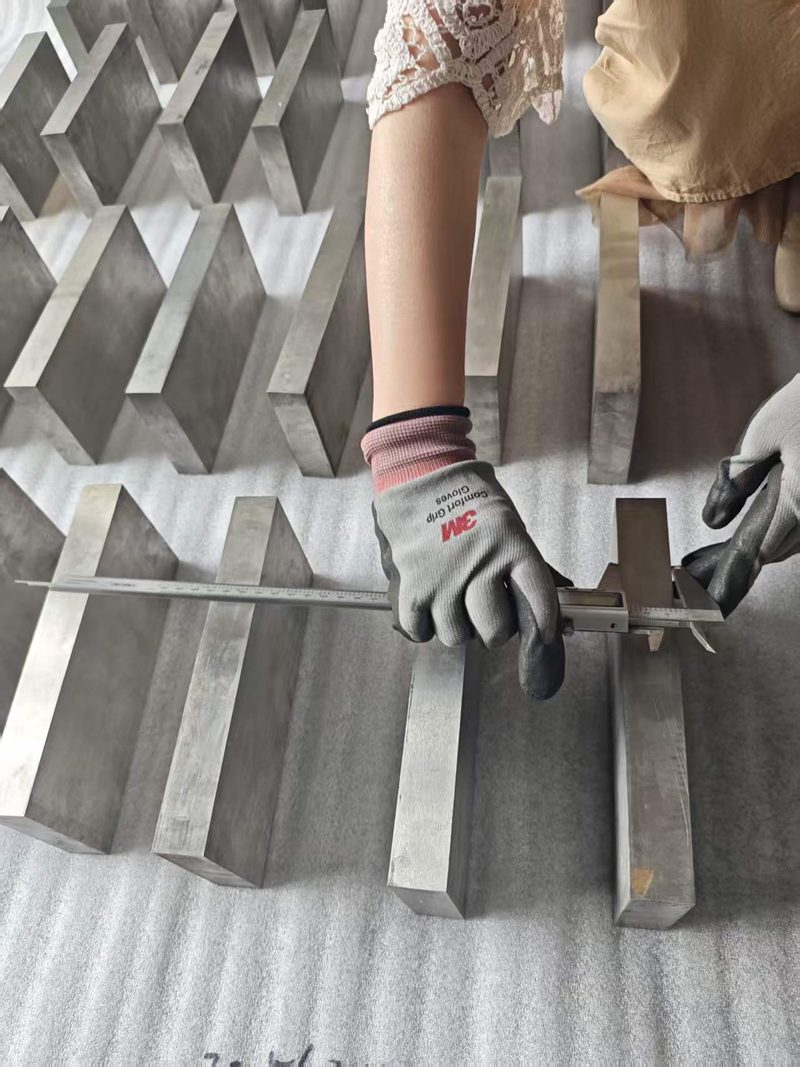
Inconel 706 (UNS N07706 / W.Nr. 2.4662) is a precipitation-hardenable nickel-iron-chromium superalloy that shares a close metallurgical lineage with the widely used Inconel 718. Developed by Special Metals Corporation as a more cost-effective alternative for large structural components, Inconel 706 offers comparable mechanical strength and fabricability while using significantly less nickel — approximately 39–44% versus 50–55% in Inconel 718. The higher iron content (28–35%) reduces raw material costs without sacrificing the essential gamma double-prime (Ni3Nb) strengthening mechanism that provides the alloy’s high tensile and yield properties.
The primary engineering rationale for Inconel 706 lies in its superior hot-working characteristics for large section sizes. When forging gas turbine discs exceeding 600 mm in diameter, Inconel 718 can develop harmful grain-boundary precipitation and structural inconsistency in the center of thick sections. Inconel 706’s modified chemistry provides improved hot ductility and more uniform grain structure throughout large forgings, making it the preferred choice for heavy rotating components in industrial gas turbines and power generation equipment.
Like Inconel 718, the strengthening of Inconel 706 relies on the precipitation of gamma double-prime (Ni3Nb) and gamma-prime (Ni3(Al,Ti)) phases during a controlled two-step aging heat treatment. The alloy’s sluggish precipitation kinetics — a direct consequence of its niobium and titanium content — allow welding and forming in the annealed condition without the risk of strain-age cracking that plagues many other precipitation-hardened superalloys. This property is critical for fabricating complex turbine assemblies that require post-weld heat treatment.
Inconel 706 is melted using vacuum induction melting (VIM) followed by vacuum arc remelting (VAR) or electroslag remelting (ESR) to ensure the cleanliness and microstructural consistency demanded by turbine specifications. The alloy is supplied in solution-annealed and aged conditions per ASTM B670 and AMS specifications. At Hangbo Alloy Group, we produce Inconel 706 round bars, large forgings, plates, and welding wire for turbine manufacturers and power generation OEMs worldwide.
The chemistry of Inconel 706 is deliberately positioned between Inconel 718 and the iron-nickel superalloy family. Nickel is reduced to 39–44% (compared to 50–55% in 718), while iron is raised to 28–35%, making the alloy substantially more economical. The critical strengthening elements — niobium, titanium, and aluminum — are maintained at levels that ensure robust gamma double-prime and gamma-prime precipitation during aging, though niobium is slightly lower than in 718. Carbon, sulfur, and phosphorus are tightly restricted to protect ductility and creep-rupture life in large forgings.
| Element | Min % | Max % |
|---|---|---|
| Nickel (Ni) | 39.0 | 44.0 |
| Chromium (Cr) | 14.5 | 17.5 |
| Iron (Fe) | 28.0 | 35.0 |
| Niobium + Tantalum (Nb+Ta) | 2.75 | 3.75 |
| Titanium (Ti) | 1.50 | 2.00 |
| Aluminum (Al) | 0.20 | 0.60 |
| Molybdenum (Mo) | 0.50 | 1.50 |
| Cobalt (Co) | — | 1.00 |
| Carbon (C) | — | 0.06 |
| Manganese (Mn) | — | 0.35 |
| Silicon (Si) | — | 0.35 |
| Phosphorus (P) | — | 0.015 |
| Sulfur (S) | — | 0.015 |
| Boron (B) | — | 0.006 |
| Copper (Cu) | — | 0.30 |
Inconel 706 has an FCC austenitic matrix in the solution-annealed condition, identical to Inconel 718. Its density of 8.05 g/cm³ is slightly lower than Inconel 718 (8.19 g/cm³) due to the higher iron content. The alloy maintains moderate thermal conductivity and a relatively low coefficient of thermal expansion, which helps minimize thermal fatigue in large rotating components that experience temperature gradients during startup and shutdown cycles.
| Property | Value | Unit |
|---|---|---|
| Density | 8.05 | g/cm3 |
| Melting Range | 1260 - 1327 | °C |
| Specific Heat (21°C) | 435 | J/kg·K |
| Thermal Conductivity (21°C) | 12.1 | W/m·K |
| Electrical Resistivity (21°C) | 1.20 | μΩ·m |
| Modulus of Elasticity (21°C) | 200 | GPa |
| Mean CTE (21-93°C) | 13.3 | μm/m·°C |
| Curie Temperature | -196 | °C |
The mechanical properties of Inconel 706 are comparable to Inconel 718 in the aged condition, with tensile strength typically reaching 1240 MPa and yield strength 1035 MPa. These values are achieved through the standard two-step aging treatment that precipitates gamma double-prime and gamma-prime strengthening phases. The alloy retains adequate ductility (12–18% elongation) for structural reliability in turbine components. Values below are typical for bars and forgings per ASTM B670 in the aged condition.
| Property | Value |
|---|---|
| Tensile Strength | 1240 MPa (180 ksi) |
| Yield Strength (0.2% offset) | 1035 MPa (150 ksi) |
| Elongation in 2 inches | 12 - 18% |
| Reduction of Area | 15 - 30% |
| Hardness | 36 - 44 HRC |
| Charpy V-notch Impact (room temp) | 25 - 45 J |
Inconel 706 is supplied in either solution-treated or solution-treated plus aged condition. The heat treatment schedules are essentially identical to those used for Inconel 718, reflecting the alloys’ shared strengthening mechanism. Two primary schedules are used:
For large forgings, controlled cooling rates and furnace atmosphere are critical to avoid differential thermal stresses that could cause distortion or cracking in massive components. Hangbo Alloy Group provides full heat treatment certification with each order, including recorded time-temperature profiles and mechanical test results.
Inconel 706 retains significant strength at elevated temperatures thanks to its gamma double-prime strengthening phase, though its high-temperature capability is slightly below Inconel 718 due to the lower niobium and nickel content. The alloy is designed for long-term service at temperatures up to approximately 650°C (1200°F). Above this temperature, the gamma double-prime precipitates begin to coarsen and transform to the equilibrium delta phase, resulting in gradual strength loss. For short-term exposure, temperatures up to 700°C are tolerable, but sustained operation above 650°C is not recommended for critical rotating components.
| Temperature (°C) | Tensile Strength (MPa) | Yield Strength (MPa) | Elongation (%) |
|---|---|---|---|
| 21 (Room) | 1240 | 1035 | 16 |
| 316 | 1160 | 950 | 17 |
| 427 | 1100 | 920 | 17 |
| 538 | 1030 | 880 | 18 |
| 649 | 860 | 750 | 20 |
| 704 | 660 | 580 | 26 |
| 760 | 450 | 380 | 32 |
| 816 | 280 | 240 | 40 |
Inconel 706 provides corrosion resistance comparable to Inconel 718, which is adequate for many industrial environments though not equivalent to dedicated corrosion-resistant alloys like Hastelloy C-276 or Inconel 625. The chromium content (14.5–17.5%) provides a protective oxide scale in oxidizing atmospheres, while molybdenum and niobium contribute to resistance against chloride-induced pitting.
Inconel 706 was specifically developed for large structural and rotating components in gas turbines where cost-effectiveness and uniform mechanical properties through thick sections are paramount. Its lower nickel content reduces material cost by 15–20% compared to Inconel 718, while its improved hot-working behavior ensures more consistent grain structure in large forgings.
Hangbo Alloy Group manufactures and supplies Inconel 706 in a comprehensive range of product forms, all supported by material test reports and third-party inspection. Our production capacity is optimized for the large-section forgings that define this alloy’s primary market:
| Standard | Description |
|---|---|
| ASTM B670 | Bar, Forging, and Forging Stock, Precipitation Hardened |
| AMS 5680 | Wire, Solution Treated |
| AMS 5681 | Wire, Precipitation Hardened |
| AWS A5.14 | Welding Wire (ERNiFeCr-2) |
| ASME SB-670 | Boiler and Pressure Vessel Code |
| NACE MR0175 / ISO 15156 | Sour Gas Service (Hardness ≤40 HRC) |
Inconel 706 has a density of 8.05 g/cm³ (0.291 lb/in³), slightly lower than Inconel 718 (8.19 g/cm³) due to its higher iron content (~40% vs balance). This lower density can reduce the weight of large turbine discs by approximately 1.7%.
The melting range of Inconel 706 is approximately 1260–1327°C (2300–2420°F), comparable to Inconel 718’s range of 1260–1336°C.
Inconel 706 (UNS N07706) nominal composition: Ni 39–44%, Cr 14.5–17.5%, Fe 28–35%, Nb+Ta 2.75–3.75%, Ti 1.5–2.0%, Al 0.2–0.6%, Mo 0.5–1.5%, C ≤0.06%, Mn ≤0.35%, Si ≤0.35%, S ≤0.015%, P ≤0.015%, B ≤0.006%. Key difference from 718: higher iron, lower nickel, slightly lower niobium.
Key standards for Inconel 706 include ASTM B670 (bar and forging), AMS 5680 (wire), AMS 5681 (wire, precipitation hardened), and ASME SB-670 for pressure vessel applications. NACE MR0175 / ISO 15156 applies for sour gas service with hardness control.
The standard two-step aging for Inconel 706 is: solution anneal at 954–982°C, air cool; age at 718°C for 8 hours, furnace cool to 621°C, hold 8 hours, then air cool. A single-step aging (718°C/8h/AC) is also used for larger forgings requiring simplified thermal cycles, achieving slightly lower but more uniform properties across thick sections.
Inconel 706 is derived from Inconel 718 with higher iron (28–35% vs balance) and lower nickel (39–44% vs 50–55%). This makes 706 more cost-effective while maintaining similar mechanical properties. 706 has comparable yield strength (~1035 MPa) and tensile strength (~1240 MPa) but slightly lower creep resistance above 650°C. Its main advantage is easier hot working for large forgings and 15–20% lower material cost.
Inconel 706 is typically 15–20% less expensive than Inconel 718 due to its higher iron content (lower nickel consumption). Rough price range: $18–30/kg for round bar in standard sizes, depending on form, size, and specification. Large custom forgings may have higher per-kg costs due to processing complexity. Contact Hangbo Alloy Group for current pricing and availability.
Inconel 706 is available as round bars (6–350 mm dia), forgings (custom open-die and ring-rolled up to 1000 mm diameter), plates and sheets (0.5–50 mm), and welding wire (ERNiFeCr-2 / AWS A5.14). Hangbo Alloy Group supplies all forms per ASTM B670 and AMS specifications with full certification.
Yes, Inconel 706 has excellent weldability similar to Inconel 718. It can be welded by GTAW (gas tungsten arc), GMAW (gas metal arc), and EBW (electron beam) using matching filler metal ERNiFeCr-2. Its sluggish precipitation kinetics prevent strain-age cracking during post-weld heat treatment, a critical advantage for fabricating complex turbine assemblies.
Inconel 706 is designed for service up to approximately 650°C (1200°F) for long-term applications. Short-term exposure to 700°C is possible, but above 650°C the gamma double-prime precipitates begin coarsening, causing gradual strength loss. For critical rotating components, 650°C is the recommended maximum continuous service temperature.
Standard round bars (ASTM B670): typical lead time 15–25 days, MOQ 100 kg. Custom forgings for turbine discs: lead time 45–90 days depending on size and specification, MOQ negotiable. Welding wire: 10–15 days, MOQ 50 kg. Hangbo Alloy Group maintains stock of common bar sizes for rapid delivery.
Hangbo Alloy Group maintains mill-direct supply of Inconel 706 round bars, large forgings, plates, and welding wire in both solution-treated and aged conditions per ASTM B670. Our team specializes in large-section turbine disc forgings and can assist with material selection, heat treatment specification, ultrasonic testing requirements, and export documentation.
For quotations, material certifications, or technical consultation, contact our sales team or call +86-136-1165-6360. We typically respond within 10 minutes.
Request a quotation for Inconel 706 round bars, turbine disc forgings, plates, or welding wire. We supply standard sizes and accept custom forging orders up to 1000 mm diameter.