
Hangbo Alloy Group
Shanghai · Est. 2012
UNS N07115 (W.Nr. 2.4636, GB GH4115) — Ni-Cr-Co precipitation-hardenable superalloy with ~55% gamma-prime volume fraction, exceptional creep-rupture strength at extreme temperatures, and proven performance in aircraft gas turbine blades, guide vanes, and the hottest sections of advanced aero-engines.
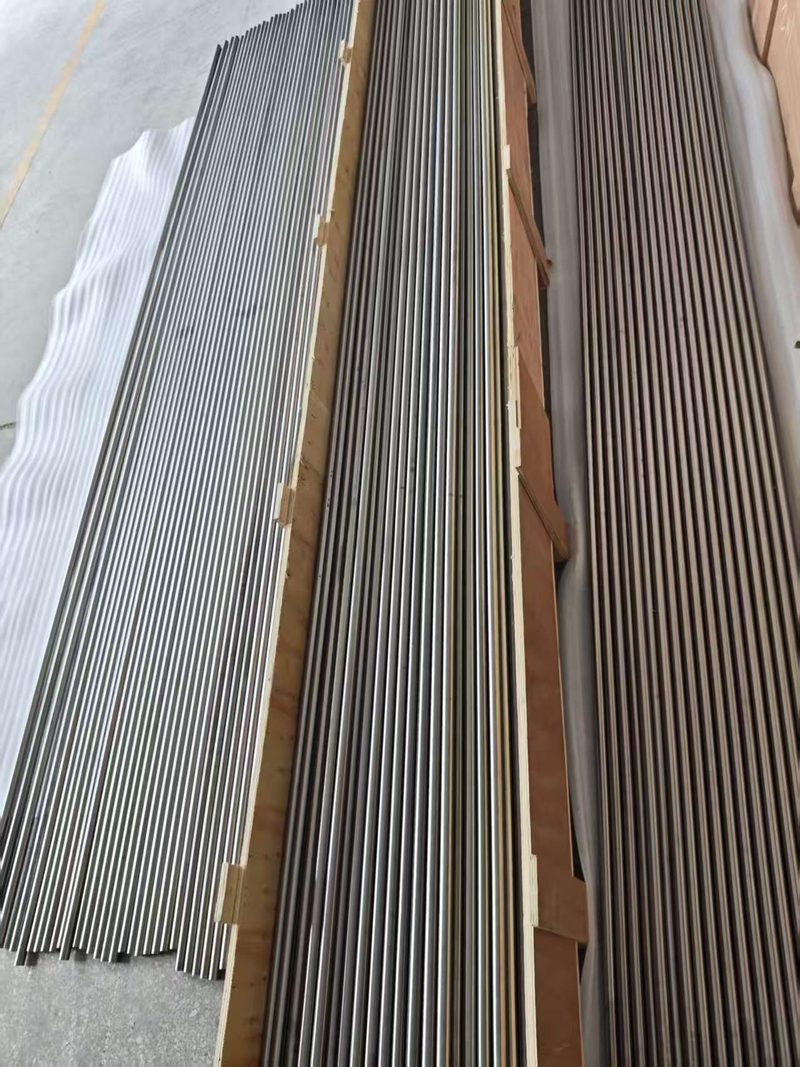
Nimonic 115 (UNS N07115, W.Nr. 2.4636, also designated GH4115 under China's GB/T 14992 standard) is a nickel-chromium-cobalt precipitation-hardenable superalloy developed by Special Metals Corporation (formerly Henry Wiggin & Company) as a high-performance evolution of the widely used Nimonic 105. With approximately 20% higher aluminum and titanium content than its predecessor, Nimonic 115 achieves a gamma-prime (γ') volume fraction of approximately 55% after full heat treatment — among the highest for any wrought nickel superalloy. This exceptionally high strengthening-phase content is the foundation of the alloy's class-leading creep-rupture performance at temperatures up to 1010°C (1850°F).
Developed during the era of rapidly advancing gas turbine technology, Nimonic 115 was specifically engineered for the hottest stages of aircraft engines where turbine blades must withstand simultaneous extremes of temperature, centrifugal stress, and oxidizing combustion gases. The alloy remains a benchmark material for cooled and uncooled turbine blade designs in both military and commercial aero-engine applications. Its Chinese equivalent GH4115 is widely produced by domestic superalloy mills and used in domestically developed gas turbine engines.
The alloy's microstructural design centers on maximizing the volume fraction of coherent gamma-prime precipitates (Ni3(Al,Ti)) while maintaining sufficient chromium content (14–16%) for hot-corrosion resistance. Molybdenum provides additional solid-solution strengthening of the gamma matrix, while cobalt raises the gamma-prime solvus temperature, extending the effective strengthening range to higher temperatures. The carefully controlled carbon content produces grain boundary carbides (primarily M23C6) that inhibit grain boundary sliding during creep.
At Hangbo Alloy Group, Nimonic 115 is supplied in extruded bar, forged bar, ring forging, and investment casting forms per UNS N07115 and GH4115 specifications. Due to its high gamma-prime content, the alloy is not typically available in sheet or plate form, and its fabrication is primarily through forging, extrusion, and investment casting processes rather than cold forming or welding.
The chemistry of Nimonic 115 represents the upper limit of gamma-prime-forming element additions achievable in a wrought nickel alloy while retaining sufficient hot-workability for commercial production. The Al+Ti total of 8–10% is approximately 20% higher than Nimonic 105, yielding a gamma-prime solvus temperature approaching 1160°C and a volume fraction of approximately 55% at service temperatures. Cobalt is present at ~14% to increase the gamma-prime solvus, while chromium at 14–16% provides the necessary hot-corrosion resistance for turbine blade environments.
| Element | Nominal % | Range % |
|---|---|---|
| Nickel (Ni) | 55.0 | Balance |
| Chromium (Cr) | 15.0 | 14 – 16 |
| Cobalt (Co) | 14.0 | 13 – 15.5 |
| Molybdenum (Mo) | 4.0 | 3 – 5 |
| Aluminum (Al) | 5.0 | 4.5 – 5.5 |
| Titanium (Ti) | 4.0 | 3.5 – 4.5 |
| Al + Ti Total | 9.0 | 8 – 10 |
| Carbon (C) | 0.10 | 0.05 – 0.15 |
| Iron (Fe) | — | max 1.0 |
| Manganese (Mn) | — | max 0.5 |
| Silicon (Si) | — | max 0.5 |
| Copper (Cu) | — | max 0.2 |
| Boron (B) | — | max 0.02 |
| Zirconium (Zr) | — | max 0.04 |
Nimonic 115 has a face-centered cubic (FCC) austenitic matrix with approximately 55% gamma-prime phase distributed as coherent precipitates after full heat treatment. The relatively low density of 7.85 g/cm³ is advantageous for rotating turbine components, where centrifugal stress is directly proportional to density. The modulus of elasticity is comparable to other precipitation-hardened nickel alloys at room temperature but declines more gradually at elevated temperatures due to the high gamma-prime solvus temperature.
| Property | Value | Unit |
|---|---|---|
| Density | 7.85 | g/cm³ |
| Melting Range | 1280 – 1320 | °C |
| Modulus of Elasticity (21°C) | 220 | GPa |
| Modulus of Elasticity (800°C) | 160 | GPa |
| Mean CTE (21–500°C) | 12.5 | μm/m·°C |
| Mean CTE (21–900°C) | 14.8 | μm/m·°C |
| Thermal Conductivity (21°C) | 10.5 | W/m·K |
| Thermal Conductivity (800°C) | 23.0 | W/m·K |
| Gamma-Prime Solvus | ~1160 | °C |
| Gamma-Prime Vol. Fraction | ~55 | % |
Nimonic 115 achieves its full strength only after the complete multi-stage precipitation hardening heat treatment. The alloy is not supplied or used in the solution-annealed condition for service applications; all mechanical property specifications reference the fully heat-treated condition. The extremely high gamma-prime volume fraction produces room-temperature strength levels that approach those of powder metallurgy superalloys.
| Property | Typical Value |
|---|---|
| Tensile Strength | 1100 – 1300 MPa (160 – 189 ksi) |
| Yield Strength (0.2% offset) | 750 – 900 MPa (109 – 131 ksi) |
| Elongation in 50 mm | 15 – 25% |
| Reduction of Area | 18 – 28% |
| Hardness | 350 – 400 HB |
| Temperature (°C) | Tensile Strength (MPa) | Yield Strength (MPa) | Elongation (%) |
|---|---|---|---|
| 21 (Room) | 1200 | 820 | 20 |
| 650 | 1050 | 750 | 15 |
| 800 | 850 | 600 | 12 |
| 900 | 550 | 400 | 10 |
| 1000 | 280 | 220 | 15 |
A notable characteristic of Nimonic 115 is that ductility actually increases at temperatures above 900°C as the gamma-prime phase begins to partially dissolve, improving stress relaxation capability which is beneficial for thermal-mechanical fatigue resistance in turbine blade applications.
The heat treatment of Nimonic 115 is a sophisticated multi-stage process that must be executed with precise temperature control to achieve the intended gamma-prime particle size distribution. The process is more complex than that of lower-gamma-prime alloys and is a significant contributor to the alloy's cost.
The two-stage aging process produces a bimodal gamma-prime distribution that is optimal for both creep resistance (coarse precipitates at grain boundaries) and tensile strength (fine precipitates within grains). The total heat treatment cycle time can exceed 30 hours, reflecting the precision required for turbine-blade-grade material.
Creep resistance is the defining performance characteristic of Nimonic 115 and the primary reason for its development. The approximately 55% gamma-prime volume fraction provides exceptional resistance to dislocation climb and glide at temperatures where most wrought superalloys have lost effective strengthening. This makes Nimonic 115 one of the few wrought alloys suitable for the hottest turbine blade stages.
| Temperature (°C) | 1000-h Rupture Strength (MPa) | Comparison: Nimonic 105 (MPa) |
|---|---|---|
| 750 | 420 | 350 |
| 850 | 200 | 160 |
| 950 | 70 | 50 |
| 1000 | 35 | 20 |
The creep advantage of Nimonic 115 over Nimonic 105 becomes more pronounced at higher temperatures, with approximately 75% higher rupture life at 1000°C. This behavior is a direct consequence of the higher gamma-prime solvus temperature, which maintains particle stability and strengthening effectiveness at temperatures where lower-Al+Ti alloys experience significant gamma-prime coarsening and dissolution.
The microstructure of Nimonic 115 after full heat treatment is dominated by its exceptionally high gamma-prime volume fraction. Understanding this microstructure is essential for appreciating both the alloy's capabilities and its processing challenges.
Nimonic 115 is challenging to process compared to lower-gamma-prime alloys, and its fabrication is typically limited to forging, extrusion, and investment casting. The high gamma-prime content gives the alloy a narrow hot-working window and high flow stress, requiring specialized equipment and expertise.
Nimonic 115 was developed specifically for the most demanding rotating and static hot-section components in gas turbine engines, and its application portfolio reflects this highly specialized origin.
| Property | Nimonic 115 | Nimonic 105 | Nimonic 90 | Waspaloy | Inconel 713C |
|---|---|---|---|---|---|
| Max Service Temp | 1010°C | 980°C | 920°C | 870°C | 980°C |
| γ' Vol. Fraction | ~55% | ~45% | ~20% | ~25% | ~65% |
| Density (g/cm³) | 7.85 | 8.01 | 8.18 | 8.22 | 7.91 |
| Form | Wrought/Cast | Wrought | Wrought | Wrought | Cast Only |
| Weldability | Poor | Poor | Fair | Fair | Poor |
| RT Tensile (MPa) | 1100–1300 | 1100–1250 | 1200–1400 | 1275–1410 | 850–1035 |
| Cost Factor | Premium | High | High | High | Medium-High |
Nimonic 115 occupies a unique niche among wrought nickel superalloys — it provides gamma-prime volume fraction and temperature capability approaching that of cast alloys like Inconel 713C (~65% γ'), while retaining the forged microstructure benefits of a wrought product. The trade-offs are high cost, challenging processing, and limited product forms compared to lower-gamma-prime wrought alloys.
Nimonic 115 has a density of approximately 7.85 g/cm³ (0.284 lb/in³). This relatively low density (for a nickel superalloy) is advantageous for rotating turbine blade applications, where centrifugal stress is directly proportional to density. The modest molybdenum content (3–5%) and absence of tungsten contribute to this favorable density compared to alloys such as Haynes 244 (9.04 g/cm³).
The melting range of Nimonic 115 is approximately 1280–1320°C (2340–2410°F). The high aluminum and titanium content tends to narrow the melting range relative to solid-solution strengthened alloys, making close temperature control essential during hot working and solution annealing to avoid incipient melting.
Nimonic 115 (UNS N07115) has a highly alloyed composition: Nickel balance (~55%), Chromium 14–16%, Cobalt 13–15.5%, Molybdenum 3–5%, Aluminum 4.5–5.5%, Titanium 3.5–4.5%, Carbon 0.05–0.15%, Iron max 1.0%. The exceptional Al+Ti total of 8–10% produces approximately 55% gamma-prime volume fraction after full heat treatment, which is the metallurgical basis for the alloy's class-leading creep resistance.
Nimonic 115 is designated under UNS N07115 (US), Werkstoff Number 2.4636 (Germany), and GH4115 per GB/T 14992 (China). It is also covered by AMS 5829 and Special Metals Corporation's proprietary technical bulletins. Major gas turbine OEMs including Rolls-Royce, GE, and Pratt & Whitney reference Nimonic 115 in their material specifications for turbine blade applications.
Nimonic 115 requires a complex three-stage heat treatment to achieve its design properties: (1) Solution annealing at 1180–1190°C for 2–4 hours (air cool); (2) Primary aging at ~1050°C for 4–6 hours to precipitate coarse grain-boundary gamma-prime; (3) Secondary aging at 750–850°C for 16–24 hours to precipitate fine intragranular gamma-prime. Total cycle time can exceed 30 hours and must be precisely controlled for optimal properties.
Nimonic 115 is rated for continuous service up to approximately 1010°C (1850°F), making it one of the highest-temperature-capable wrought precipitation-hardenable nickel superalloys. The high gamma-prime solvus temperature (~1160°C) ensures that strengthening precipitates remain stable and effective at service temperatures approaching 1010°C, where lower-gamma-prime alloys have already experienced significant particle coarsening and strength loss.
Nimonic 115 has poor weldability and is generally NOT recommended for welding. The ~55% gamma-prime volume fraction makes the alloy extremely susceptible to strain-age cracking (also known as post-weld heat treatment cracking) in the heat-affected zone. For applications requiring joining, alternative methods such as brazing or mechanical fastening should be considered. The alloy is primarily used in forged or cast monolithic component forms.
Nimonic 115 is a direct evolution of Nimonic 105, featuring approximately 20% higher aluminum and titanium content (Al+Ti 8–10% vs. 6–7.5% for Nimonic 105). This increases the gamma-prime volume fraction from ~45% to ~55%, raising the gamma-prime solvus temperature and providing approximately 25–30°C higher temperature capability with significantly improved creep-rupture life, especially above 900°C.
Nimonic 115 is primarily available as extruded bars and sections, forged bars, investment castings (including turbine blades), and ring forgings. Due to its high gamma-prime content and limited ductility in the annealed condition, it is not commonly supplied as sheet or plate. Hangbo Alloy Group can supply bars, forgings, and custom extrusions per customer specifications.
Nimonic 115 is a premium turbine-blade-grade superalloy with pricing typically 2–4 times higher than commodity nickel alloys like Inconel 625. Cost drivers include: high cobalt content (~14%), complex multi-stage heat treatment (30+ hours), narrow hot-working window requiring specialized processing, and the rigorous quality assurance required for rotating turbine components. Contact Hangbo Alloy Group for a competitive project-specific quotation.
Primary applications are in the hottest sections of gas turbine engines: first and second-stage turbine blades (both cooled and uncooled), nozzle guide vanes (NGVs), high-temperature turbine discs and seals, and structural components in advanced military and commercial aero-engines. It was specifically developed for turbine blade applications in Rolls-Royce and other major OEM engines where metal temperatures approach 1000°C.
At 800°C (1470°F), Nimonic 115 retains a yield strength of approximately 550–650 MPa, which is significantly higher than most other wrought superalloys at this temperature. Even at 950°C (1740°F), the alloy maintains yield strength of 250–300 MPa. This exceptional high-temperature strength retention is the direct result of the ~55% gamma-prime volume fraction and high gamma-prime solvus temperature.