
Hangbo Alloy Group
Shanghai · Est. 2012
UNS N07713 — Chemical composition, casting characteristics, mechanical properties, microstructure, and applications in gas turbine blade and vane investment castings operating at temperatures up to 980°C.
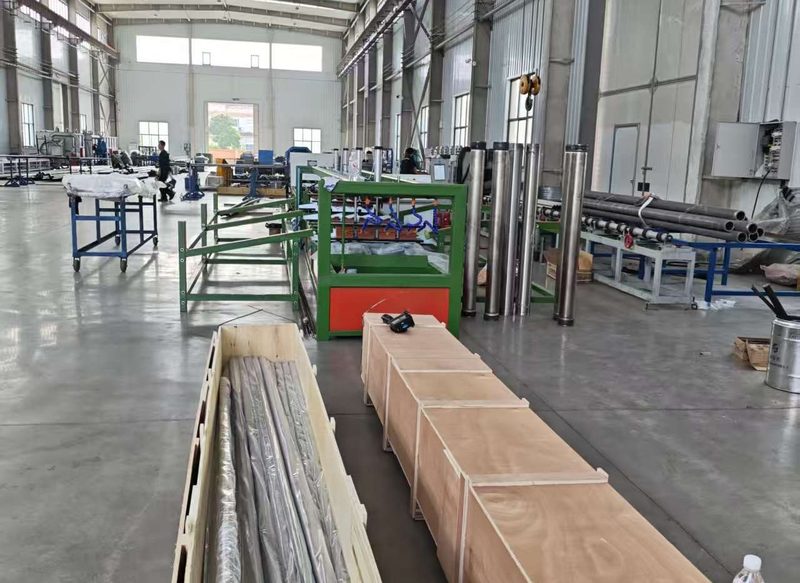
Inconel 713C (UNS N07713) is a nickel-based precipitation-hardened investment casting superalloy designed for gas turbine blade and vane applications at temperatures up to 980°C (1800°F). The "C" designation indicates that the alloy composition has been specifically optimized for casting applications, with controlled carbon content, grain-refining additions, and solidification characteristics tailored for investment casting processes.
The most distinctive feature of Inconel 713C is its very high aluminum content (5.5–6.5%), which is among the highest of any commercially available nickel superalloy. This extraordinary aluminum level produces a gamma prime (Ni3Al) volume fraction exceeding 40%, which precipitates during cooling from the casting temperature without requiring a separate aging heat treatment. This self-hardening characteristic is critical for investment-cast components with complex internal cooling passages that cannot be uniformly heat treated after casting.
Inconel 713C was developed in the 1950s by General Electric and has been one of the most widely used casting superalloys for first-stage and second-stage turbine blades and nozzle guide vanes in both aerospace and industrial gas turbine engines. Its excellent castability, self-hardening behavior, and good high-temperature strength have made it a benchmark alloy in the investment casting superalloy field. Although newer single-crystal alloys like CMSX-4 and PWA 1484 have superseded 713C in the most demanding modern engines, it remains in active production for legacy programs and less severe service conditions.
The chemical composition of Inconel 713C reflects its casting-optimized design philosophy. The very high aluminum content (5.5–6.5%) provides strong gamma prime precipitation that occurs automatically during cooling from the casting temperature, eliminating the need for a separate aging treatment. The carbon range (0.08–0.16%) is higher than in wrought alloys, as carbide formation at grain boundaries during solidification provides essential grain boundary strengthening in the cast structure. Zirconium and boron additions improve grain boundary cohesion and castability.
| Element | Min % | Max % |
|---|---|---|
| Nickel (Ni) | Balance | Balance |
| Chromium (Cr) | 12.0 | 16.0 |
| Aluminum (Al) | 5.5 | 6.5 |
| Molybdenum (Mo) | 3.5 | 5.0 |
| Titanium (Ti) | 0.4 | 0.8 |
| Iron (Fe) | — | 2.0 |
| Carbon (C) | 0.08 | 0.16 |
| Boron (B) | 0.005 | 0.015 |
| Zirconium (Zr) | 0.05 | 0.15 |
| Silicon (Si) | — | 0.50 |
| Manganese (Mn) | — | 0.50 |
| Sulfur (S) | — | 0.015 |
| Phosphorus (P) | — | 0.015 |
| Copper (Cu) | — | 0.50 |
| Cobalt (Co) | — | 1.0 |
Inconel 713C has a relatively low density compared to many wrought nickel superalloys, which is advantageous for rotating turbine blade applications where centrifugal stress is proportional to material density. The reduced density allows either higher rotational speeds or longer blade life at existing speeds. The thermal conductivity is typical of highly alloyed nickel superalloys and increases significantly with temperature.
| Property | Value | Unit |
|---|---|---|
| Density | 8.01 | g/cm³ |
| Melting Point (Range) | 1260–1320 | °C |
| Specific Heat (21°C) | 430 | J/kg·K |
| Thermal Conductivity (21°C) | 8.4 | W/m·K |
| Electrical Resistivity (21°C) | 1.36 | μΩ·m |
| Modulus of Elasticity (21°C) | 190 | GPa |
| Mean Coefficient of Thermal Expansion (21–93°C) | 12.5 | μm/m·°C |
| Mean Coefficient of Thermal Expansion (21–538°C) | 14.8 | μm/m·°C |
The mechanical properties of Inconel 713C are inherently determined by the casting process and the self-hardening gamma prime precipitation that occurs during cooling from the casting temperature. No separate aging heat treatment is required, which is a major advantage for investment-cast components with complex internal cooling passages. The as-cast properties are sufficient for most gas turbine blade and vane applications.
The high yield-to-tensile ratio (>85%) is characteristic of heavily precipitation-hardened casting alloys. The relatively low elongation (4–8%) reflects the high gamma prime volume fraction that restricts dislocation motion. Cast-to-cast property variation is inherent in investment casting and is managed through statistical process control and minimum property guarantees in specifications.
| Property | As-Cast | After Homogenization |
|---|---|---|
| Tensile Strength | 760–900 MPa (110–130 ksi) | 850–950 MPa (123–138 ksi) |
| Yield Strength (0.2% offset) | 690–760 MPa (100–110 ksi) | 740–800 MPa (107–116 ksi) |
| Elongation in 2 inches | 4–8% | 6–10% |
| Reduction of Area | 6–12% | 8–14% |
| Hardness (Rockwell C) | 32–38 HRC | 34–40 HRC |
| Impact Strength (Charpy V-notch) | 8–15 J | 12–20 J |
Inconel 713C is renowned for its excellent investment casting characteristics, which were a primary design consideration in its development. The alloy exhibits narrow solidification range, good fluidity at casting temperature, and minimal hot tearing susceptibility, making it ideal for the complex geometries required in internally cooled turbine blades.
Inconel 713C exhibits useful tensile strength at elevated temperatures, though its capabilities at extreme temperatures (>950°C) are limited compared to modern single-crystal alloys. Its primary value is in the 700–980°C range where the combination of self-hardening, castability, and moderate cost provides an optimal balance for many turbine component applications.
| Temperature (°C) | Tensile Strength (MPa) | Yield Strength (MPa) | Elongation (%) |
|---|---|---|---|
| 21 (Room) | 850 | 740 | 6 |
| 316 | 780 | 680 | 7 |
| 538 | 720 | 640 | 8 |
| 649 | 650 | 570 | 8 |
| 760 | 530 | 450 | 9 |
| 816 | 420 | 350 | 12 |
| 871 | 310 | 260 | 14 |
| 927 | 200 | 170 | 18 |
| 982 | 120 | 100 | 22 |
Inconel 713C exhibits reasonable creep-rupture strength for a conventionally cast (equiaxed) superalloy. The 100-hour rupture stress at 815°C is approximately 210 MPa, and at 900°C approximately 130 MPa. These values are adequate for many second-stage and third-stage turbine blade and vane applications. However, for first-stage turbine blades in the hottest zone of modern high-performance engines, single-crystal alloys like CMSX-4 with directional solidification provide significantly better creep resistance by eliminating transverse grain boundaries.
The creep-rupture ductility of Inconel 713C is relatively low (2–5% elongation at rupture at temperatures above 800°C), which is characteristic of equiaxed casting superalloys with intergranular crack propagation. The boron and zirconium additions improve grain boundary cohesion and provide some improvement in rupture ductility, but the fundamental limitation of transverse grain boundaries in equiaxed castings remains.
The very high aluminum content (5.5–6.5%) gives Inconel 713C a distinctive advantage in oxidation resistance compared to chromium-dependent alloys. At temperatures above 900°C, aluminum forms a continuous, protective Al2O3 scale that is more stable and protective than the Cr2O3 scale formed by most other superalloys. This alumina scale provides excellent long-term oxidation resistance in clean combustion atmospheres.
Inconel 713C has been one of the most widely used investment casting superalloys since its introduction in the 1950s. Its applications span aerospace and industrial gas turbine engines, where its self-hardening characteristic and excellent castability have made it the alloy of choice for complex internally cooled blade and vane castings.
Inconel 713C is exclusively an investment casting alloy and is not available in wrought product forms (bar, sheet, plate, or forgings). This is because the very high aluminum content (5.5–6.5%) makes the alloy extremely difficult to hot work or cold form. All Inconel 713C components are produced by investment casting in vacuum or inert atmosphere.
| Standard | Description |
|---|---|
| AMS 5380 | Investment Castings, As-Cast Condition |
| AMS 5381 | Investment Castings, Homogenized Condition |
| AMS 2280 | Revert Material, Chemical Composition Verification |
| UNS N07713 | Unified Numbering System Designation |
| ASTM A985 | Standard Specification for Investment Castings |
| AMS 2780 | Heat Treatment of Investment Castings |
Inconel 713C has a density of 8.01 g/cm³ (0.290 lb/in³), which is slightly lower than most wrought nickel superalloys. This relatively low density is advantageous for rotating turbine blade applications where centrifugal stress is proportional to material density.
Inconel 713C has a melting range of approximately 1260–1320°C (2300–2410°F). The narrow melting range and good fluidity make it well-suited for investment casting of complex turbine blade geometries.
Inconel 713C is a nickel-chromium-aluminum-titanium casting superalloy: Nickel balance (~74%), Chromium 12–16%, Aluminum 5.5–6.5%, Molybdenum 3.5–5.0%, Titanium 0.4–0.8%, Iron max 2%, with Boron (0.005–0.015%), Zirconium (0.05–0.15%), and Carbon (0.08–0.16%). The very high aluminum content provides strong gamma prime precipitation without separate aging treatment.
Inconel 713C is covered by AMS 5380 (investment castings, as-cast) and AMS 5381 (investment castings, homogenized). It appears under UNS N07713. ASTM A985 references the alloy for investment casting applications.
Inconel 713C can operate continuously at temperatures up to approximately 980°C (1800°F) in gas turbine environments. For short-term peak exposures, it can withstand temperatures approaching 1100°C. The high aluminum content provides oxidation resistance through alumina scale formation.
Inconel 713C is a casting alloy while Inconel 718 is primarily a wrought alloy. 713C has much higher aluminum (5.5–6.5% vs. 0.2–0.8%) and self-hardens during casting cooling, while 718 requires careful precipitation hardening heat treatment. 713C is ideal for investment casting complex shapes that cannot be uniformly heat treated.
Inconel 713C has very limited weldability due to its high aluminum content. Fusion welding is susceptible to strain-age cracking and hot cracking. Repair welding of casting defects is possible with specialized procedures but limited to non-critical areas. Brazing is the preferred joining and repair method.
In the as-cast condition, Inconel 713C exhibits tensile strength of 760–900 MPa (110–130 ksi), yield strength of 690–760 MPa (100–110 ksi), and elongation of 4–8%. The high yield-to-tensile ratio (>85%) reflects the substantial gamma prime volume fraction (~40%).
Inconel 713C is exclusively an investment casting alloy — not available in wrought forms (bar, sheet, plate). Hangbo Alloy Group supplies precision investment cast turbine blades, vanes, turbocharger wheels, and custom castings per AMS 5380/5381. Casting master bars and revert material are also available.
Inconel 713C is primarily used in gas turbine engines for investment cast turbine blades, nozzle guide vanes, and combustor segments. It is also used in turbocharger wheels for diesel engines, hot-section exhaust valve components, and high-temperature structural investment castings.
The 'C' designation stands for 'Cast' — indicating the alloy composition is optimized for investment casting. The controlled carbon range (0.08–0.16%) and grain-refining additions (Zr, B) are adjusted for solidification characteristics in precision casting, as opposed to wrought processing requirements.
Inconel 713C is priced per casting component rather than per kg of raw material. Raw casting master bars range from $40–$80 per kg. Finished investment cast turbine blades and vanes range from $200–$800 per piece depending on complexity and specification. Contact our sales team for specific component pricing.
Hangbo Alloy Group provides Inconel 713C investment cast turbine blades, nozzle vanes, and custom-designed cast components per AMS 5380 and AMS 5381 specifications. Our casting facility supports both equiaxed and directionally solidified grain structures with vacuum investment casting capability. Complete NDT inspection (radiographic, fluorescent penetrant, dimensional), material certification, and OEM documentation packages are available.
For quotations, casting specifications, or technical consultation, contact our sales team or call +86-136-1165-6360. We typically respond within 10 minutes.
Request a quotation for Inconel 713C investment cast turbine blades, vanes, or custom components per AMS 5380/5381. Vacuum investment casting with full NDT inspection and OEM documentation available.