
Hangbo Alloy Group
Shanghai · Est. 2012
UNS N62444 — Ni-Cr-Mo-W solid-solution strengthened alloy with outstanding oxidation resistance up to 1250°C, superior creep-rupture strength, and excellent fabricability for extreme-temperature aerospace and industrial applications.
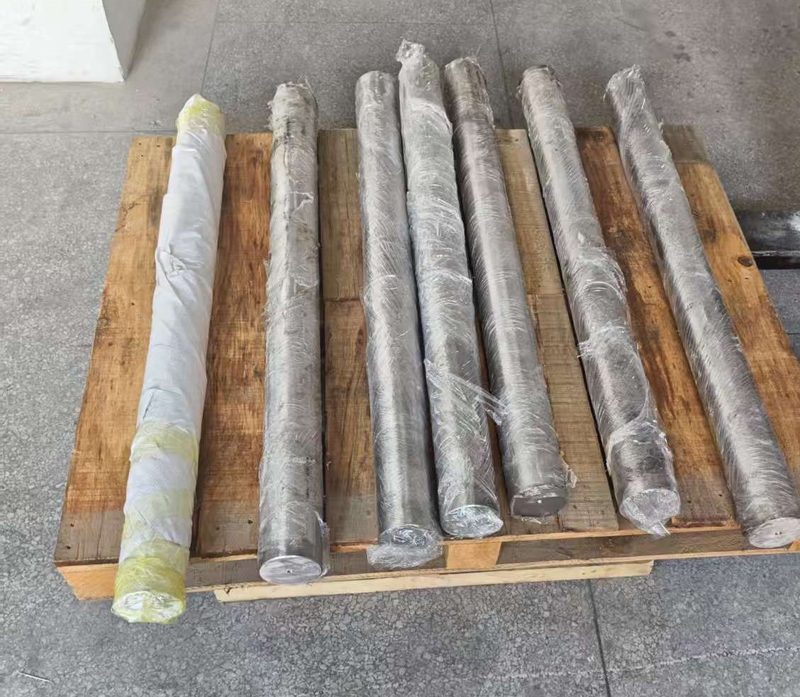
Haynes 244 (UNS N62444) is a nickel-chromium-molybdenum-tungsten solid-solution strengthened superalloy developed by Haynes International specifically for ultra-high temperature applications that exceed the capability of established alloys such as Haynes 230, Inconel 617, and Hastelloy X. With a maximum recommended service temperature of approximately 1250°C (2282°F) in oxidizing environments, Haynes 244 represents one of the highest-temperature-capable wrought nickel alloys commercially available, filling a critical gap between conventional wrought superalloys and cast alloys used in the hottest sections of gas turbine engines.
The alloy's design philosophy centers on a balanced combination of refractory metal additions (tungsten ~12% and molybdenum ~7%) that provide solid-solution strengthening and raise the melting range, together with a high chromium content (~22%) that ensures robust oxidation and hot-corrosion resistance. A controlled lanthanum addition (0.01–0.05%) enhances the adhesion and spallation resistance of the protective chromia oxide scale at temperatures above 1100°C, where conventional alloys begin to suffer significant oxide degradation. This rare-earth modification is a key differentiator that gives Haynes 244 its exceptional long-term oxidation stability in cyclic thermal environments.
Unlike many ultra-high temperature alloys that are only available as castings, Haynes 244 is fully wrought and fabricable. It can be cold-formed, hot-worked, machined, and welded using conventional shop practices, making it practical for thin-wall combustor liners, transition ducts, and other complex sheet-metal fabrications that require both extreme temperature resistance and good manufacturability. The alloy's solid-solution strengthening mechanism means it requires no precipitation hardening heat treatment — solution annealing alone produces the intended microstructure and properties.
At Hangbo Alloy Group, Haynes 244 is supplied in solution-annealed condition per the Haynes International product data sheet specifications. We produce sheets, plates, round bars, seamless tubes, and custom fabrications for gas turbine manufacturers, aerospace engine builders, and industrial furnace operators worldwide.
The chemistry of Haynes 244 is designed to maximize both high-temperature strength and environmental resistance without relying on precipitation-hardening phases. The high tungsten content provides the primary solid-solution strengthening contribution, while chromium and lanthanum work synergistically to form a tenacious, slow-growing oxide scale. Molybdenum adds additional solution strengthening and contributes to creep resistance at intermediate temperatures. The low carbon content minimizes carbide formation during prolonged high-temperature exposure, preserving ductility and weldability.
| Element | Nominal % | Range % |
|---|---|---|
| Nickel (Ni) | Balance | 42 – 46 |
| Chromium (Cr) | 22.0 | 20 – 24 |
| Molybdenum (Mo) | 7.0 | 6 – 8 |
| Tungsten (W) | 12.0 | 11 – 13 |
| Cobalt (Co) | — | max 3.0 |
| Aluminum (Al) | 0.5 | 0.3 – 0.7 |
| Carbon (C) | 0.02 | max 0.03 |
| Silicon (Si) | 0.1 | max 0.30 |
| Manganese (Mn) | — | max 0.50 |
| Lanthanum (La) | 0.03 | 0.01 – 0.05 |
| Iron (Fe) | — | max 2.0 |
| Boron (B) | — | max 0.006 |
| Phosphorus (P) | — | max 0.015 |
| Sulfur (S) | — | max 0.010 |
Haynes 244 has a face-centered cubic (FCC) austenitic structure in all conditions, as it contains no precipitation-hardening phases. The relatively high density of 9.04 g/cm³ reflects the substantial tungsten and molybdenum additions. The thermal conductivity is moderate and increases with temperature, which helps dissipate heat in thin-wall combustor applications. The coefficient of thermal expansion is lower than many iron-containing alloys, reducing thermal fatigue stress in cyclic service.
| Property | Value | Unit |
|---|---|---|
| Density | 9.04 | g/cm³ |
| Melting Range | 1300 – 1350 | °C |
| Specific Heat (21°C) | 420 | J/kg·K |
| Thermal Conductivity (21°C) | 10.2 | W/m·K |
| Thermal Conductivity (1000°C) | 26.5 | W/m·K |
| Electrical Resistivity (21°C) | 1.30 | μΩ·m |
| Modulus of Elasticity (21°C) | 210 | GPa |
| Mean CTE (21–1000°C) | 14.2 | μm/m·°C |
| Mean CTE (21–1100°C) | 14.6 | μm/m·°C |
Haynes 244 is supplied in the solution-annealed condition, and its mechanical properties are determined by solid-solution strengthening rather than precipitation hardening. This gives the alloy a unique combination of moderate room-temperature strength with exceptional ductility — elongation values of 45–55% are typical, which is far higher than precipitation-hardened superalloys. This high ductility is valuable for cold-forming operations such as deep drawing of combustor liners.
| Property | Solution Annealed |
|---|---|
| Tensile Strength | 860 MPa (125 ksi) |
| Yield Strength (0.2% offset) | 380 MPa (55 ksi) |
| Elongation in 2 inches | 45 – 55% |
| Reduction of Area | 60 – 70% |
| Hardness | 200 – 240 HV |
| Charpy V-notch Impact (room temp) | 80 – 120 J |
Because Haynes 244 relies entirely on solid-solution strengthening, its heat treatment is straightforward compared to precipitation-hardened alloys. The standard solution annealing treatment dissolves any carbides formed during prior processing and produces a uniform, fully recrystallized grain structure with maximum ductility and formability.
No aging treatment is required or beneficial for Haynes 244. The alloy is designed to operate in the solution-annealed condition at all service temperatures, and its strength at elevated temperatures is derived from the inherent stability of its solid-solution-strengthened matrix.
Haynes 244 was specifically engineered to extend the usable temperature range of wrought nickel alloys beyond the limits of established materials like Haynes 230 (max ~1150°C) and Inconel 617 (max ~1100°C). Its high-temperature mechanical properties are remarkable for a solid-solution alloy, thanks to the combined refractory metal strengthening from tungsten and molybdenum.
| Temperature (°C) | Tensile Strength (MPa) | Yield Strength (MPa) | Elongation (%) |
|---|---|---|---|
| 21 (Room) | 860 | 380 | 50 |
| 538 | 680 | 240 | 55 |
| 704 | 560 | 210 | 58 |
| 816 | 420 | 175 | 60 |
| 927 | 280 | 140 | 65 |
| 1038 | 170 | 100 | 70 |
| 1093 | 110 | 75 | 75 |
| 1149 | 75 | 50 | 80 |
The creep resistance of Haynes 244 at temperatures above 1000°C is significantly superior to Haynes 230 and Inconel 617. The refractory metal content provides effective obstacle strengthening against dislocation climb at elevated temperatures. Typical 100-hour rupture strengths are shown below:
| Temperature (°C) | 100-h Rupture Strength (MPa) | Comparison: Haynes 230 (MPa) |
|---|---|---|
| 980 | 80 | 55 |
| 1040 | 48 | 30 |
| 1093 | 30 | 17 |
| 1149 | 18 | — |
The oxidation resistance of Haynes 244 is its most distinguishing characteristic and the primary reason for its development. The alloy forms a continuous, adherent chromia (Cr2O3) scale that provides excellent protection in oxidizing atmospheres. The controlled lanthanum addition acts as a "reactive element effect" (REE) modifier that: (1) reduces oxide growth rate by segregating to oxide grain boundaries and blocking cation diffusion, (2) improves scale adhesion by preventing the formation of a weak void-filled interface at the scale-metal boundary, and (3) dramatically reduces scale spallation during thermal cycling.
| Alloy | Metal Loss (mm) | Scale Spallation (mg/cm²) |
|---|---|---|
| Haynes 244 | 0.02 | 0.5 |
| Haynes 230 | 0.06 | 2.8 |
| Inconel 617 | 0.08 | 4.2 |
| Hastelloy X | 0.12 | 6.5 |
| Inconel 601 | 0.15 | 8.0 |
In addition to oxidation resistance, Haynes 244 exhibits good resistance to hot corrosion (salt-induced degradation) in the moderate-temperature regime encountered in marine and industrial gas turbines. The high chromium content provides a robust chromia scale that resists attack by sodium sulfate (Na2SO4) deposits at temperatures between 700–900°C, where hot corrosion is most aggressive. The lanthanum modification also benefits hot corrosion resistance by maintaining a more continuous and protective oxide film under salt-deposit conditions.
However, for strongly reducing acid environments at lower temperatures (e.g., concentrated hydrochloric acid at 50–100°C), Haynes 244 is not the optimal choice — alloys such as Hastelloy B-3 or Alloy 59 offer far superior performance in such conditions. Haynes 244 is primarily an ultra-high-temperature oxidation-resistant alloy rather than a general-purpose corrosion-resistant material.
The unique combination of ultra-high temperature oxidation resistance, good creep strength, and excellent fabricability makes Haynes 244 the preferred material for the most thermally demanding wrought-component applications in modern engineering.
Hangbo Alloy Group manufactures and supplies Haynes 244 in a comprehensive range of product forms. As a wrought alloy with good fabricability, Haynes 244 can be produced in thin-wall sheet and tube configurations that are essential for combustor and heat exchanger applications:
| Standard | Description |
|---|---|
| Haynes International PDSS-244 | Product Data Sheet — Haynes 244 Alloy |
| AMS (in development) | Aerospace Material Specification for Haynes 244 |
| UNS N62444 | Unified Numbering System designation |
| ASME Code Case (pending) | Boiler and Pressure Vessel Code inclusion under evaluation |
| AWS A5.14 (interim) | Welding wire specification — ERNiCrWMo-1 filler class |
Haynes 244 has a density of approximately 9.04 g/cm³ (0.327 lb/in³), which is higher than many conventional nickel superalloys due to its significant tungsten content (~12%). Designers should account for this when calculating component weight.
The melting range of Haynes 244 is approximately 1300–1350°C (2370–2460°F). The high tungsten and molybdenum content raises the solidus temperature compared to lower-alloyed nickel alloys.
Haynes 244 (UNS N62444) nominal composition: Nickel 42–46% (balance), Chromium 20–24%, Molybdenum 6–8%, Tungsten 11–13%, Cobalt max 3%, Aluminum 0.3–0.7%, Carbon max 0.03%, with controlled additions of La (0.01–0.05%) and Si for oxidation resistance.
Haynes 244 is covered under the Haynes International proprietary product data sheet (PDSS-244). AMS and ASME code cases are in development. The alloy is primarily specified per customer purchase orders referencing the Haynes datasheet until formal standards are published.
Haynes 244 can be used for long-term service at temperatures up to 1250°C (2282°F) in oxidizing environments, making it one of the highest-temperature-capable wrought nickel superalloys available. Short-term exposure can extend even higher.
Primary applications include gas turbine combustor liners and transition ducts, aerospace afterburner liners and flame holders, industrial furnace components, heat treatment baskets and fixtures, and high-temperature catalytic converter substrates operating above 1000°C.
Yes, Haynes 244 can be welded using GTAW (TIG) and GMAW (MIG) processes. Matching filler wire is under development; interim options include Haynes 25 (L605) or Haynes 188 filler. Post-weld solution annealing at 1175°C is recommended for optimum properties.
Haynes 244 offers approximately 100°C higher temperature capability than Haynes 230 in oxidizing environments, with superior oxidation and creep resistance above 1100°C. However, Haynes 230 remains more widely available and has better established weldability credentials for general applications below 1050°C.
Haynes 244 is available as sheet and plate (0.5–50 mm thickness), round bars (6–200 mm diameter), seamless tubes, and wire. Hangbo Alloy Group can also produce custom forgings and precision-machined components per customer drawing.
Haynes 244 is a premium specialty alloy with pricing typically 2–3 times higher than commodity nickel alloys like Inconel 625. Exact pricing depends on product form, size, quantity, and delivery requirements. Contact Hangbo Alloy Group for a specific quotation.
Haynes 244 is a solid-solution strengthened alloy requiring no precipitation hardening. The standard heat treatment is solution annealing at 1175–1200°C (2150–2190°F) for 10–30 minutes followed by rapid cooling (air cool or water quench). This restores full ductility after forming or welding operations.
Haynes 244 machines similarly to other high-chromium nickel superalloys. It work-hardens moderately during machining. Carbide tools (C2 or uncoated inserts) with low cutting speeds (20–30 m/min), moderate feed rates, and generous coolant flow are recommended. Rigid setups and continuous cuts without dwelling are essential for good surface finish.
Hangbo Alloy Group maintains mill-direct supply of Haynes 244 sheet, plate, round bars, seamless tubes, and welding products. Our technical team can assist with material selection for ultra-high temperature applications, provide fabricability guidance, and support custom specification development. We serve gas turbine OEMs, aerospace engine builders, and industrial furnace manufacturers with reliable quality and competitive lead times.
For quotations, material certifications, or technical consultation, contact our sales team or call +86-136-1165-6360. We typically respond within 10 minutes.
Request a quotation for Haynes 244 sheet, plate, bars, tubes, or welding wire. We support custom specifications for ultra-high temperature applications.