
Hangbo Alloy Group
Shanghai · Est. 2012
UNS N07263 — Ni-Co-Cr-Mo precipitation-hardenable superalloy with outstanding intermediate-temperature ductility, excellent fabricability in annealed condition, and proven performance in gas turbine combustion chambers, casings, and rings up to 900°C.
Haynes 263 (UNS N07263, also marketed as Nimonic 263) is a precipitation-hardenable nickel-cobalt-chromium-molybdenum superalloy developed by Haynes International specifically to bridge the gap between high-temperature strength and excellent fabrication characteristics. Introduced in the 1960s for gas turbine hot section applications, Haynes 263 remains widely specified across the aerospace, power generation, and industrial heating industries for components operating in the 650–900°C (1200–1650°F) temperature range where both creep strength and thermal fatigue resistance are critical.
The alloy's design philosophy uniquely balances two often-conflicting requirements: (1) high strength after precipitation hardening through controlled gamma-prime (γ') phase formation from its titanium and aluminum additions, and (2) outstanding ductility and formability in the solution-annealed condition, enabling complex fabrication operations such as deep drawing, spinning, and welding before the final aging treatment. This dual-characteristic approach sets Haynes 263 apart from many competing superalloys that sacrifice fabricability for higher strength or vice versa.
A key differentiator of Haynes 263 is its exceptional intermediate-temperature tensile ductility — even at 650–750°C, where many precipitation-hardened alloys suffer from ductility minima, Haynes 263 maintains elongation values that ensure reliable performance in thermal cycling conditions. The cobalt content (~20%) plays a critical role by lowering the stacking fault energy of the austenitic matrix, promoting planar slip and enhancing creep resistance without the need for excessively high gamma-prime volume fractions.
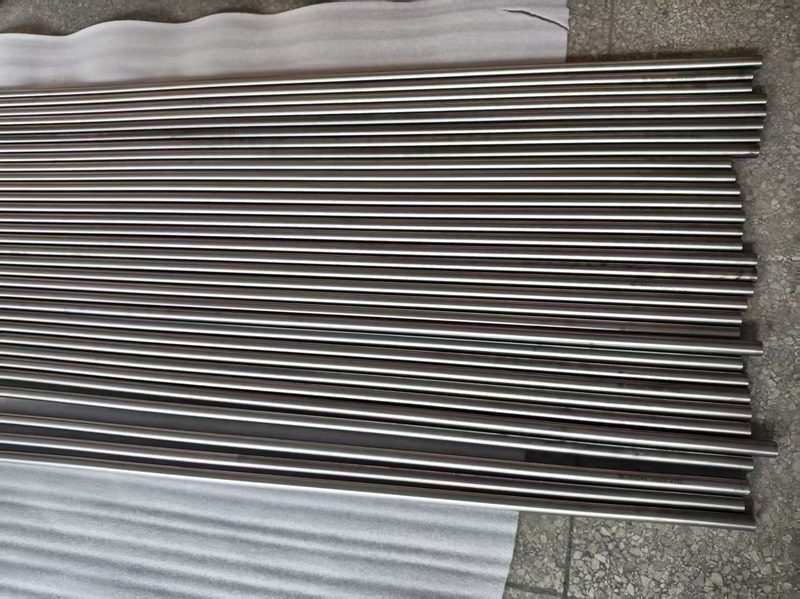
At Hangbo Alloy Group, Haynes 263 is supplied in the solution-annealed condition per AMS 5872 and AMS 5886 specifications, ready for customer fabrication, forming, and subsequent aging. We produce sheets, plates, round bars, seamless tubes, welding wire, and custom forgings for gas turbine OEMs, MRO facilities, and industrial equipment manufacturers worldwide.
The chemistry of Haynes 263 is precision-balanced to achieve the dual objectives of precipitation hardenability and fabrication friendliness. Cobalt (~20%) and chromium (~20%) form the backbone of the alloy, with molybdenum providing solid-solution strengthening. The titanium-to-aluminum ratio is carefully controlled to produce a moderate volume fraction of gamma-prime phase (Ni3(Al,Ti)) during aging, while maintaining sufficient annealing ductility. The very low iron content (max 0.70%) maintains phase stability at temperature, and the controlled carbon level provides grain boundary carbide strengthening without risking weldability issues.
| Element | Nominal % | Range % |
|---|---|---|
| Nickel (Ni) | 52.0 | Balance |
| Cobalt (Co) | 20.0 | 19 – 21 |
| Chromium (Cr) | 20.0 | 19 – 21 |
| Molybdenum (Mo) | 5.9 | 5.6 – 6.1 |
| Titanium (Ti) | 2.15 | 1.9 – 2.4 |
| Aluminum (Al) | 0.40 | max 0.60 |
| Al + Ti Total | 2.55 | 2.4 – 2.8 |
| Carbon (C) | 0.06 | 0.04 – 0.08 |
| Iron (Fe) | — | max 0.70 |
| Manganese (Mn) | — | max 0.60 |
| Silicon (Si) | — | max 0.40 |
| Boron (B) | — | max 0.005 |
| Sulfur (S) | — | max 0.007 |
Haynes 263 has a face-centered cubic (FCC) austenitic matrix in all conditions. The moderate density of 8.36 g/cm³ is lower than many tungsten-bearing superalloys, contributing to favorable weight characteristics in aerospace applications. The thermal expansion coefficient is well-matched to nickel-based structural alloys, minimizing thermal stress in multi-alloy assemblies.
| Property | Value | Unit |
|---|---|---|
| Density | 8.36 | g/cm³ |
| Melting Range | 1300 – 1355 | °C |
| Specific Heat Capacity (21°C) | 461 | J/kg·K |
| Thermal Conductivity (21°C) | 11.7 | W/m·K |
| Thermal Conductivity (500°C) | 19.7 | W/m·K |
| Electrical Resistivity (21°C) | 1.15 | μΩ·m |
| Modulus of Elasticity (21°C) | 221 | GPa |
| Modulus of Elasticity (500°C) | 192 | GPa |
| Mean CTE (21–500°C) | 13.6 | μm/m·°C |
| Mean CTE (21–900°C) | 17.0 | μm/m·°C |
Haynes 263 is supplied in the solution-annealed condition and achieves its full design strength after precipitation hardening (aging). In the annealed condition, the alloy is soft and highly formable — tensile strength approximately 750–850 MPa with elongation exceeding 50%. After the standard two-stage aging treatment, the gamma-prime precipitates provide a significant strength increase, particularly in yield strength which nearly doubles.
| Property | Value |
|---|---|
| Tensile Strength | 950 – 1150 MPa (138 – 167 ksi) |
| Yield Strength (0.2% offset) | 550 – 750 MPa (80 – 109 ksi) |
| Elongation in 50 mm | 30 – 45% |
| Reduction of Area | 40 – 55% |
| Hardness | 250 – 320 HB |
| Temperature (°C) | Tensile Strength (MPa) | Yield Strength (MPa) | Elongation (%) |
|---|---|---|---|
| 21 (Room) | 1050 | 650 | 38 |
| 538 | 860 | 550 | 32 |
| 650 | 750 | 500 | 28 |
| 750 | 500 | 400 | 25 |
| 850 | 300 | 250 | 22 |
The standard heat treatment for Haynes 263 is a two-stage process designed to dissolve primary carbides and homogenize the alloying elements in the first stage, then precipitate the strengthening gamma-prime phase in the second stage. The exact parameters vary depending on product form and section thickness.
Proper temperature control during solution annealing is critical — overheating can cause excessive grain growth, while underheating leaves undissolved carbides that reduce aging response. The aging temperature of 800°C was specifically selected to produce an optimum gamma-prime particle size distribution for the intended service temperature range of 650–900°C.
Haynes 263 was developed with creep resistance as a primary design objective, and its performance in the 700–850°C range is excellent for a precipitation-hardenable wrought alloy. The combination of solid-solution strengthening from molybdenum and cobalt, grain boundary carbide pinning, and gamma-prime precipitation hardening produces a creep curve characterized by a low minimum creep rate and extended tertiary creep stage.
| Temperature (°C) | Stress for Rupture in 1000 h (MPa) | Comparison: Waspaloy (MPa) |
|---|---|---|
| 650 | 420 | 500 |
| 750 | 150 | 180 |
| 850 | 60 | 70 |
| 950 | 25 | N/A |
While Waspaloy offers higher absolute creep strength at temperatures above 750°C due to its higher gamma-prime volume fraction, Haynes 263 compensates with superior ductility and resistance to thermal fatigue cracking under cyclic conditions — a failure mode that often dominates in gas turbine combustion hardware.
One of Haynes 263's most valued characteristics is its outstanding fabricability in the solution-annealed condition. Unlike many high-strength superalloys that are difficult to form or require hot-working, Haynes 263 can be cold-formed, deep drawn, spun, and bent at room temperature in the annealed state, then age-hardened to full strength. This enables the economical production of complex sheet-metal fabrications such as combustion chamber liners with intricate cooling hole patterns.
Haynes 263's unique combination of high-temperature strength, excellent fabricability, and reliable weldability has made it a staple alloy in gas turbine hot section components for over 50 years. Its proven track record and extensive service database provide confidence for both new designs and replacement parts.
| Property | Haynes 263 | Waspaloy | Inconel 718 | Nimonic 90 |
|---|---|---|---|---|
| Max Service Temp | 900°C | 870°C | 650°C | 920°C |
| Density (g/cm³) | 8.36 | 8.22 | 8.19 | 8.18 |
| RT Tensile (MPa) | 950–1150 | 1275–1410 | 1275–1380 | 1200–1400 |
| Cold Formability | Excellent | Fair | Fair | Good |
| Weldability | Excellent | Fair | Good | Fair |
| Cost Factor | Medium-High | High | Medium | High |
Haynes 263's sweet spot is in complex fabricated sheet-metal assemblies operating at 700–900°C, where Inconel 718 is temperature-limited and Waspaloy is difficult to form and weld. For the highest-temperature static components above 950°C, solid-solution alloys like Haynes 230 or Haynes 244 are preferred, while for forged rotating components, higher-strength precipitation-hardened alloys like Waspaloy or Udimet 720 are typically selected.
Haynes 263 has a density of approximately 8.36 g/cm³ (0.302 lb/in³), which is typical for nickel-cobalt-chromium superalloys with moderate refractory metal content. This density is lower than tungsten-heavy alloys like Haynes 244 (9.04 g/cm³) but higher than iron-containing alloys like Incoloy 825 (8.14 g/cm³).
The melting range of Haynes 263 is approximately 1300–1355°C (2370–2470°F). The substantial cobalt content (~20%) and chromium (~20%) contribute to a broad melting range characteristic of multi-component nickel superalloys. The solution annealing temperature of 1150°C is well below the solidus, ensuring a safe processing window.
Haynes 263 (UNS N07263) has a carefully balanced composition: Nickel ~52% (balance), Cobalt 19–21%, Chromium 19–21%, Molybdenum 5.6–6.1%, Titanium 1.9–2.4%, Aluminum max 0.60%, Carbon 0.04–0.08%, Iron max 0.70%. The total Al+Ti is controlled at 2.4–2.8% to produce an optimum gamma-prime volume fraction for the intended service temperature range.
Haynes 263 is covered under multiple international standards: AMS 5872 (sheet, strip, and plate), AMS 5886 (bars, forgings, and rings), ASTM B408 (nickel-iron-chromium alloy rod and bar), ASTM B435 (plate, sheet, and strip), and DIN/EN standards under Werkstoff Number 2.4650. It is also listed in major gas turbine OEM specifications including GE, Rolls-Royce, and Pratt & Whitney material standards.
Haynes 263 requires a two-stage heat treatment to achieve full design properties: (1) Solution annealing at 1150°C (2100°F) — hold time varies from 3–30 minutes for thin sheet to 1.5–2.5 hours for heavy bar sections, followed by water quench or rapid air cool; then (2) Aging at 800°C (1470°F) for 8 hours, air cool. No intermediate treatments are required between forming and aging.
Haynes 263 is recommended for continuous service up to approximately 900°C (1650°F). Above this temperature, the gamma-prime strengthening phase (Ni₃(Al,Ti)) begins to coarsen and dissolve, leading to progressive loss of creep strength. For applications above 900°C, solid-solution strengthened alloys such as Haynes 230 or Haynes 244 are preferred.
Yes, Haynes 263 has excellent weldability for a precipitation-hardenable superalloy. It can be welded using GTAW (TIG), GMAW (MIG), plasma arc, electron beam, and resistance welding processes. Matching filler wire conforms to AMS 5966. A full post-weld solution anneal + aging treatment is strongly recommended to restore mechanical properties and relieve residual stresses in the weld zone.
Haynes 263 offers significantly better cold formability and weldability in the annealed condition compared to Waspaloy, making it the preferred choice for complex fabricated sheet-metal assemblies. Waspaloy provides approximately 20–30% higher creep-rupture strength at temperatures above 750°C, making it better suited for highly stressed forged disc applications. The choice often depends on whether the component is fabricated (263) or forged (Waspaloy).
Haynes 263 is commercially available as sheet and plate (0.5–50 mm thickness), round bars (6–300 mm diameter), seamless tubes and pipes, welding wire (AMS 5966), ring forgings, and custom extruded shapes. Hangbo Alloy Group supplies all standard product forms in solution-annealed condition per AMS/ASTM specifications, with mill test certificates provided.
Haynes 263 is a specialty aerospace-grade alloy with pricing typically in the mid-to-premium range — approximately 1.5–2.5 times the cost of Inconel 625 depending on product form, size, and order quantity. The ~20% cobalt content is a significant raw material cost driver. For current pricing and availability, contact Hangbo Alloy Group for a project-specific quotation.
Primary applications include gas turbine combustion chambers and liners, transition ducts, turbine casings and rings, afterburner components, industrial furnace hardware (radiant tubes, muffles, baskets), and high-temperature expansion joints and bellows. Its combination of weldability and high-temperature strength makes it particularly suitable for complex fabricated assemblies in the 700–900°C range.
At 650°C (1200°F), solution-treated and aged Haynes 263 retains approximately 750 MPa (109 ksi) tensile strength, which is about 65–70% of its room-temperature strength. This excellent intermediate-temperature strength retention, combined with high ductility at this temperature, is a key reason for its widespread use in gas turbine combustion hardware.