
Hangbo Alloy Group
Shanghai · Est. 2012
GB/T 14992 (equivalent to UNS R30188 / W.Nr. 2.4964) — Wrought Co-Ni-Cr-W superalloy with 22% nickel, 22% chromium, and 14% tungsten for gas turbine combustors, transition ducts, and afterburner components up to 1100°C.
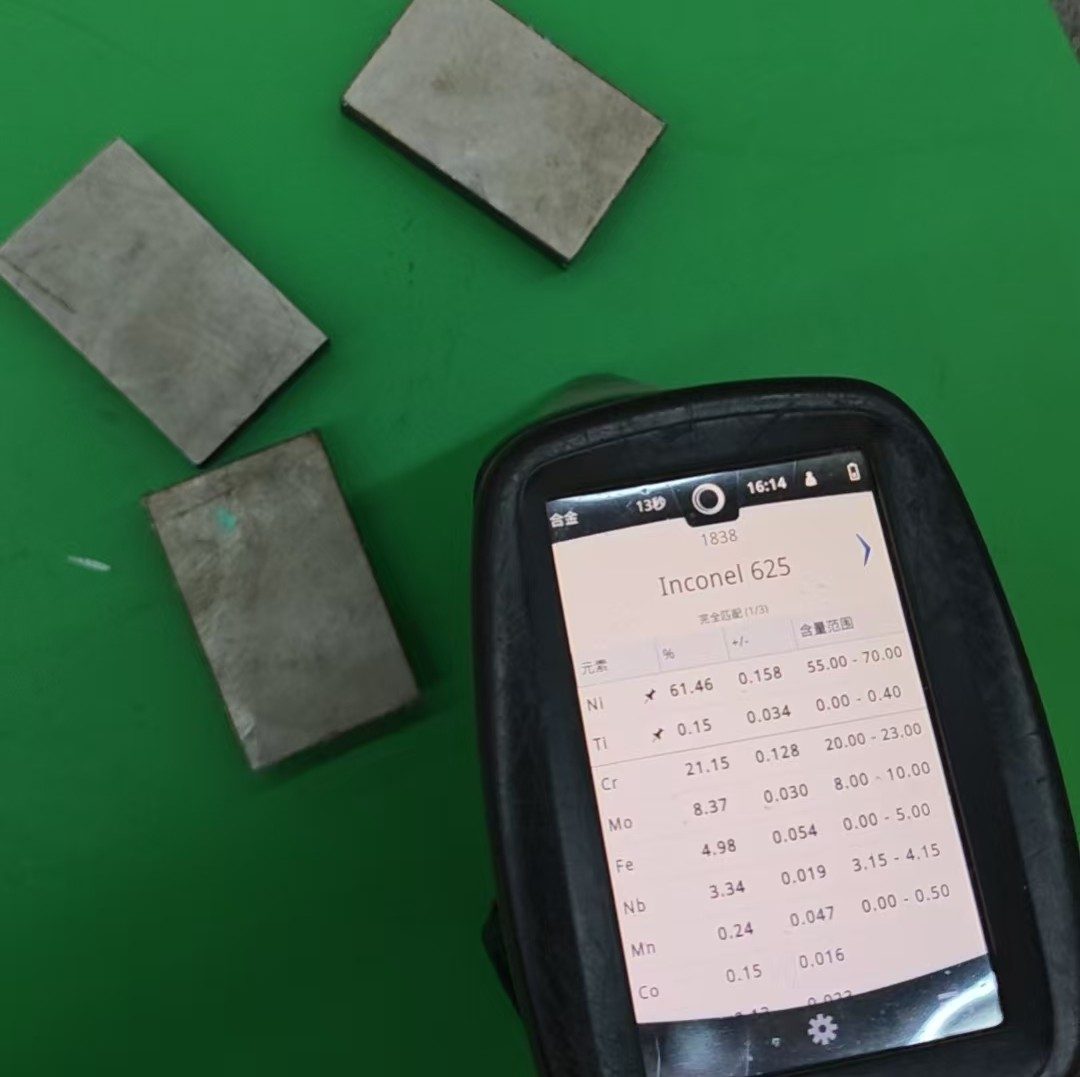
GH5188 (also written as GH188) is the Chinese GB designation for a wrought cobalt-based superalloy chemically equivalent to Haynes 188 (UNS R30188 / W.Nr. 2.4964) developed by Haynes International. The alloy is one of the most widely used cobalt-based superalloys in the world, with applications spanning military and commercial aerospace engines, industrial gas turbines, marine turbines, and rocket propulsion systems. In Chinese aerospace and industrial standards (GB/T 14992 “Designation and Chemical Composition of Superalloys”), the alloy carries the designation GH5188 and is produced to the same nominal composition as its Western counterpart.
The defining metallurgical feature of GH5188 is its high cobalt and tungsten content combined with a balanced 22% chromium addition for oxidation resistance. The 14% tungsten provides the dominant solid-solution strengthening at high temperature, while the 22% nickel stabilizes the FCC austenitic structure and improves fabricability relative to earlier cobalt superalloys. A small lanthanum addition (0.03–0.12%) dramatically improves oxide-scale adhesion, reducing spallation under thermal cycling and giving the alloy much longer service life than non-Ln-modified cobalt alloys in cyclic heating environments.
GH5188 is supplied primarily in sheet and plate form for gas turbine combustor liners, transition ducts, and afterburner components. It is also available in bar, wire, and tube form for fasteners, seal rings, and small fabricated parts. The alloy is fully austenitic, non-magnetic, and readily welded, formed, and machined using procedures similar to austenitic stainless steels. At Hangbo Alloy Group, GH5188 is available in plates, sheets, bars, wires, tubes, and welding wire to GB/T, AMS, and equivalent international standards.
The chemistry of GH5188 is balanced to provide high-temperature strength, oxidation resistance, and fabricability. Cobalt forms the matrix and contributes to high-temperature strength; chromium provides oxidation and sulfidation resistance; nickel stabilizes the austenitic structure and improves fabricability; tungsten provides solid-solution strengthening that increases with temperature; and lanthanum dramatically improves oxide-scale adhesion under thermal cycling.
| Element | Min % | Max % |
|---|---|---|
| Cobalt (Co) | Balance | Balance (~39%) |
| Chromium (Cr) | 20.0 | 24.0 |
| Nickel (Ni) | 20.0 | 24.0 |
| Tungsten (W) | 13.0 | 16.0 |
| Iron (Fe) | — | 3.0 |
| Manganese (Mn) | — | 1.25 |
| Silicon (Si) | 0.20 | 0.50 |
| Carbon (C) | 0.05 | 0.15 |
| Lanthanum (La) | 0.03 | 0.12 |
| Boron (B) | — | 0.015 |
| Phosphorus (P) | — | 0.020 |
| Sulfur (S) | — | 0.015 |
GH5188 has a face-centered cubic (FCC) austenitic structure in all standard supply conditions. The high cobalt and tungsten content gives the alloy a relatively high density (~9.13 g/cm³) compared to nickel-based superalloys, but this is more than offset by the alloy's exceptional high-temperature strength, oxidation resistance, and fabricability. The alloy is non-magnetic in the annealed condition.
| Property | Value | Unit |
|---|---|---|
| Density | 9.13 | g/cm³ |
| Melting Range | 1300 – 1395 | °C |
| Specific Heat (20°C) | 410 | J/kg·K |
| Thermal Conductivity (20°C) | 10.5 | W/m·K |
| Thermal Conductivity (1000°C) | 25.5 | W/m·K |
| Electrical Resistivity (20°C) | 1.12 | μΩ·m |
| Modulus of Elasticity (20°C) | 230 | GPa |
| Modulus of Elasticity (1000°C) | 165 | GPa |
| Mean CTE (20–100°C) | 11.5 | μm/m·°C |
| Mean CTE (20–800°C) | 15.5 | μm/m·°C |
| Magnetic Permeability | 1.001 | (non-magnetic) |
GH5188 is supplied in the solution-annealed condition, typically heat treated at 1175°C followed by rapid cooling. The alloy exhibits a unique combination of high strength and exceptional ductility at room temperature, with elongation around 50% that allows deep drawing, spinning, and complex sheet-metal forming operations. The values below are representative for plate, sheet, and bar products per GB/T 14995/14994 and AMS 5608/5772.
| Property | Annealed Value |
|---|---|
| Tensile Strength | 950 MPa (138 ksi) |
| Yield Strength (0.2% offset) | 485 MPa (70 ksi) |
| Elongation in 2 inches | 50% |
| Reduction of Area | 60% |
| Hardness | 95 HRB |
| Charpy V-notch Impact (RT) | 120 J min |
GH5188 was developed specifically for the highest-temperature sections of gas turbine and rocket engines, where the combination of high strength, oxidation resistance, and fabricability is essential. The alloy's performance in the 900–1100°C range exceeds most nickel-based superalloys, particularly under cyclic oxidation conditions.
Thanks to its 14% tungsten and balanced Co-Ni-Cr matrix, GH5188 retains useful tensile and creep-rupture strength up to 1100°C. The alloy's 1000-hour rupture strength at 980°C is approximately 25 MPa, comparable to or exceeding that of Haynes 230 and significantly better than solid-solution nickel alloys such as Inconel 625 or Alloy 800H. For very-high-stress service, single-crystal nickel superalloys are preferred, but GH5188 is the cost-effective workhorse for sheet-metal hot-section components.
The 22% chromium content produces a very adherent Cr2O3 scale that protects the base metal from oxidation and from type I and type II hot corrosion in jet-engine environments. The lanthanum microaddition dramatically improves scale adhesion under thermal cycling, giving GH5188 5–10x longer life than non-Ln-modified cobalt superalloys in burner-rig and flight-service tests. The alloy also resists sulfidation reasonably well in moderately aggressive environments.
Because the alloy is supplied in the solution-annealed condition and is not precipitation hardened, it has excellent thermal-fatigue resistance. The combination of high ductility, low modulus, and stable microstructure makes GH5188 well suited for components subject to severe thermal cycling, such as combustor liners and transition ducts.
| Temperature (°C) | Tensile Strength (MPa) | Yield Strength (MPa) | Elongation (%) |
|---|---|---|---|
| 20 (Room) | 950 | 485 | 50 |
| 538 | 800 | 340 | 55 |
| 760 | 650 | 285 | 55 |
| 871 | 510 | 250 | 60 |
| 982 | 345 | 195 | 65 |
| 1093 | 210 | 140 | 70 |
GH5188 is the material of choice for the most demanding sheet-metal hot-section components in modern gas turbines and rocket engines. Its combination of high-temperature strength, oxidation resistance, and fabricability is unmatched in its class.
Hangbo Alloy Group supplies GH5188 in the full range of product forms required by aerospace, industrial gas turbine, and rocket engine customers. Material is delivered in the solution-annealed condition with EN 10204 3.1 mill test certificates and full traceability. Custom cutting, bending, forming, and export packaging are available.
GH5188 is readily welded using gas tungsten arc welding (GTAW/TIG), gas metal arc welding (GMAW/MIG), and plasma-arc welding processes. Its austenitic structure and stable chemistry make it significantly more fabricable than many nickel-based superalloys of similar strength.
| Standard | Description |
|---|---|
| GB/T 14992 | Designation and Chemical Composition of Superalloys (Chinese) |
| GB/T 14993 | Hot-Rolled Bars for Superalloys |
| GB/T 14994 | Cold-Drawn Bars for Superalloys |
| GB/T 14995 | Hot-Rolled Plates and Sheets for Superalloys |
| GB/T 14996 | Cold-Rolled Plates and Sheets for Superalloys |
| YB/T 5247 | Plate and Sheet (specific to GH5188) |
| YB/T 5248 | Welding Wire (GH5188 / equivalent) |
| HB/Z 140 | Aviation Industry Heat Treatment Specification |
| AMS 5608 | Plate, Sheet, and Strip (Haynes 188) |
| AMS 5772 | Bar, Rod, and Wire (Haynes 188) |
| AMS 5801 | Welding Wire (Haynes 188) |
| ASME SB-435 / SB-572 | Boiler and Pressure Vessel Code (Co-based alloy) |
| DIN/EN W.Nr. 2.4964 | German/European Material Designation |
| UNS R30188 | Unified Numbering System |
Shanghai Hangbo Alloy Group is a professional manufacturer and global supplier of GH5188 (equivalent to Haynes 188 / UNS R30188 / W.Nr. 2.4964). We provide plates, sheets, bars, wires, tubes, fittings, and welding wire with full material certification per GB/T, AMS, and EN standards. Mill-direct pricing, ISO 9001:2015 quality system, and fast delivery to 50+ countries worldwide.
GH5188 (also written as GH188) is the Chinese GB designation for a wrought cobalt-based superalloy chemically equivalent to Haynes 188 (UNS R30188 / W.Nr. 2.4964). It is a Co-Ni-Cr-W alloy with 22% nickel, 22% chromium, and 14% tungsten for gas turbine combustors, transition ducts, afterburner components, and similar hot-section applications up to 1100°C.
Nominal composition: Co balance (~39%), Cr 20.0–24.0%, Ni 20.0–24.0%, W 13.0–16.0%, Fe ≤3.0%, Mn ≤1.25%, Si 0.20–0.50%, C 0.05–0.15%, La 0.03–0.12%, plus strict control of B, P, and S. The high Co+Cr+W combination provides solid-solution strengthening and oxidation resistance.
GH5188 has a density of approximately 9.13 g/cm³ (0.330 lb/in³) and a melting range of 1300–1395°C (2375–2545°F). The high cobalt and tungsten content gives a relatively high density compared to nickel-based superalloys.
Typical solution-annealed properties: tensile strength ~950 MPa (138 ksi), yield strength ~485 MPa (70 ksi), elongation ~50%, hardness ~95 HRB. The alloy retains useful strength up to 1100°C and has outstanding ductility for complex fabrications.
Key standards: GB/T 14992/14993/14994/14995/14996 (Chinese superalloy standards), YB/T 5247/5248 (plate and welding wire), AMS 5608/5772/5801 (Western equivalents), ASME SB-435/SB-572, and W.Nr. 2.4964 / UNS R30188.
GH5188 forms a very adherent, slow-growing Cr2O3 scale due to its 22% chromium content. The lanthanum microaddition dramatically improves scale adhesion, giving the alloy 5-10x longer life than non-Ln-modified cobalt superalloys in cyclic oxidation service.
GH5188 is designed for continuous service up to 1100°C (2010°F) in oxidizing atmospheres, with short-term peak capability approaching 1200°C. For purely oxidation-resistant service above 1200°C, Alloy 602CA or Haynes 214 are preferred.
Primary applications: gas turbine combustor liners and transition ducts, afterburner liners and spray bars, exhaust system components, industrial gas turbine hot-section hardware, rocket engine combustion chamber liners, and other high-temperature sheet-metal components.
Yes, GH5188 has good weldability using GTAW, GMAW, and plasma processes. Matching filler metal ERCoCrNiW-1 / GH5188 bare wire is recommended. The alloy is highly fabricable in the annealed condition with elongation around 50% supporting complex sheet-metal operations.
GH5188 is the Chinese GB designation for the same alloy chemistry as Haynes 188 (Haynes International, USA). The two grades have equivalent nominal composition, equivalent mechanical properties, and are generally interchangeable in design. The primary differences are the standardization system (GB/T vs ASTM/AMS) and the supply chain.
Hangbo Alloy Group supplies GH5188 in plates/sheets/strips, bars and rods, wires, seamless tubes, forgings, and welding wire. Stock sizes range from thin sheet (0.5 mm) to heavy plate (50 mm) and bar up to 250 mm diameter. All products are supplied with EN 10204 3.1 mill test certificates and full traceability.
GH5188 is a premium specialty superalloy. Typical mill-direct pricing ranges from $45–75/kg for plates, $60–100/kg for bars, and $80–150/kg for seamless tubes, depending on size, quantity, and market conditions. Lead times are typically 8–12 weeks for custom mill orders; Hangbo Alloy maintains strategic inventory of common sheet and plate sizes for 3–6 week delivery. MOQ is generally 50 kg for stock sizes and 200–500 kg for custom sizes.
Request a quotation for GH5188 plates, sheets, bars, wires, or welding wire for gas turbine, afterburner, or rocket engine applications. We provide full GB/T, AMS, and EN certification.